How to Brief a Manufacturer for Custom Training Tanks
A clear brief is the cheapest insurance you can buy on a custom training tank order. The short answer: send a factory-ready tech pack that pins down fabric, GSM, fit and trims; give print and embroidery artwork as vector files with Pantone or thread references; run a sampling loop that ends at an approved pre-production sample; avoid the fit mistakes that surface only after bulk is cut; and ask hard questions about MOQ, tolerances and QC before you release the deposit. This guide walks through each step of briefing a manufacturer for custom training tanks.
Why a Good Brief Beats a Great Sketch
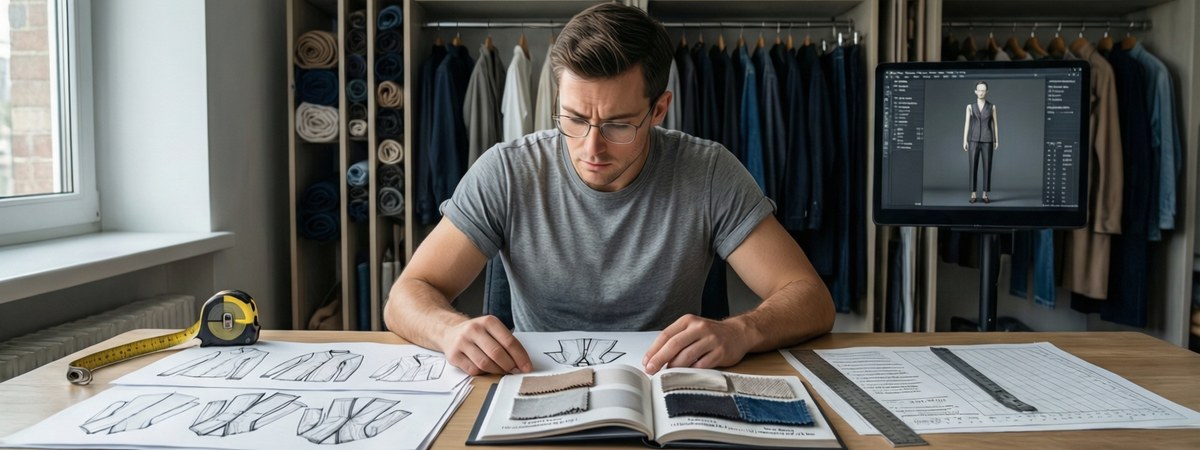
A tech pack is not a formality you attach to an order. It is the system that defines your product: what you are making, how it should be made, and what correct looks like. If the tech pack is incomplete, unclear, or inconsistent, samples take longer, production errors climb, and quality becomes unpredictable. A reference photo shows the general look of a tank, but it rarely carries the chest width, GSM, print placement, or seam construction a factory actually needs. The factory fills every gap you leave with its own assumptions, and that is where wrong fabric, wrong fit, and off-center logos come from. Build the tech pack before you approach manufacturers, not after, and treat it as a living document that evolves through sampling and fit adjustments until it reflects the tank you are actually producing.
Tech Pack Essentials: Fabric, GSM, Fit, Trims
A factory-ready tech pack answers the same questions on every style. Construction and stitch specification lists stitch type, stitch density, seam allowance, and reinforcement points such as bar tacks at stress areas. The measurement specification defines fit with a base size, usually M or L, a Point of Measure diagram showing exactly where each number is taken, tolerance of roughly plus or minus 0.5 to 1 cm, and grading increments for the other sizes. The fabric specification covers type, whether it is knit or woven, GSM, fiber content, finish, shrinkage, and color. The trim specification covers every non-fabric component: zipper length and type, drawcord, rib composition, and thread color. Colorways use standardized references such as Pantone to avoid shade drift between batches, label and branding placement comes with a diagram in centimeters, and packaging sets the fold method, polybag size, and units per carton. Finish with a bill of materials and a version number, because a tech pack without version control lets the factory follow an old file.
Getting the Fabric and GSM Right
Fabric is the most important variable on a training tank, and a vague line like cotton jersey is not a specification. Define it precisely so the factory cannot substitute. For training tops and tanks, light to midweight knits in the 140 to 180 GSM range keep the body breathable during intense work, while poly-spandex blends tuned for compression land closer to 160 to 220 GSM. Summer training tanks and running tops most often sit at 140 to 175 GSM, with 160 to 200 GSM the comfortable band for a structured or compression-style tank. Always state fiber and stretch, for example 88 percent nylon with 12 percent spandex, because the elastane percentage drives recovery and snap-back after repeated wear. Note the finish too, enzyme wash or brushed, and the shrinkage ceiling, because if shrinkage is not specified the factory cuts to the exact measurement and the tank shrinks below size after the first wash.
Artwork Specs for Print and Embroidery
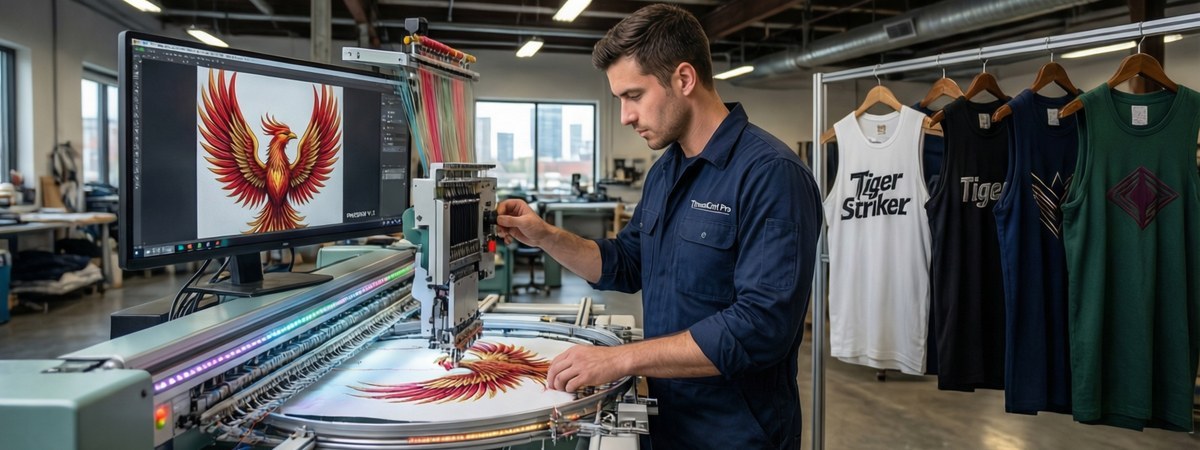
Artwork is where many first orders go wrong, so hand the factory the right file type up front. For print, vector files such as AI, EPS, PDF, or SVG are preferred because they scale without pixelation; if you only have a raster image, send PNG or TIFF at a minimum of 300 DPI at the final print size, in CMYK color mode with a 3 mm bleed if the design runs to the edge. For embroidery, supply vector or a high-resolution reference, give Pantone or thread color references, keep text at least 5 mm tall, and remember that a left-chest logo is typically around 100 mm wide while a back design can run up to 250 mm. Screen print separates one screen per color and needs vector spot-color files; sublimation needs a polyester-spandex base to take the dye; heat transfer needs a vector cut path. Embroidery machines run on a digitized stitch file, usually DST, built from your artwork for a one-time fee that carries forward to reorders of the same logo, so confirm the digitizing before bulk rather than after.
The Sampling Step and Approval Loop
Sampling is where the specification gets proven, and each round should answer one question and close it. A proto sample proves the pattern and silhouette are achievable, often in a substitute fabric, in roughly one to three weeks. A fit sample proves the measurements hit spec across the base size. The pre-production sample, the PP, is the approval gate: it is built from your final bulk materials on the same production line that will run the order, and bulk should not start until it is signed off in writing. A top-of-production sample pulled from the actual run then confirms that volume output matches the approved PP. A simple tank can clear in one or two rounds, while a complex or incomplete brief may need three or more; sample fees commonly run 40 to 100 dollars per piece at two to three times unit cost. Keep the signed PP sample as your golden reference, because when the bulk shipment arrives you compare it directly against that sample to win any quality claim.
Common Fit Mistakes to Avoid
Most fit-related bulk problems trace back to a small set of repeatable errors. Omitting shrinkage lets the tank shrink below size after wash. Omitting tolerance forces QC to reject on every small variation, or to accept inconsistency. Failing to define the stitch lets the factory pick the cheapest seam, which breaks after limited wear. Skipping the label diagram places branding too high, too low, or off-center. The grading mistakes are the quietest: inconsistent grade increments make fit degrade toward the size extremes, stretch fabrics graded like wovens produce worse fit as sizes climb, and approving bulk from a single base-size sample never confirms that grading was applied correctly across the range. Request a size set, one unit per size in graded spec, before bulk approval, and submit finished garment measurements rather than a body chart, because a factory works from the garment spec, not from body dimensions.
Tolerances and Version Control
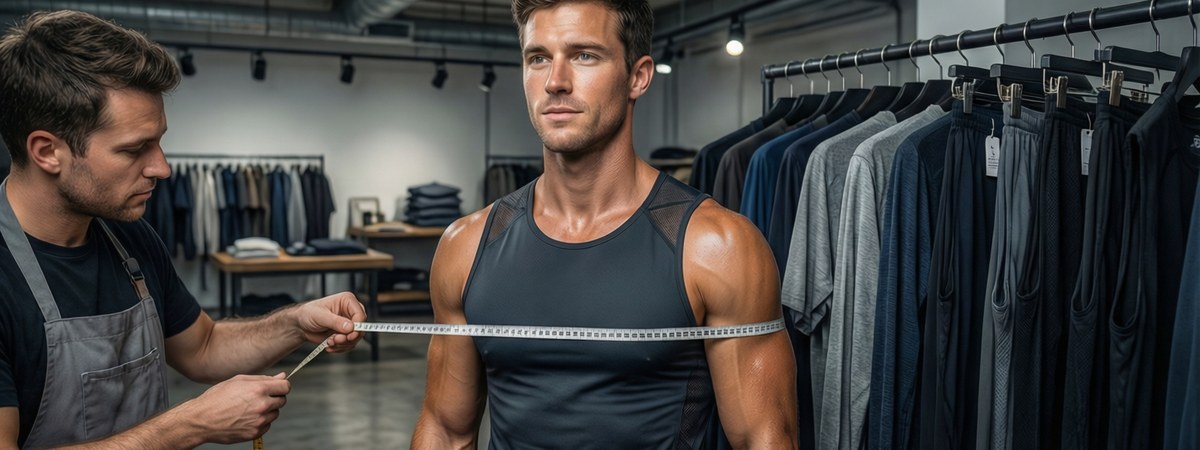
Tolerances turn quality from a feeling into a number. Define an acceptable variance for every Point of Measure, commonly plus or minus 0.5 inches on chest and length and tighter on neckline opening, and write it into the tech pack before cutting begins. Without tolerances, QC has no acceptable range, and even normal variation can fail inspection or pass unchecked. Version control is the other discipline brands skip: every approved change goes back into the tech pack as a new version, highlighted and acknowledged by the factory manager in writing. A phone call telling the factory to lengthen a sleeve gives you no recourse if bulk arrives wrong; an updated, version-numbered tech pack with the revision in red is the only indisputable source of truth. One disciplined document, version-controlled and tolerance-defined, prevents most of the disputes that follow a launch.
Questions to Ask Before Bulk
Before you release the deposit, ask the manufacturer to confirm the exact approved sample, not a photo but the physical version, date, fabric, color, size, artwork, and finishing standard that bulk will follow. Clarify MOQ by style, color, and size range, because fabric dyeing, washing, and decoration can raise the real minimum above the headline number. Ask what happens if bulk differs from the sample, which quality checkpoints run during production, from incoming material to final inspection, and for a stage-by-stage timeline that separates fabric sourcing, cutting, sewing, decoration, washing, finishing, and packing. Confirm the tolerance rules, labeling, packing method, and shipment responsibility, and align on an AQL plan, commonly AQL 2.5 for major defects and 4.0 for minors. These questions are not about price alone; they prove the factory has one fixed target and a process to hit it.
How MontForge Handles Your Brief
MontForge builds custom training tanks from a complete brief: fabric and GSM pinned to the 140 to 220 GSM performance band, fit defined by POM and graded across the size run, trims and Pantone colorways locked before cutting, and print or embroidery artwork set up as vector with confirmed digitizing. Sampling runs from proto through a PP sample on the production line, with a size set available when you order across more than two sizes, and bulk starts only after the PP is signed. Tolerances are written into the tech pack, every revision is version-controlled, and incoming, inline, and final checks run against the approved standard so the reorder matches the first run. Whether you bring a full tech pack or start from a reference tank, the build begins at the product page or a short brief, and the result is a training tank that fits your brand and your athletes.
Frequently Asked Questions
What GSM should a custom training tank use?
For summer training tanks and running tops, light to midweight knits in the 140 to 180 GSM range keep the body breathable, while compression-style poly-spandex tanks land closer to 160 to 220 GSM. Always state fiber and elastane percentage, because recovery depends on it, and note a shrinkage ceiling so the tank does not shrink below size after washing.
What file do I send for print versus embroidery?
For print, send vector AI, EPS, PDF, or SVG, or a 300 DPI raster in CMYK with bleed. For embroidery, send vector or a high-resolution reference with Pantone or thread colors, keep text at least 5 mm tall, and confirm the digitized stitch file before bulk, since embroidery runs on a one-time DST that reuses on reorders.
How many sampling rounds does a tank need?
A simple tank with a complete tech pack often clears in one or two rounds, while a complex or incomplete brief may need three or more. The pre-production sample is the approval gate and bulk should not start until it is signed, with a top-of-production sample later confirming the run matches it.
What fit mistakes surface only after bulk is cut?
Omitted shrinkage and tolerance, undefined stitches, a missing label diagram, inconsistent grade increments, stretch fabrics graded like wovens, and approving from a single base-size sample. A size set reviewed before bulk catches most of these while corrections are still cheap.
Which questions matter most before bulk?
Confirm the exact approved sample, MOQ by style color and size, what happens if bulk differs from sample, the production QC checkpoints, a stage-by-stage timeline, tolerance rules, and an AQL plan. These prove the factory has one fixed target and a process to hit it.
Ready to brief a manufacturer that builds your training tank to spec, not to assumption? Send a tech pack or a reference tank and we will pin the fabric, GSM, fit, and artwork before the first sample.