Low MOQ Activewear Manufacturing: How Small Brands Launch a T-Shirt Line
The fastest way to kill a new activewear brand is to over-commit inventory before you know what actually sells. The short answer: launch your first custom t-shirt line with a low MOQ manufacturer - order a small, testable batch, sample in 7-15 days from a tech pack, and scale only the winners. This guide lays out the cash-flow math, the real cost tiers, and the reorder path that keep a young brand solvent long enough to earn a second drop.
What "Low MOQ" Means for a New T-Shirt Brand
MOQ (Minimum Order Quantity) is the smallest run a factory will accept per style or colour. Traditional offshore plants still demand 1,000+ pieces; a low MOQ sits much lower. Across the 2026 sourcing market, low-MOQ activewear typically starts at 100-500 pieces per style/colour, and China's flexible low-MOQ tier now reaches 50-200 pieces by holding common fabrics in stock. A few stock programs open at 30-50 pieces.
For a startup, the number is less important than what it buys you: a smaller upfront cheque, room to test several colours, and cash left over for marketing. Low MOQ turns manufacturing from a bet into an experiment.
Why MOQ Decides Cash Flow and Risk for Startups
MOQ is a planning constraint that quietly decides whether a brand survives year one. The mechanics are stark:
- A 500-unit minimum on a $20 FOB tee ties up $10,000 in one untested design; sell it at half price and you have destroyed $5,000 of working capital.
- 40% of fashion startups fail within two years, and premature high-MOQ commitment is the primary cited mechanism.
- Brands on smaller, more frequent cycles report 30-50% better inventory turnover than seasonal bulk buyers.
- High-MOQ runs leave 20-30% deadstock when a colour or fit misses - capital trapped in boxes that will not move.
Cash is the only resource you cannot borrow back. Every unit you do not buy is budget you keep for ads, photography and the next drop.
The Real Cost of a Too-High Minimum
The cheapest unit price is rarely the cheapest business decision. A 3,000-piece order looks good on paper; if the style underperforms, the savings vanish into storage and markdowns. Compare the two models on what matters:
| Factor | Low MOQ (50-300 pcs) | High MOQ (1,000+ pcs) |
|---|---|---|
| Unit price | Higher ($8-15 typical) | Lower ($5-10 typical) |
| Financial risk | Low - test before committing | High - large inventory bet |
| Cash flow | Liquid, frequent small orders | Tied up for months |
| Best for | Startups, new colourways, drops | Proven bestsellers, carryover |
| Design freedom | Stock + custom logo + colour | Fully custom from tech pack |
How MontForge's Flexible Low MOQ Model Works
MontForge is built for brands that need small batches without giving up spec. The model is simple: your first run is a test, not a bet. You launch a tight range, read real sell-through, then reorder only what the market confirmed.
- Flexible low minimums so a first drop can be 50-300 pieces per style.
- Sampling in 7-15 days from a complete tech pack.
- Mix styles, colours and sizes inside one order to spread risk.
- GRS-certified recycled polyester available on performance weights.
- Private-label options for gym-owned and affiliate apparel lines.
Sampling in 7-15 Days From Your Tech Pack
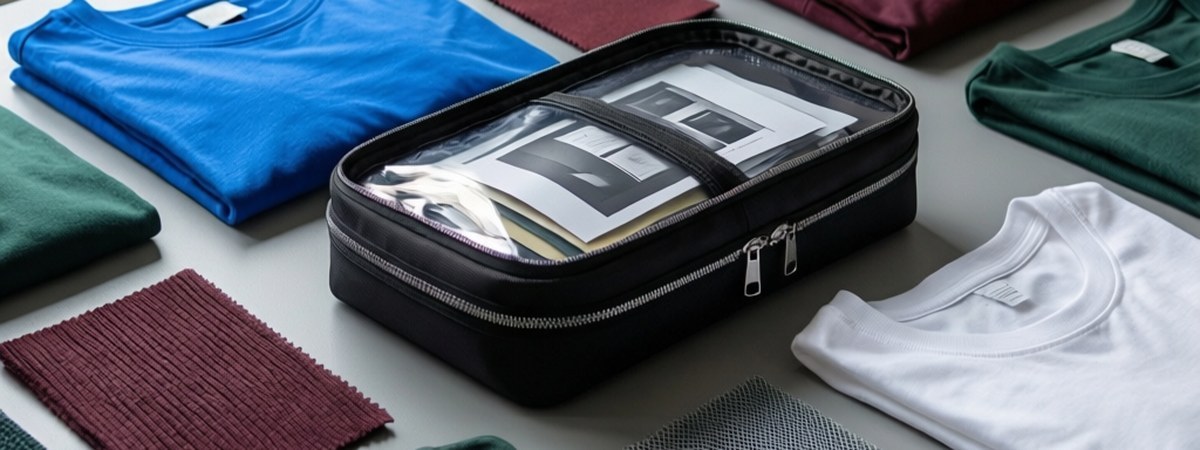
A tech pack is the bridge from screen to sample. In 2026 it must be more than a sketch: a Bill of Materials, construction notes, and measurement charts for every size. Hand that over and MontForge confirms feasibility, cuts a pre-production sample in 7-15 days, and revises until you approve. Sample fees are typically refunded against the bulk order.
A 7-15 day sample turnaround is the 2026 benchmark for a professional startup partner - fast enough to catch a trend cycle before it moves on. Treat sampling as a three-step loop: proto sample (validate silhouette) → pre-production (lock construction) → bulk approval.
Expected Unit Cost at Small Batch Sizes
Exact pricing depends on fabric, GSM, print method and trims, but these industry planning figures for startup sourcing show how cost falls as volume rises:
| Order type | Typical unit price | Lead time |
|---|---|---|
| Sample (1-5 pcs) | $22-40 each | 3-7 days |
| Small launch (20-50 pcs) | $9-15 each | 7-12 days |
| Launch order (100-300 pcs) | $5.50-9.50 each | 12-18 days |
| Higher-volume restock (500+ pcs) | $2.50-4.00 each | 18-22 days |
These are directional benchmarks, not a MontForge quote. Your real number moves with fabric weight, decoration and packaging - always ask for priced breaks at 50 / 100 / 300 / 500 tiers.
A Real Launch-Math Example
Numbers make the trade-off obvious. Say you want three styles for a first drop:
The Reorder and Scale-Up Path as Demand Grows
Low MOQ is a learning phase, not a ceiling. The proven "test and scale" loop:
- 1 Capsule drop - launch 100 units of a new style.
- 2 Analyse sell-through, returns and which colours convert.
- 3 Replenish the winners with a faster reorder.
- 4 Archive the laggards - no warehouse of sale racks.
Scale when demand is repeatable: steady sell-through across 2-3 cycles, predictable reorders, and a margin that genuinely improves with volume. Moving from 75 to 150 units per style typically cuts per-unit cost 15-25% as setup amortises. MontForge keeps the same fabric, trim and spec locked so a winner scales cleanly into bulk.
Mistakes to Avoid When Scaling Too Early
- Scaling before validation - jumping a tier on one good month locks $6k-15k in inventory you may need to markdown.
- Switching factories at scale - you lose the sampling knowledge baked into the first runs; vet the partner at Tier 2.
- Underestimating deposits - a 50% deposit on 5 styles at 300 units is real cash; model it before you commit.
- Ignoring fabric lead times - at scale, fabric alone can take 4-6 weeks, pushing total lead time to 10-14 weeks.
How to Brief Your Manufacturer for a Clean First Run
Keep the first run disciplined so the learning is clean:
- One fabric, two colours, a tight size range, a few hundred units - enough to validate fit and demand.
- Send a tech pack with BOM, measurement charts, Pantone codes and print files (AI/PDF).
- Ask for priced breaks at multiple volumes so the scale-up maths is known in advance.
- Lock fabric spec and trims now so every reorder matches the original.
Frequently Asked Questions
What is a good MOQ for a first t-shirt line?
For a startup, 50-300 pieces per style is the healthy range - small enough to test colours and fit, large enough for a credible launch. Treat the first run as a test, not a bet.
How long does sampling take?
With a complete tech pack, MontForge turns around a pre-production sample in 7-15 days, with revisions until you approve. A 7-15 day turnaround is the 2026 benchmark for a startup-grade partner.
How much does a small batch actually cost?
Industry planning figures put a 100-300 piece launch order around $5.50-9.50 per tee, depending on fabric, GSM, print and trims. Ask for priced breaks at 50 / 100 / 300 / 500 tiers for the real number.
When should I scale up to bulk?
Scale when sell-through is steady across 2-3 cycles, reorders are predictable, and volume genuinely improves your margin. A single viral week is not enough signal.
Does low MOQ mean lower quality?
No. Small batches often get founder-level attention and 100% inspection, while very large runs can be subcontracted and harder to monitor. Low MOQ protects cash, not quality.
Ready to turn a tech pack into a sample? Send it over and we will spec the fabric, GSM and finish for your brand position - sampled in 7-15 days, with a reorder path built in from day one.