Lightweight Packable Hardshells for Hiking and Trail Running
For hiking and trail running brands, a packable waterproof shell needs to earn both its space in a bag and its place on the wearer. Developing custom lightweight hardshells means balancing garment weight, storage volume, comfort and construction, then choosing the features that support the intended activity.
Plan Your Lightweight Shell
Share your activity, weight and pack-away targets to discuss the right material and feature package.
Define the Shell’s Job Before Its Weight
A packable hardshell should be briefed around the activity and weather role, not a single gram target. Hiking may involve extended wear beneath a larger backpack, while trail running often puts more emphasis on low bulk, arm movement and access from a running vest. Define which use is primary.
Write down the intended layers, carried equipment and expected use pattern. Is the jacket mainly carried between showers or regularly worn during sustained wet conditions? Both require a credible protective construction, but the feature priorities may differ.
For custom lightweight hardshell development, ask the supplier to explain how material, pattern and closures support the proposed role. If the concept is principally a wind layer, compare the windbreaker and light jacket category before choosing the product description. A water-repellent wind layer and a waterproof shell need different evidence.
Set a Repeatable Garment Weight Target
Specify the sample size, complete trim configuration and weighing conditions. State whether a separate stuff sack is included. Compare like with like: a small prototype without final labels cannot fairly represent a larger production garment with all approved components.
Record actual measured weight alongside the development target at each sample round. Review differences rather than automatically trimming features to reach an attractive number. Fabric mass, pattern area, tape, zippers, pockets and adjustment hardware all contribute.
A lower weight is useful only when the jacket still performs its intended tasks. Agree an acceptable weight range for the approved configuration and review representative sizes. Avoid publishing an exact production weight until the material and trim package is settled and the claim can be tied to a defined reference size.
Measure Packable Hardshells for Volume as Well as Weight
Low weight and small packed volume are related design goals, but they are not the same measurement. Fabric stiffness, zipper arrangement, pocket construction and the packing method affect the final bundle. A lighter jacket may still form an awkward shape for a vest pocket.
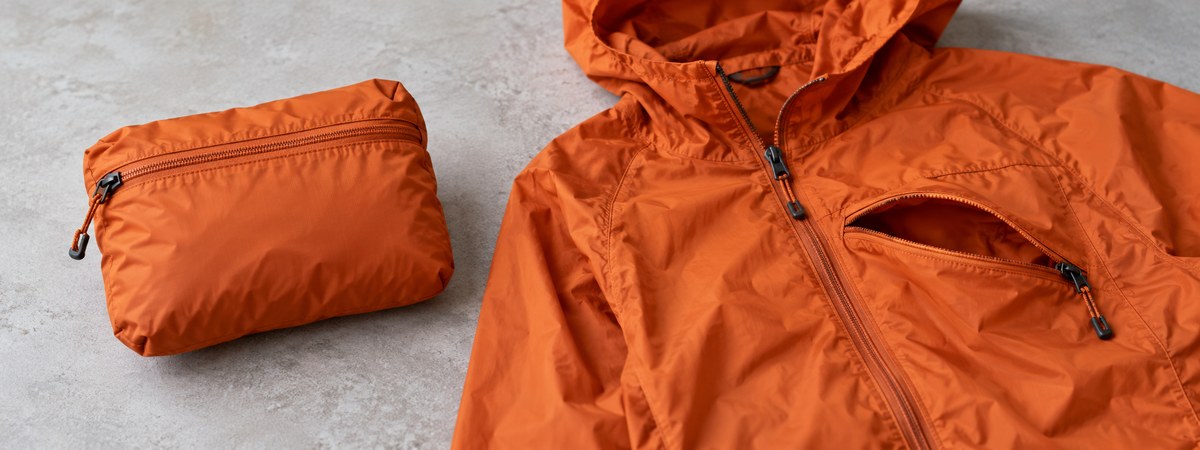
Choose a packing approach: a dedicated pouch, a self-stowing pocket or a simple folded bundle. Specify a repeatable packing procedure, whether dimensions are measured without forced compression and the intended storage compartment. Then check the real sample against that compartment.
Assess packing and unpacking with damp hands and the intended gloves where relevant. Check zipper strain, component pressure and whether the wearer can locate the opening easily. A self-stowing pocket should function both as storage during wear and as a practical pack-away system.
Choose the Laminate as a Complete System
Identify the finished laminate, including face textile, barrier and inner protective structure. Neither a thin face fabric nor a layer-count label establishes waterproofness or moisture-transfer performance. Request material references and the evidence relevant to the intended use.
Our 2.5-layer versus 3-layer guide explains the structural distinction. Compare actual candidates for handle, mass, care compatibility, sealing and cost rather than assuming one construction always wins on weight or comfort.
Separate hydrostatic resistance, surface wetting and moisture-transfer requirements, recording method and sample conditioning. Include post-care expectations where needed. Branded fabric names require sourcing and programme confirmation; examples from other brands do not establish that the same material is available for every custom order.
Distinguish Breathability, Airflow and Ventilation
Moisture-vapour transfer through a laminate, air permeability and mechanical ventilation describe different mechanisms. They should not be reduced to one generic “breathable” promise. Ask which property a proposed number represents and which test method and conditions produced it.
Pertex describes Shield Air as an example of a waterproof membrane designed to permit airflow. This illustrates why air permeability should be discussed explicitly; it does not mean all waterproof laminates share that structure or that one supplier’s result transfers to another fabric.
Review comfort as a garment system involving material, openings, fit, layers and activity. An opening can release heat but also changes weather exposure. Avoid mixing results from different methods into a ranking without technical advice on comparability. Keep laboratory targets distinct from wearer observations collected during development.
Select Openings That Work During Movement
A simple front zipper can provide useful ventilation without adding separate underarm closures. Pit zips offer another option, but add components, seam work and packed bulk. Choose the layout from the activity rather than treating more vents as automatically better.
Check operation while wearing the intended pack or vest. Review slider direction, puller grip and whether straps obstruct the opening. Specify vent backing or overlap where included, and assess the installed closure rather than relying on a loose zipper sample.
Each opening belongs in the weather-construction plan. Examine zipper ends, backing, garages and adjacent tape junctions. Use the component supplier’s terminology for water resistance. A coated-looking zipper is not, by appearance alone, evidence that the entire garment is watertight.

Balance Weight, Comfort and Features
Compare the proposed fabric, ventilation and packing system before approving the sample.
Compare Minimal and Fuller Feature Packages
Minimal design should mean deliberate choices, not missing instructions. Decide which tasks the wearer must perform, then retain the features needed for those tasks. A hiking customer may value hand pockets and a broader adjustment range; a runner may prefer less hardware and a cleaner vest interface.
| Decision | Minimal direction | Fuller feature direction |
|---|---|---|
| Storage | One carefully placed pocket | More pockets mapped against pack straps |
| Ventilation | Front opening | Additional vents if justified |
| Adjustment | Simple elastic or selected adjusters | More adjustable hood, cuffs and hem |
| Pack-away | Integrated pocket or folded bundle | Separate pouch or more structured storage |
| Wear zones | Light construction matched to use | Targeted reinforcement where required |
These are development directions, not fixed categories. Compare complete samples before deciding whether an added feature earns its weight, complexity and price.
Review Fit With the Actual Pack or Running Vest
State whether a running vest is intended over the jacket or whether the jacket must accommodate equipment beneath it. These are different pattern briefs. Do not assume that a conventional fit block will work equally well in both arrangements.
Review arm swing, forward reach, torso rotation and uphill stepping over the intended layers. Observe hem lift, cuff retreat, collar contact and pocket access. For hiking, check the effect of shoulder straps and a loaded hip belt; for running, include bounce and repeated movement in the agreed wear-review sequence.
Specify hood coverage and adjustment for the planned headwear. Check visibility when turning and looking down at the trail. Record wearer measurements and sample size so revisions are assessed consistently rather than against a different fit setup each time.

Keep Seam Sealing and Wear Checks in the Brief
Weight reduction should not make the sealing plan ambiguous. Identify relevant seams, tape references and the laminate surface used for bonding. Review junctions, openings and changes in thickness on the assembled sample.
Assess the proposed construction for the expected contact from packs, straps and repeated packing. Thinness alone does not determine service life, and denier is not a substitute for an abrasion result. Agree the material and assembly checks that support your intended claims.
Use the waterproofing specification guide to keep fabric, seam and finish evidence separate. Include approved care and relevant conditioning in the review, then revisit affected checks if the laminate, tape, trim or construction changes.
Plan Colours, Branding and Care Together
Approve colours on the actual laminate and trims, not just a screen rendering. Review shade differences between zipper tape, shell fabric and printed artwork. Where colour matching matters, retain the agreed physical references.
Keep decoration proportionate to the garment’s lightweight role. Confirm application compatibility with the face textile, membrane and tape system. Review the actual decoration after agreed conditioning; a small logo can still affect material through heat, pressure or needle holes.
Colour contrast and reflective details need precise descriptions. A bright colour does not establish a certified visibility claim. Care instructions should be validated for the complete garment. Follow the actual label and supplier guidance for drying and storage, and avoid leaving a damp packed shell compressed for extended periods.
Plan Low MOQ Hardshell Jackets Around Available Materials
When sourcing low MOQ hardshell jackets, confirm the complete material and trim package as well as the garment quantity. MontForge’s current hardshell page lists MOQ starting from 100 pieces per colour and style. Treat that as a discussion starting point and confirm terms for the selected construction. A garment-level MOQ does not establish that every custom laminate, dye colour or branded trim is available at that quantity.
Ask which materials and standard colours can support the first run, what custom options create separate minimums and whether development costs change between choices. A focused initial colour range and shared trims can simplify sourcing, but their actual effect on price and timing needs a project quotation.
| Launch item | Confirm before ordering |
|---|---|
| Product target | Use case, reference size, weight and packing method |
| Materials | Laminate availability, colours and separate minimums |
| Features | Pocket, hood, ventilation and vest configuration |
| Approval | Fit, sealing, care, artwork and relevant reports |
| Commercial terms | Quantity by colour, costing, sample scope and delivery |
Browse the custom hardshell jacket product range to discuss a starting silhouette. Send a versioned brief using the hardshell tech pack guide, then link the approved sample to the garment production process. Ask your hardshell jacket manufacturer to confirm MOQ, price and schedule against that same specification.
Frequently Asked Questions
Does lightweight automatically mean packable?
No. Assess packed shape and dimensions using a defined method as well as measuring garment weight.
Is a windbreaker the same as a packable hardshell?
No. Define the protective role and supporting fabric, seam and closure evidence for the product being developed.
Are pit zips essential for a running shell?
Not universally. Compare the ventilation benefit with added weight, bulk and the intended vest interface.
Does a running vest go over or under the jacket?
Specify the intended arrangement in the brief and review the pattern with that equipment setup.
Does the factory MOQ cover custom fabric colours?
Not necessarily. Material, dyeing and trim minimums may be separate; confirm the complete sourcing package.
Will a shell meet every race’s kit rules?
Do not assume so. Obtain the specific event’s current requirements and verify the proposed garment against them.
Ready to Launch a Packable Hardshell?
Send your brief, colour quantities and required dates to discuss materials, sampling and a project quotation.
Sources
- Pertex: Shield Air membrane and air-permeability explanation.
- Montane: Minimus Lite waterproof jacket — an industry example of an activity-focused lightweight shell.
- GORE-TEX: outerwear care guidance — follow instructions appropriate to the actual garment.
- MontForge: hardshell sourcing options and MOQ reference.
Sources checked 28 October 2026. Brand examples do not establish the specifications or material availability of a custom programme.