Waterproofing Specs Buyers Should Know (mm Rating, Taping, DWR)
A waterproof shell brief often starts with a millimetre rating. It should not end there. For buyers developing custom waterproof shell jackets, fabric pressure resistance, seam sealing, DWR, closures and hood fit are connected specifications with different evidence behind them. Understanding those differences makes quotations, sample reviews and product claims more precise.
Turn Waterproofing Claims Into a Clear Brief
Share your intended use and performance requirements to discuss the fabric, seam and closure system.
Read the Waterproof Claim as a System
A shell specification should connect fabric resistance to water penetration, seam construction, closures and fit. DWR belongs in the same brief, but it answers a different question: how the outside surface wets. One attractive number cannot describe all of these functions.
For custom hardshell jacket sourcing, begin with the intended activity, weather role, layers and equipment. Then ask which material results and garment checks support the proposed product description. Keep development targets distinct from verified findings.
If the brief is primarily a wind layer for light moisture, compare the windbreaker and light jacket category. If sustained rain protection is central, define the full shell system before selecting a laminate. The product role should determine what you need to verify.
What a Millimetre Water-Column Rating Means
Hydrostatic head describes resistance to water penetration under a pressure test, often expressed as millimetres of water column. ISO 811 specifies a hydrostatic pressure method for fabrics. The figure relates to a test specimen under defined conditions, rather than a wearer standing in a particular storm.
As a unit example, 10,000 mm corresponds to a 10-metre water-column height. It does not mean 10,000 mm of rainfall, ten metres of safe submersion or a guaranteed number of hours outdoors. Real garments include seams and openings that a plain fabric specimen does not represent.
A larger result can indicate greater resistance under a comparable method, but it should not replace the rest of the brief. Check whether the supplier is quoting an actual measured result, a minimum target or the upper limit of the test equipment.
Ask What Was Tested and Under Which Conditions
Start with the material identity. The report should be traceable to the proposed fabric or laminate, not simply a similar material from the same mill. Confirm whether the result applies to the finished laminate, a coated fabric, a seam specimen or another assembly.
| Report field | Buyer question |
|---|---|
| Material reference | Does it match the proposed production material? |
| Method and edition | Which hydrostatic procedure was used? |
| Conditions and endpoint | What setup and observation rule produced the result? |
| Sample state | Was it new, laundered, aged or otherwise preconditioned? |
| Result presentation | Are individual results and any reported minimum or average clear? |
ISO 811 and AATCC TM127 are recognised method references for hydrostatic testing, but do not assume results from different procedures are directly interchangeable. Ask the laboratory to explain comparability where methods or conditions differ. A marketing sheet is not a substitute for an identifiable report.
Set Targets From the Use Case, Not a Universal Threshold
There is no single fabric number in this guide that automatically makes every jacket suitable for every activity. Carried loads, contact, construction, exposure and material ageing all affect the development decision. Agree targets with the supplier and testing provider against the intended product role.
Compare more than initial water resistance. A higher hydrostatic result may come with changes in weight, handle, cost or moisture-management performance. Those trade-offs need to be reviewed on the selected materials and complete sample.
Write performance requirements as measurable fields: named material, method, conditions, target and sample state. If a buyer or event has a specific acceptance requirement, obtain the current wording and build it into the brief. Avoid treating a general category label such as “mountain shell” as that requirement.
Fully Taped and Critically Taped Are Different Instructions
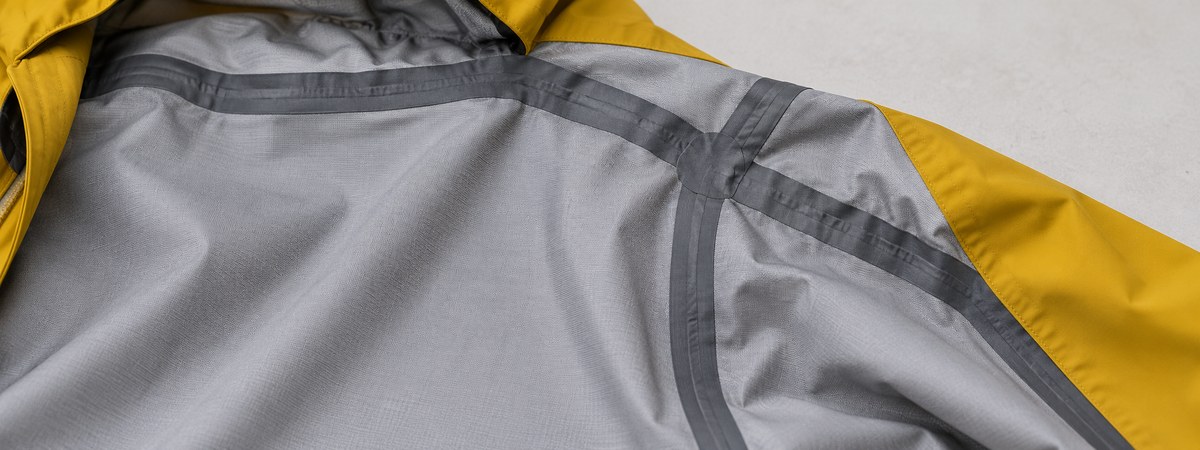
Seam tape covers a stitched join from the inside to help seal needle holes and the seam path. Fully taped construction generally means all relevant stitched seams in the protective shell are taped. Critically taped construction seals selected seams considered important for the design; it does not establish that every shell seam is covered.
The word “critical” needs a map. Ask the supplier to identify which seams are sealed and which are not, including sleeves, side panels, hood joins, pocket assemblies and intersections. A photograph of one taped shoulder cannot answer that question for the whole jacket.
Mountain Warehouse’s construction explainer distinguishes taped, critically taped and welded seams. Use those terms as the start of a discussion, then document the actual construction. If a joint is welded or bonded instead of stitched and taped, show the method and its evidence rather than assume it is equivalent.
Approve the Tape–Laminate Combination
A seam-sealing plan needs more detail than “use waterproof tape.” Identify the tape reference and its compatibility with the laminate’s inner surface, together with the application process agreed by the material and tape suppliers.
Inspect junction coverage, wrinkles, bridging and lifting on the assembled sample. Areas around hood joins, zipper ends and pockets can involve changes in thickness and direction. Review these points explicitly rather than approve only a straight seam on a flat panel.
Agree which care, conditioning and performance checks are needed after sealing. Record the process and inspection references so production can repeat the approved result. If the laminate, tape or assembly changes, review the affected checks before accepting the substitution.
DWR Measures Surface Behaviour, Not the Whole Barrier
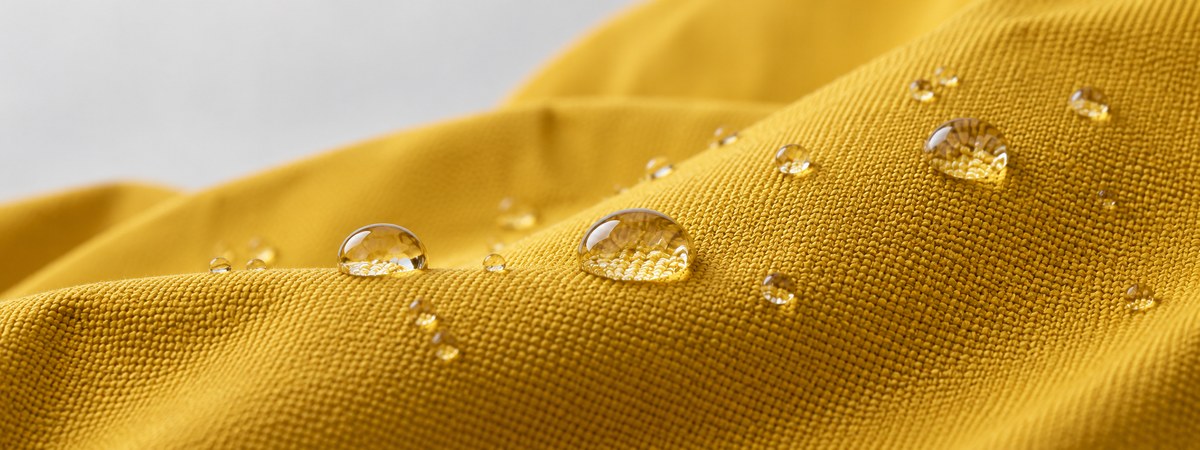
Durable water repellent treatment helps water bead on the face fabric. It is separate from the barrier that resists penetration through the material system. GORE-TEX explains that a saturated outer fabric can feel damp and clammy even when its membrane is not leaking.
AATCC TM22 evaluates resistance to surface wetting using a spray test. That answers a different question from a hydrostatic pressure test. Do not compare a spray rating and a water-column figure as if they were alternative units for the same result.
Specify the finish, care requirements and expected surface performance after an agreed sequence of laundering or other conditioning. If a finish chemistry claim matters, request a written declaration with a defined scope and suitable supporting information. Water droplets in a photograph do not establish chemistry or durability.
Check Fabric, Seams and Finish Together
Bring your proposed material references and claim wording into the sample-review discussion.
Make Re-Treatment Instructions Specific to the Garment
DWR is not permanent. Wear, contamination and care can affect the surface’s ability to bead water. The customer needs instructions validated for the actual shell, tape, trims and decoration, rather than a procedure copied from a different brand’s garment.
GORE-TEX publishes washing and drying guidance for its own products to help restore repellency. Use it as an example of product-specific care, not blanket permission to apply the same heat or treatment to an unverified laminate. Follow the final garment care label and relevant supplier guidance.
Re-treatment is not a repair for every water-ingress problem. If a seam, opening or damaged laminate is involved, it needs its own assessment. Keep consumer instructions clear about maintaining the face finish without implying that a spray can correct all construction failures.
Specify the Zipper and Its Installation Together
A coated-looking zipper is not automatically watertight. YKK’s AquaGuard leaflet describes that product as water repellent rather than waterproof or watertight. Specify the exact zipper and use the terminology its supplier supports.
Show zipper ends, garages, backing or storm flaps, pocket openings and the interface with seam tape on the technical flats. Water can interact with the installed assembly differently from a loose component. Review the closure on the complete jacket with the intended fit.
Ask how the supplier will verify the proposed design for the intended exposure. Operating comfort, snagging and durability also matter; a closure that looks sealed but is difficult to use may not meet the product brief. Keep the zipper’s material description separate from any verified whole-garment claim.
Define Hood Performance as Fit and Coverage Tasks
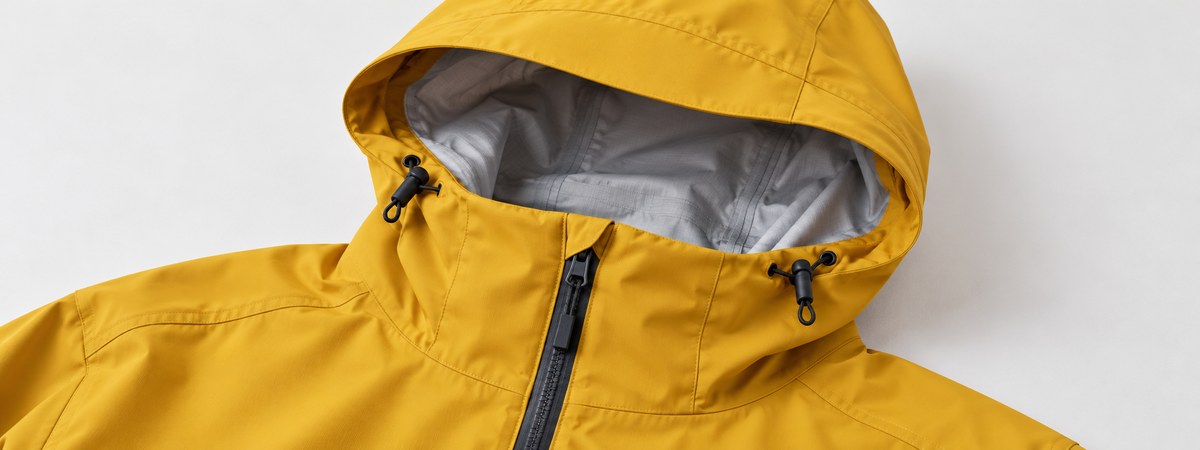
A hood brief should describe head turning, forward and side visibility, collar comfort, brim behaviour and the adjustment range. Include the intended cap or helmet where relevant. Do not rely on “storm hood” as a complete specification.
Test the hood open and closed with the wearer moving. Check whether the opening stays positioned, whether the collar pulls against the face and whether the adjustment hardware is usable. Review the hood-to-neck seam and any openings within the sealing plan.
There is no generic hood approval in this guide that applies to all activities. Where a customer or test programme sets a particular requirement, identify it explicitly and agree an appropriate verification method. Keep helmet compatibility, weather performance and fit as distinct questions.
Send a Shell Brief That a Supplier Can Answer
Start with the hardshell jacket product range to discuss silhouette and features, then send a written brief for your own material and construction. Our 2.5-layer vs 3-layer manufacturing guide explains the laminate choices behind that conversation.
| Brief item | What to ask the supplier to confirm |
|---|---|
| Fabric and water resistance | Material reference, hydrostatic method, target and preconditioning |
| Seam protection | Seam map, sealing method, tape reference and validation scope |
| Surface finish | DWR reference, wetting method, post-care target and care instructions |
| Closures and hood | Exact components, installation details, coverage and movement checks |
| Production and claims | Approval gates, report references, inspection plan and permitted product wording |
Ask the MontForge technical hardshell team to identify open decisions, proposed materials and the testing scope for your project. Link the approved sample and reports to the current specification through the garment production process. Price, MOQ and lead time should be confirmed against that same version.
Frequently Asked Questions
Does a 10,000 mm rating mean ten hours of rain protection?
No. It is a water-column pressure figure, not a duration rating. Check the method, sample state and complete garment construction.
Is a higher mm value always the best choice?
It can show greater resistance under comparable testing, but the product also needs suitable weight, comfort, durability, construction and cost.
Are critically taped seams the same as fully taped seams?
No. Critical taping covers selected seams. Ask for the seam map so the coverage is explicit.
Does DWR prove a jacket is waterproof?
No. Surface water beading and resistance to water penetration are different properties requiring different evidence.
Can a DWR treatment fix a leaking seam?
Do not assume so. A seam or laminate problem needs an appropriate assessment and repair approach rather than a surface-finish claim.
Is a water-repellent zipper watertight?
No. Use the component supplier’s supported terminology and verify the installed closure as part of the garment design.
Ready to Specify Your Next Hardshell?
Send your technical flats, target performance methods, seam map and colour quantities to discuss materials, sampling and a project quotation.
Sources
- ISO 811: hydrostatic pressure testing scope.
- AATCC: TM127 hydrostatic pressure method listing.
- AATCC TM22: surface water-repellency spray test scope.
- Mountain Warehouse: taped, critically taped and welded seams.
- GORE-TEX: DWR and membrane functions and outerwear care guidance.
- YKK: AquaGuard water-repellency limitations.
- MontForge: hardshell manufacturing options.
Sources checked 25 October 2026.