Urban Streetwear Down: Balancing Warmth and Silhouette
Urban streetwear down needs a recognisable silhouette and a coherent construction. For brands developing insulated collections, the task is to balance warmth, movement, fabric and visual identity, then turn the approved design into repeatable production instructions.
Develop Your Streetwear Down Collection
Share your intended use, silhouette targets and colour quantities to discuss materials, sampling and a project quotation.
Define the Streetwear Silhouette
Urban streetwear down jackets need a deliberate shape before the filling is selected. Define body length, shoulder line, chest volume, sleeve shape and hem position as a coordinated block. A shorter hem or wider shoulder can change the impression of the jacket without requiring excessive filling.
Use front, back and side technical flats, then show the intended layers beneath the garment. References communicate direction, but should not replace measurements and construction notes. Avoid calling a particular shape a market trend without evidence from your target customer.
For custom streetwear down jackets, explain whether the collection prioritises everyday mobility, a sculpted appearance or layering space. Agree which visual features are essential and which remain open to supplier proposals.
Balance Fill and Visible Volume
Filling should support both the intended insulation role and the approved outline. More filling does not automatically create a better silhouette: it can change sleeve rotation, pocket access, collar pressure and the way the hem sits.
Specify fill reference, composition, allocation and garment reference size. Read fill power together with fill weight and construction. IDFL treats these as separate considerations in jacket evaluation; a material number alone is not an entire garment warmth rating.
Review the sample after an agreed preparation period and handling sequence. Check thin areas and inconsistent distribution, particularly near panel intersections. Do not reduce filling merely to improve a photograph or add it solely to create volume without reviewing the effect on function.
Use Baffles to Shape the Design
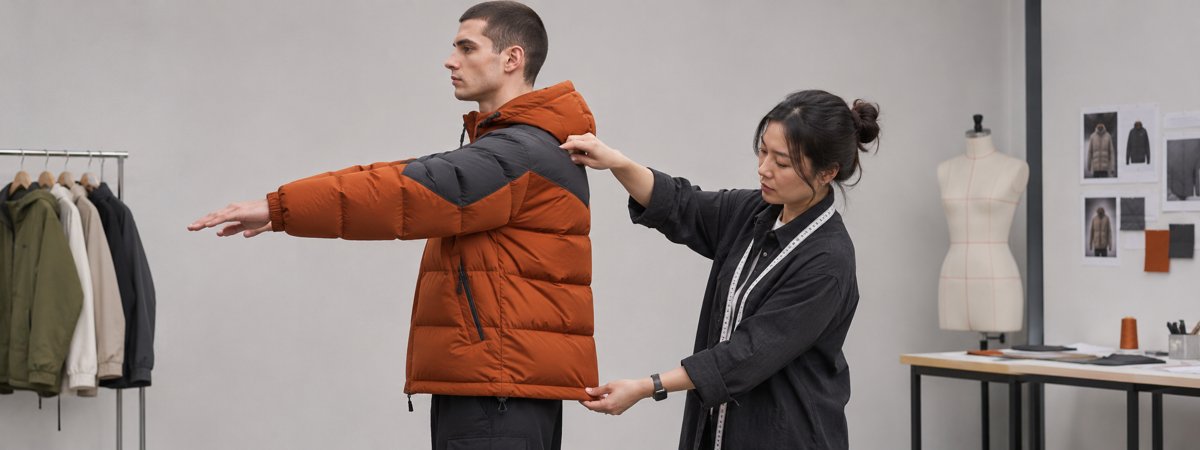
Baffle spacing and direction establish much of a puffer’s visual rhythm. Horizontal chambers, chevron shoulder lines and shaped side panels can emphasise different proportions. Keep those choices connected to filling allocation and the proposed assembly.
Draw each panel boundary and identify the construction method. Sewing through layers and using internal separators involve different bulk, labour and thermal considerations. Approve the actual sample rather than assume an attractive sketch predicts the final loft.
Inspect symmetry where required, alignment across the front closure and the way seams meet around pockets. A construction change can alter appearance even when overall measurements remain within tolerance. Retain photographs of the approved front, side and back views.
Keep Lightweight Construction Credible
Set a garment weight target against a complete reference size and trim package. Shell, lining, filling, zippers and adjustments all contribute. A prototype without final hardware or labels should not become the published weight claim.
Choose shell and lining references with appropriate containment and handling characteristics. Thinness alone does not establish durability or suitability for the selected down. Where leakage is a concern, agree finished-product checks as well as material review.
DWR describes surface water repellency, not a guarantee that the quilted jacket is waterproof. Review care requirements for the actual filling, shell, lining and decoration. Claims about warmth, weather performance or durability should match the scope of the available evidence.
Develop Your Streetwear Down Collection
Share your intended use, silhouette targets and colour quantities to discuss materials, sampling and a project quotation.
Plan Colour Blocks and Trim Hierarchy
Start with a main colour, a supporting panel colour and a limited trim palette. Geometric panels can give a jacket identity, but their boundaries should follow a buildable pattern rather than exist only as a graphic overlay.
Approve colours on actual shell materials and zipper tapes. Different textures and gloss levels may make nominally matching shades look different. Retain agreed physical references and review production substitutions before accepting them.
Prioritise closure operation and pocket access alongside appearance. YKK’s work on reducing fabric snagging illustrates why thin fabric and zipper interaction deserves attention. This does not establish availability of a particular zipper for every project; identify the proposed component and assess its installation on the sample.
Make Branding Part of the Pattern
Place artwork around baffles, folds and pocket openings. Specify position from stable measurement points, artwork dimensions, colours and application method. A logo that looks centred on a flat drawing may shift visually once the jacket is filled.
Trial printing, transfers, embroidery or patches on the proposed shell and review the actual result after agreed care or conditioning. Heat, pressure, adhesives and needle holes can affect materials differently. Avoid treating a successful application on a T-shirt as approval for an insulated shell.
Use the private label down jackets category to discuss style directions, then create a controlled artwork and label approval sheet for your own collection. Any certification statement requires its own verification and permission.
Check Fit and Retail-Ready Finish
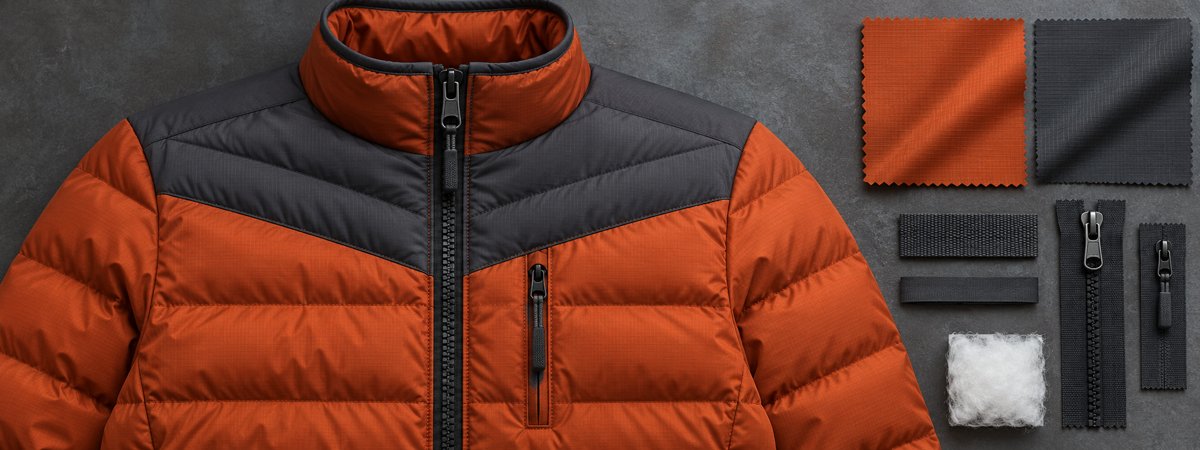
Assess forward reach, sitting, walking and pocket access over the intended layers. Observe shoulder tension, cuff retreat and hem movement. A visibly oversized jacket still needs a coherent fit block and grading plan.
Review lining exposure, zipper backing, pocket bag placement, seam ends, filling leakage and the consistency of visible quilting. Agree which defects are unacceptable and how production will be inspected. One approved prototype is not evidence that every piece in a production lot will match it.
Confirm labels, hangtags, size identification, spare components where required and packaging. Give the jacket sufficient space and appropriate handling after transport so its presentation can be reviewed fairly. Validate care and storage instructions for the complete garment.
Define Sampling and Bulk Release
For a streetwear down jacket manufacturer, the brief should connect silhouette, filling, material references, colour blocks and trim details in one revision. Ask your streetwear down jacket manufacturer to identify technical questions before the first sample is made.
A 7–15-day sampling reference needs a defined start point and sample stage. Confirm whether materials are available and whether the timing covers a prototype, fit revision or pre-production sample. Custom colours, trims and external testing may have separate dependencies.
Record each review against the sample identifier, with photographs and measurable changes. Request price, MOQ and delivery against the approved construction; MontForge’s published starting MOQ is 100 pieces per colour and style, subject to project confirmation and separate component minimums. Link final approvals to the garment production process. See the down insulation manufacturing guide for filling background.
Frequently Asked Questions
Does an oversized shape require more down?
Not automatically. Review the pattern, chamber dimensions and fill allocation against the intended insulation role.
Can colour blocking affect construction?
Yes. Additional seams and materials need review for alignment, bulk, filling containment and assembly.
Is a lightweight shell necessarily less durable?
Weight alone cannot establish durability. Evaluate the actual material and garment for the intended use.
Does a 7–15-day sample mean bulk approval?
No. Define the sample stage and any remaining fit, material, artwork or testing approvals.
Can the design use a certification logo?
Verify the applicable supply chain, documentation and claim requirements before approving labels.
Develop Your Streetwear Down Collection
Share your intended use, silhouette targets and colour quantities to discuss materials, sampling and a project quotation.
Sources
- IDFL: jacket testing information
- IDFL: finished-product down containment
- Textile Exchange: Responsible Down Standard
- MontForge: development and MOQ references
Sources checked 4 November 2026.