Technical Running Apparel Manufacturers: What to Look For
Written by Chence Chen · Design Director at MontForge
Chence Chen has 15 years of industry experience and leads new style development and design modifications at MontForge.
Choose technical running apparel manufacturers by how they develop and validate a running garment, rather than by the size of their sportswear catalog. Ask for relevant worn samples, identifiable materials, pocket movement checks and documented revisions. Define the running distance, conditions and carried items before comparing quotations. For a coordinated range, assess the top, shorts and liner together. MontForge’s published guidance on phone-pocket validation, two-in-one shorts and stretch-logo trials offers concrete questions for this review; the proposed materials, performance and production terms still need project-specific confirmation.
Running brief
Define distance, conditions and carried items.
Material system
Review fabric, panels and construction together.
Loaded movement
Check liner behavior and phone-pocket stability.
Approval evidence
Record wear feedback, care checks and revisions.
What makes a factory suitable for technical running apparel?
A suitable development partner translates a running brief into garment decisions that can be inspected. Ask how it would connect stride, arm movement, carried equipment and expected conditions with pattern shape, fabric placement and construction. A sample conversation should move beyond color choices and logo position.
Request an explanation of what the first sample will establish and what remains unresolved. A prototype made from substitute material may help review shape, but cannot settle final fabric feel or decoration behavior. Make those limits visible in the sample record before approving another stage.
How should 5K, longer runs and training change the brief?
For a short road-running product, specify the intended silhouette, movement and essential storage. For longer runs, explain what the wearer carries and where prolonged contact may occur. For a training crossover, identify movements beyond running, such as lunges, that the garment must accommodate.
Do not treat distance as a universal recipe for fabric weight or inseam. Describe the intended wearer, conditions, fit reference and coverage preference. If several scenarios share one garment, rank the requirements so the supplier can explain compromises rather than silently choosing them.
Which products belong in the first collection?
Start with a coherent outfit: a running T-shirt or tank paired with shorts. Add tights or other running pants when the intended conditions and customer need justify them. Each added style introduces its own fit, materials, size allocation and approval work.
Use the performance T-shirt development service to discuss the top and the performance shorts service for the lower garment. Specify whether consistency means matching colors, coordinated placement, compatible fits or all three. Similar product photographs do not establish that separate materials will match.
Which sourcing route should your shortlist compare?
Compare development scope before comparing unit prices. Ask each candidate to identify the garment base, changes included and evidence available. The following routes are comparison categories, not promises that every manufacturer offers each option.
| Route | Strength and customization | Minimums and cost | Samples and timing | Buyer fit and evidence |
|---|---|---|---|---|
| Established style with branding | Existing garment base; agreed decoration | Confirm quantities by style and color, stock and setup fees | Review actual decorated garment and availability | Buyers accepting the base fit; retain style and artwork references |
| Adapted development | Modify a relevant pattern, pockets or panel arrangement | Confirm revision scope and material minimums | Agree fit reviews and final-material trials | Brands refining an existing direction; request revision records |
| Coordinated custom range | Develop related tops and bottoms against one brief | Confirm each style, fabric and component requirement | Separate material, fit and decoration approvals | Brands needing their own product system; retain approved specifications |
What should fabric and ventilation samples show?
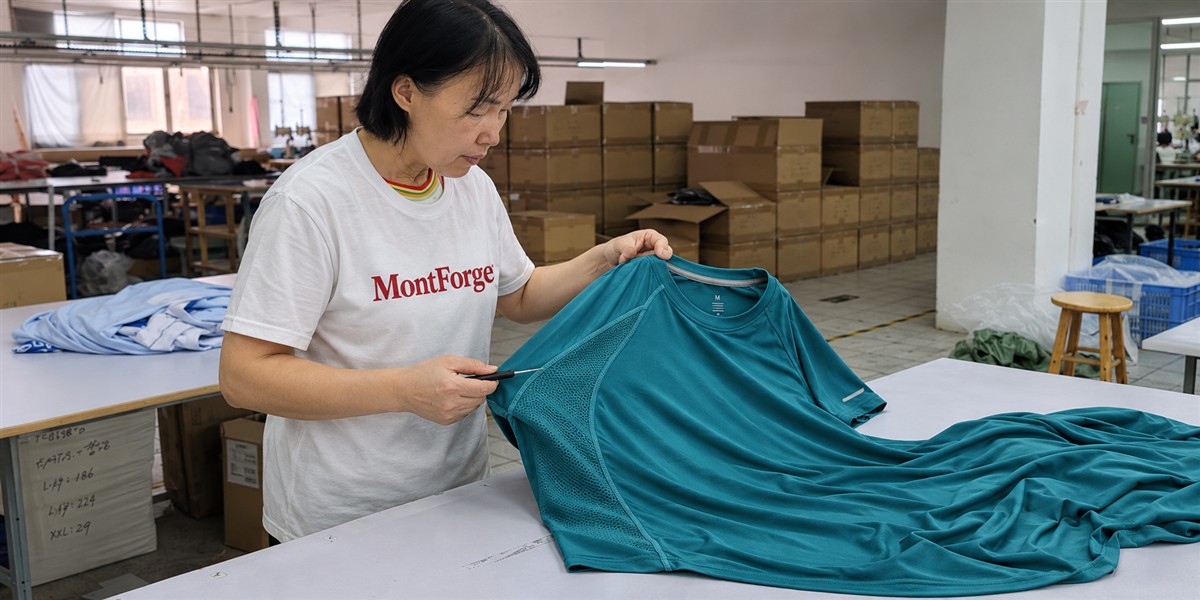
Identify composition, construction, weight and finish for each proposed material. Explain where a panel will sit on the worn garment and inspect its connection to surrounding fabric. Request a garment sample when a mesh swatch alone cannot reveal seam placement or differential stretch.
MontForge’s shorts service presents mesh and lightweight material directions for discussion. Select the actual combination for your project, then agree any supporting tests. Do not turn a category label such as “quick-dry” into an unqualified performance claim without evidence for the selected material and procedure.
How should two-in-one shorts be evaluated?
Approve the shell and liner as one worn garment. The company’s two-in-one sample guidance calls for reviewing relative lengths, stretch directions, attachment points and movement during squats, lunges and running. Those checks make the sample review more useful than examining two loose fabric pieces.
Record liner ride-up, shell pulling and seam pressure, including the size and conditions reviewed. After a revision, repeat affected checks on the combined garment. A comfortable liner does not automatically establish a comfortable shell-and-liner system.
What proves a phone pocket works during running?
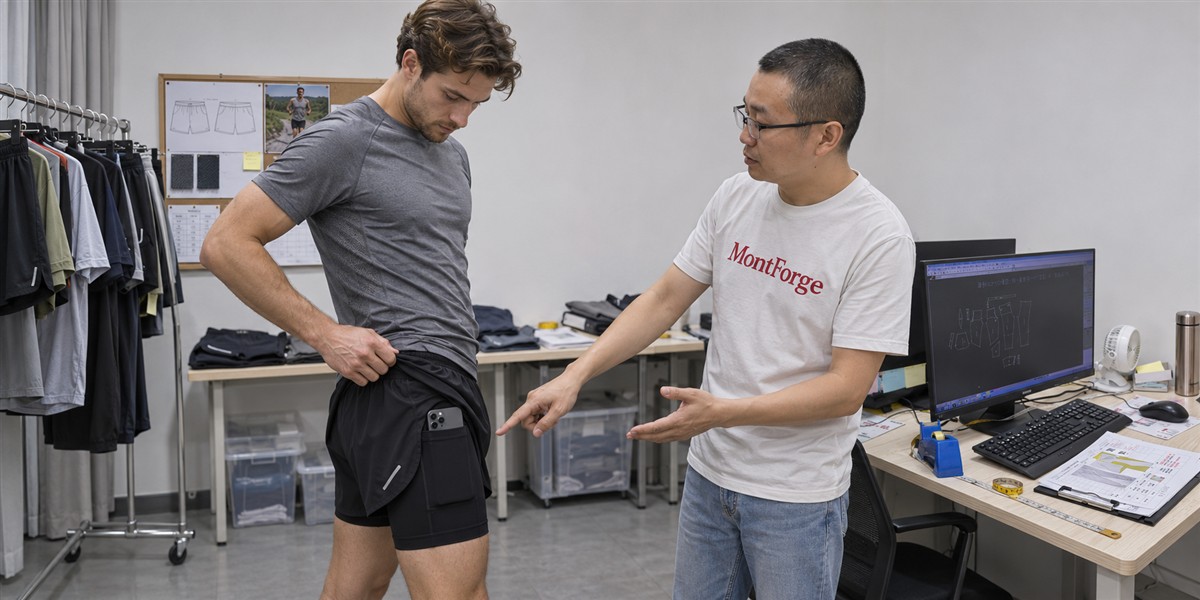
Use a representative device and record its dimensions. Define pocket opening, depth and closure, then review bounce, retention, access and seam loading during the movement expected in use. This follows MontForge’s published phone-pocket validation guidance and gives both parties a repeatable discussion.
A standing photograph cannot establish running retention. Include the intended carried load in the sample review and inspect the pocket bag and attachment after the agreed care procedure. When the device or pocket position changes, reassess the affected behavior.
How should seams, fit and reflective details be reviewed?
Inspect seam locations on the intended wearer while moving, rather than assuming a named seam method guarantees comfort. Note rubbing, pulling, restricted movement and pressure from stacked construction. Compare representative sizes when proportions or feature positions change across the size range.
For reflective details, define placement, dimensions, decoration method and the purpose of the feature. Review appearance and attachment on the actual material. Do not describe a decorative reflective element as certified visibility equipment without the relevant product evidence.
What should a running wear trial record?
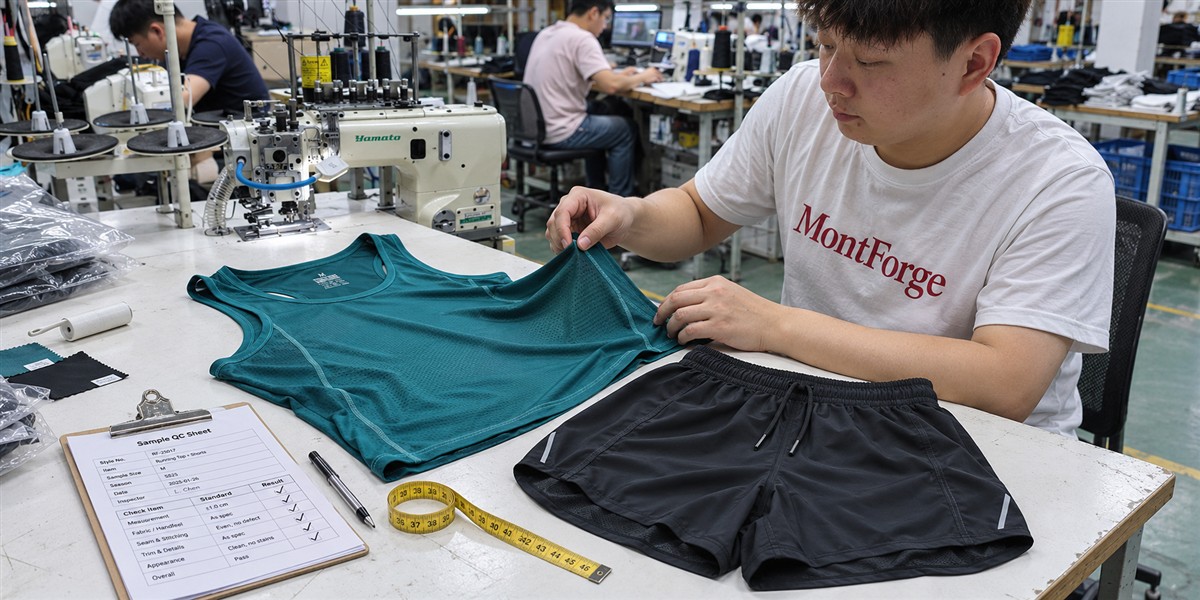
Use a short, consistent record: garment revision, size, wearer feedback, conditions, duration and carried items. Ask participants to identify the location and movement associated with a problem. “Uncomfortable” is less actionable than a description of where a seam rubs or when a pocket shifts.
Inspect the garment again after the agreed care procedure. Record changes in measurements, appearance, pocket attachment and decoration that matter to the brief. Keep observations separate from formal laboratory results and agree acceptance criteria before treating a trial as approval.
How can branding be approved without compromising the garment?
The company’s stretch T-shirt guidance requires trials on the actual fabric and color, reviewing placement, legibility, distortion, hand feel and appearance after agreed washing. Use the chosen process and intended artwork size; a different logo trial may answer a different question.
Retain the approved decorated sample and artwork revision. If artwork crosses a ventilation panel or sits near a pocket opening, review the assembled garment as well as the printed surface. Changes to fabric, placement or coverage should trigger a discussion of which checks must be repeated.
What should you send before requesting a quotation?
Send garment references or a tech pack, intended running use, material direction, size range and quantities by style and color. Include artwork, pocket load, labels, packaging, destination and target date. Identify the features that must remain custom and those you can simplify.
Ask for written confirmation of minimums, sample fees, revisions and schedule dependencies. Connect approval responsibilities through the garment production process. Request a tailored running-apparel quotation with that complete brief.
Frequently Asked Questions
Is a general sportswear catalog enough to qualify a manufacturer?
No. Request relevant samples and explanations of movement, materials and feature validation for your proposed running product.
Can a phone pocket be approved while standing?
Standing inspection is only part of the review. Evaluate the representative load during the expected movement and check attachment after agreed care.
Should the liner and shell be approved separately?
Review their materials separately when useful, but approve fit and movement on the combined two-in-one garment.
Does reflective decoration establish certified visibility?
No. Keep decorative appearance separate from any safety or certification claim requiring specific evidence.
Are published minimums and sample schedules binding for my range?
Obtain written project confirmation. Style-color quantities, material sourcing and development scope can change feasibility and timing.
About MontForge
MontForge develops custom sportswear for brands, including performance T-shirts, tanks, shorts, hoodies and outerwear. Its published development guidance addresses practical questions such as combined shell-and-liner fit, loaded phone-pocket behavior and decoration on stretch fabrics. Buyers can discuss those requirements against their own range brief. Meet the team.