Running Tank Top Manufacturers for New Collections
Written by Chence Chen · Design Director at MontForge
Chence Chen has 15 years of industry experience and leads new style development and design modifications at MontForge.
Choose running tank top manufacturers by reviewing a worn sample, not a flat photograph alone. Define the silhouette, coverage and fabric first, then compare armhole behavior, binding recovery and measurements across the intended sizes. Ask suppliers to identify the actual materials and record revisions before quotation or production approval. MontForge’s tank-development guidance provides three concrete checkpoints: shared measurement references, armhole review during movement, and binding checks on the selected body fabric after agreed care. Use those checkpoints to qualify the proposed construction and confirm your project’s quantities, costs and timing in writing.
Silhouette
Define front, side and racerback references.
Armhole coverage
Observe gaping and exposure during movement.
Binding recovery
Review stretch, waviness and care behavior.
Size consistency
Keep shared measurement and grading references.
Which tank silhouettes fit your runners?
A conventional running tank, a deeper-armhole training tank and a racerback create different coverage and development questions. Start with the wearer and intended activity. Explain whether the collection serves road running, club training or a crossover use, and provide a reference showing the desired front, side and back appearance.
Avoid treating a silhouette name as a complete specification. Two racerbacks can differ in strap position, back width and neckline. Ask the supplier to mark those differences on a drawing before sampling. If the range includes several shapes, define what they should share and which details need separate approval.
What should your supplier shortlist compare?
Compare development responsibility as well as product photographs. Ask which pattern is proposed, which changes are included and what evidence will be supplied. The routes below help organize your shortlist; availability, minimum quantities and schedules need confirmation from each candidate.
| Route | Positioning and scope | Quantity and cost questions | Sample and timing questions | Buyer fit and evidence |
|---|---|---|---|---|
| Existing tank with branding | Established silhouette and material, agreed decoration | Confirm stock by size and color, branding minimums and setup fees | Review the actual decorated garment and availability | Buyers accepting the base fit; retain style and material identity |
| Adapted tank development | Adjust openings, body shape or panel placement | Confirm pattern revisions, fabric and binding requirements | Separate shape review from final-material approval | Brands refining a relevant platform; request dated sample comments |
| Custom collection development | Coordinate silhouette, grading, panels and branding | Confirm minimums for each style, color and component | Agree development stages and representative size reviews | Brands needing a distinct range; retain the complete specification |
Which measurements need approval before sampling?
MontForge’s tank measurement FAQ identifies chest width, body length, armhole depth, shoulder width and neckline dimensions. Turn these into a measurement diagram rather than sending an unexplained list of numbers. State how the garment lies and where the tape begins and ends.
For a racerback, define back-panel width and the position where straps join. Keep these references with the pattern and sample record. When discussing a revision, name the affected dimension instead of asking for an opening to be simply “more athletic.”
How should armhole coverage be evaluated?
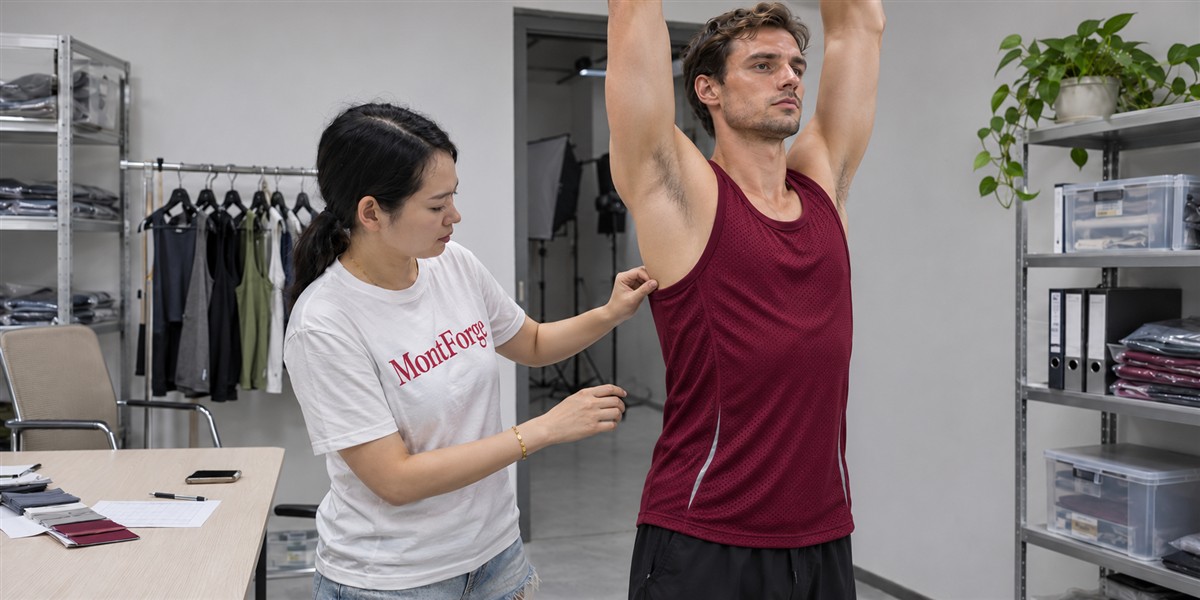
Evaluate the intended fit model while standing, reaching overhead and moving the arms forward. The company’s armhole FAQ calls attention to side-body exposure, gaping and restriction at the front opening. Compare those observations with the reference silhouette before changing the pattern.
Record the size, sample revision and movement associated with each comment. An opening can look acceptable at rest but pull or reveal more than intended during reach. Decide whether that behavior suits the product positioning; do not assume every running customer wants the deepest possible armhole.
What should a binding sample demonstrate?
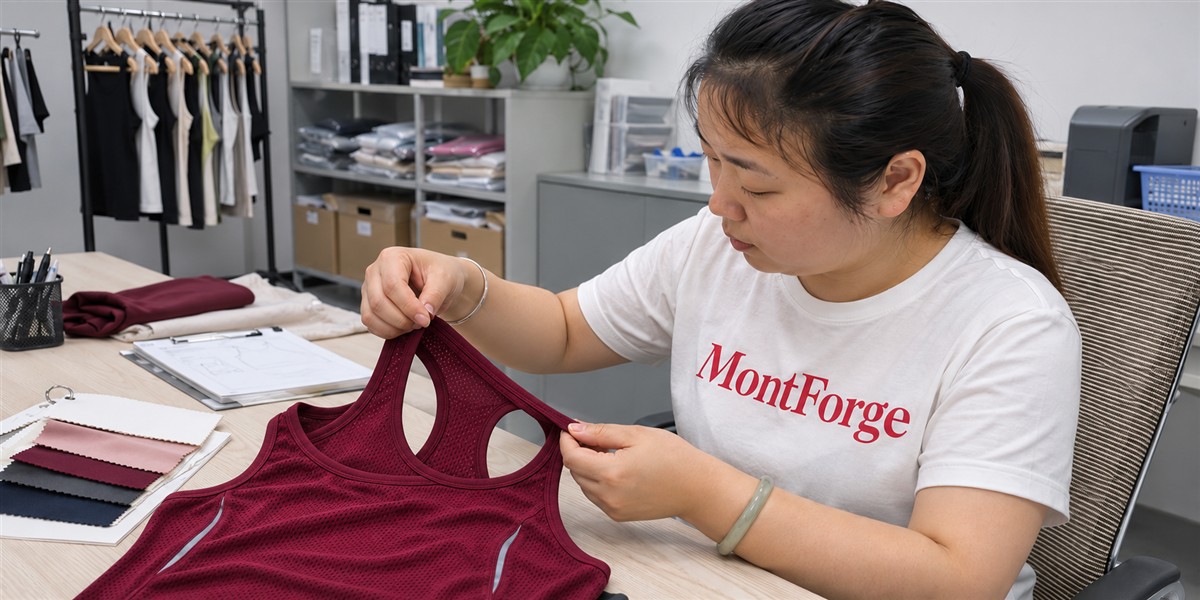
The opening should look smooth while retaining the stretch and recovery needed for dressing and use. Review binding width, seam bulk and waviness on the actual body fabric. Ask the supplier to identify the binding material and construction rather than approving an attractive edge without knowing how it was made.
Reassess the opening after the agreed care procedure. MontForge’s binding guidance treats this as part of approval and links the accepted construction to the tank specification. If either material changes, identify the affected checks before assuming that the previous binding result still applies.
How should mesh and joined materials be reviewed?
Inspect the assembled panel arrangement, including how different materials stretch at their joins. Review where seams sit on the body and whether mesh placement remains appropriate during movement. A loose mesh swatch can support material selection but cannot demonstrate the completed garment’s fit or seam feel.
Identify composition, construction, fabric mass and finishes for each proposed material. Define any performance claim and the evidence needed to support it. Words such as lightweight or breathable should start a technical discussion, rather than replace an agreed method of assessing the selected combination.
How should shoulder and back construction be checked?
Review straps and shoulder sections through the movements expected in use. Note shifting, pressure or neckline movement and identify whether the issue comes from shape, material or the opening construction. For a racerback, inspect the back junction as well as the front view.
If runners use a vest or backpack, include it in the sample review and note contact areas. Do not promise universal freedom from rubbing based on a seam name or a single photograph. Record practical observations on the intended outfit and agree which changes require another worn sample.
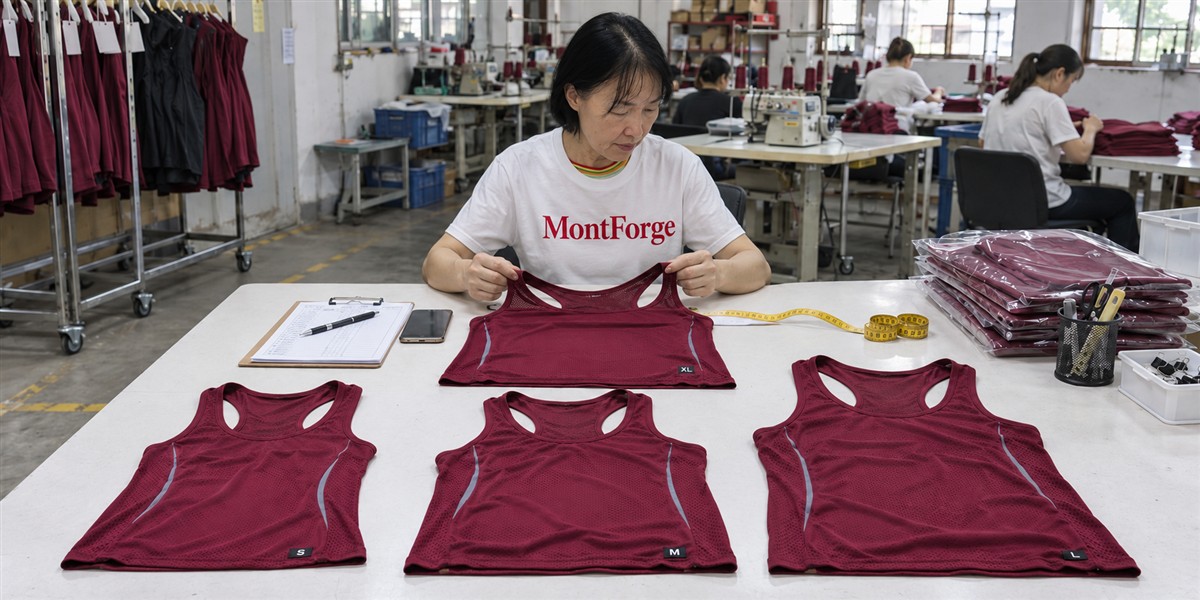
How can brands compare samples across sizes?
Establish a common size reference and grading rules before comparing samples. Ask which sizes need physical review when armhole exposure, strap position or back-panel proportions may change. A sample in one size does not settle the appearance and movement of every size in the collection.
Separate body measurements from artwork dimensions. Specify placement references and any size-specific artwork variants without silently changing the approved fit. Keep the approved combination identifiable so that a later logo adjustment does not obscure which garment measurements remain valid.
What should washing and appearance checks include?
Agree the care procedure, preparation and measurement points before comparing results. Review body dimensions, opening shape, seam appearance and binding waviness after treatment. Record what changed and whether it meets the criteria agreed for this particular construction.
Inspect decoration on the finished tank when present, especially where placement approaches a binding or panel join. Retain the physical sample and artwork revision. If a material or process is substituted, ask which earlier approvals remain applicable and which need repeating before production release.
How should a new collection control cost and timing?
List development fees, revisions, materials, decoration and packing separately. Confirm quantities by style and color rather than treating the collection total as proof that every minimum is met. A common body fabric does not automatically remove separate requirements for bindings, trims or colors.
Ask what must be approved before each schedule stage begins. Distinguish sample review, material sourcing, production and delivery. Compare the complete development scope across quotations and resolve substitutions or exclusions before paying for a sample that cannot represent your intended product.
How can MontForge develop your tank range?
Use the custom tank top development service to discuss silhouette, material and opening construction together. Send front, side and back references, target measurements, intended running use and quantities by style and color. Explain which details define your range and which you can simplify.
Connect sample comments with the garment production process. Request written confirmation of scope, minimums, sample charges and timing. Before bulk approval, retain one dated package linking materials, fit, binding, decoration and accepted revisions.
Frequently Asked Questions
Can I select a manufacturer from flat tank photographs?
Use photographs for initial discussion, then request identifiable samples and a worn review for coverage and movement.
Is a deeper armhole always better for running?
No. Match exposure and movement to the intended silhouette and wearer, then evaluate gaping and restriction.
Should binding be approved on a substitute fabric?
A preliminary trial can support discussion. Approve the final opening on the intended body material and construction.
Does a racerback need additional measurements?
Yes. Define back-panel width and strap-junction position alongside the usual body and opening measurements.
What should my first inquiry include?
Send references or a tech pack, fabric direction, size range, quantities by style and color, branding, delivery destination and target date.
About MontForge
MontForge develops custom sportswear for brands, including tank tops, performance T-shirts, shorts and coordinated apparel. Its published tank guidance addresses measurement references, moving armhole coverage and binding approval. Buyers can use those topics to define a project discussion and confirm the proposed development scope. Meet the MontForge team.