Running T-Shirt Suppliers for Performance Brands
Written by Chence Chen · Design Director at MontForge
Chence Chen has 15 years of industry experience and leads new style development and design modifications at MontForge.
Select running T-shirt suppliers by comparing the same garment brief, then checking fit during movement, finished-garment wash behavior and decoration on the proposed fabric. Ask for identifiable samples and revision records rather than relying on lightweight fabric claims. Define the runner, conditions and intended fit before requesting prices. MontForge’s published T-shirt development guidance provides a practical sequence: document body and sleeve measurements, keep artwork changes separate from fit changes, and review the completed shirt after agreed washing and drying. Confirm quantities, materials and production timing for your particular project.
Material identity
Compare the actual knit and panel combination.
Movement fit
Review sleeves, neckline and equipment contact.
Care stability
Record dimensions and twisting after agreed care.
Decoration approval
Keep artwork separate from garment measurements.
What should a running T-shirt supplier be able to develop?
A useful supplier should explain how the proposed shirt addresses your running use. Discuss sleeve construction, neckline shape, body ease, ventilation placement and branding together. Ask what an existing pattern can accommodate and which changes require a new sample. A broad sportswear catalog does not answer those questions for a particular garment.
Request a relevant physical sample with its fabric identity and development status. Establish whether it demonstrates construction, fit or the exact proposed production combination.
How should you define the intended runner and use?
Describe the expected activity, conditions and fit preference. A relaxed club-training shirt and a closer-fitting race shirt may require different decisions. Include whether the wearer uses a running vest or backpack, because shoulder, upper-back and side-panel contact should be reviewed on the complete outfit.
Provide an identified reference garment and explain what you want to retain or change. Separate measurable requests from impressions: “more freedom at the sleeve opening” gives a clearer development question than “more technical.” Agree who will evaluate the sample and how their feedback will be recorded.
Which sourcing route should your shortlist compare?
Compare the scope behind each quotation. Confirm the same intended quantity, decoration and delivery requirements with every candidate. The routes below organize the conversation; they do not establish that every supplier offers each option or accepts the same minimums.
| Route | Positioning and customization | Quantity and cost questions | Sample and schedule questions | Suitable buyer and evidence |
|---|---|---|---|---|
| Existing shirt with branding | Established body and sleeve shape; agreed logo | Confirm stock, style-color quantities and setup fees | Request the actual decorated base garment | Buyers accepting an existing fit; identify the garment and fabric |
| Adapted performance pattern | Adjust fit, sleeve or ventilation details | Confirm revision charges and material requirements | Separate shape review from final-material approval | Brands refining a relevant platform; retain dated revisions |
| Custom running T-shirt | Coordinate pattern, materials, panels and branding | Confirm fabric, trim and production minimums | Agree development stages and dependencies | Brands needing a specific product; retain the complete approval package |
Which fabric specifications should you compare?
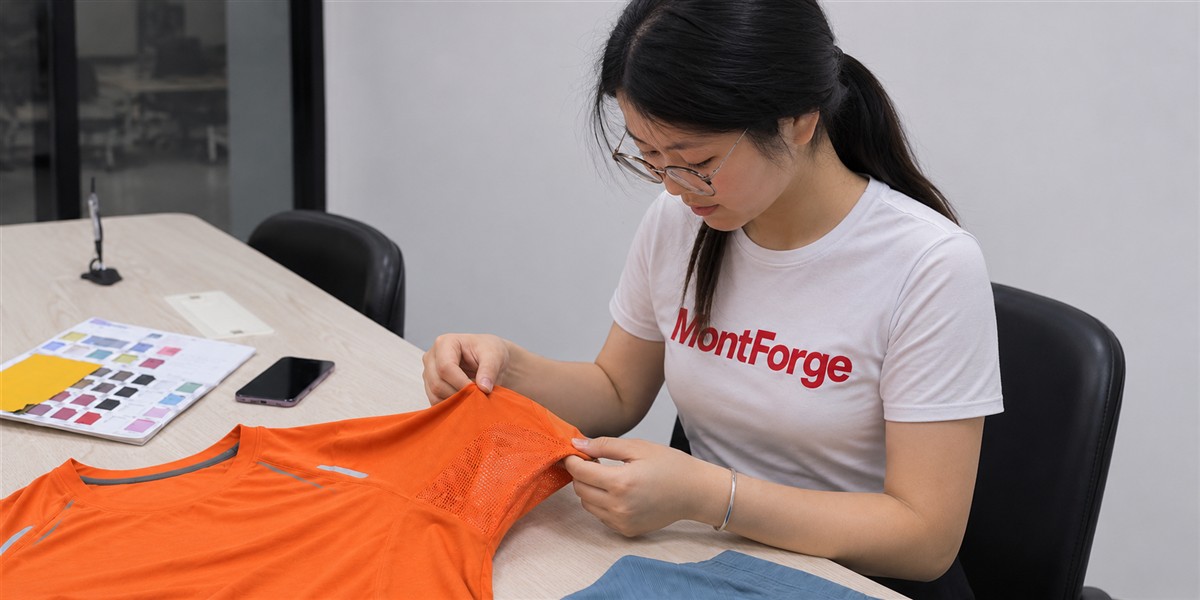
Request composition, knit construction, fabric mass, finish and the relevant stretch direction. Ask which material reference will be used for sampling and whether it is expected to remain available for production. A lower stated GSM is not automatically the best choice for your intended coverage, appearance or construction.
Define any performance claim and the evidence required to support it. If quick drying or moisture management matters to your brief, agree an applicable assessment method and the exact material being assessed. Do not treat a supplier’s fabric family name as a test result for every color or finished garment.
How should mesh and ventilation panels be reviewed?
Review panel location on a worn shirt, including where the join falls during arm movement. Inspect whether adjacent materials behave differently when stretched or after care. A mesh swatch can help choose texture, but it cannot show seam pressure or the appearance of a completed panel arrangement.
For a running-vest product, review the shirt with the intended equipment. Record contact areas rather than assuming an attractive panel map will remain useful beneath straps. Ask the supplier to identify any material substitution before the next sample so that affected checks can be repeated.
What belongs in the fit-development tech pack?
MontForge’s fit-development FAQ identifies body fit, sleeve shape, measurement points and grading rules as inputs before the first sample. Translate your reference into chest width, body length, shoulder width, sleeve length and opening, and neckline dimensions. State how each measurement is taken.
For raglan or drop-shoulder designs, mark the seam lines clearly and retain the reference garment used to explain the fit. Record changes against one specification version. When artwork dimensions change, keep the garment measurements separate; increasing a print should not silently authorize a wider or longer shirt.
How should fit and seam comfort be checked?
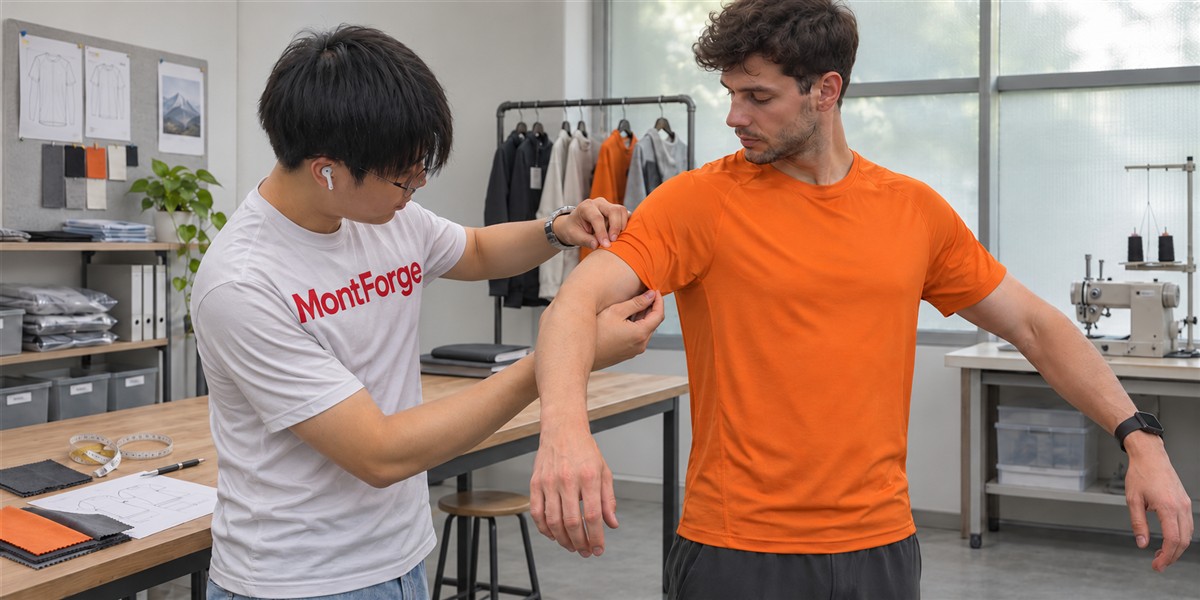
Review normal running arm swing, forward reach and torso rotation on the intended wearer. Observe underarms, shoulder joins, sleeve openings and the neckline. Note whether the hem lifts, the body pulls or a seam presses against the skin. Record the size and garment revision associated with each observation.
Repeat relevant movements with a running vest when it forms part of the intended use. Check shoulder, collar and upper-back contact rather than promising universal “chafe-free” performance.
How can brands compare supplier samples fairly?
Use the same target measurements, intended size, artwork and evaluation sequence. Identify substitutions in fabric or trims before comparing results. If two samples differ in both pattern and material, document those differences instead of attributing every change in feel to workmanship.
Separate fit comments from appearance preferences and process defects. Request a response showing which revisions the supplier accepts, which need clarification and which affect price or timing.
What should washing and drying approval demonstrate?
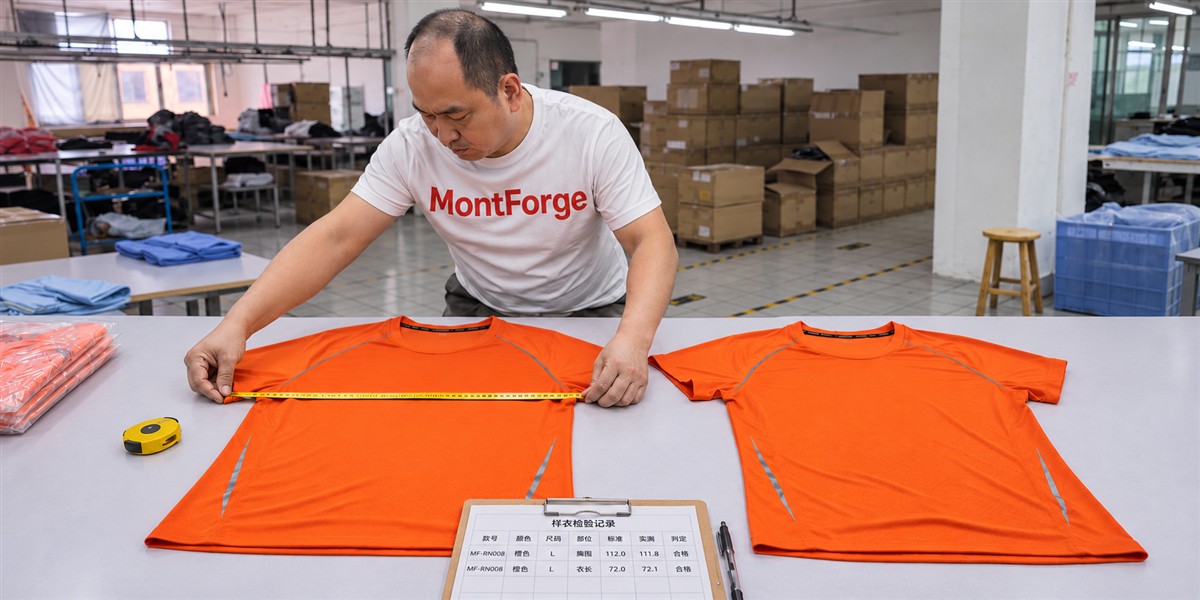
The company’s wash-approval guidance calls for recording length, chest width, sleeve dimensions and side-seam alignment before and after an agreed care procedure. Check twisting alongside dimensional change. Use the same measurement points and preparation method so the comparison remains meaningful.
Pre-shrunk fabric does not replace reviewing the finished garment. Joined materials, neckline trims, seams and decoration can affect the result. Agree limits for the actual construction and confirm any pattern allowance or material change before the next approval. Avoid applying one universal shrinkage percentage to every running knit.
How should logos and reflective details be approved?
Trial the proposed artwork on the actual shirt fabric and color. Review legibility, placement, distortion, hand feel and appearance after agreed care. For a heat-transfer proposal, discuss adhesion and cracking; for embroidery, review reinforcement and puckering. Select checks appropriate to the proposed method rather than assuming one process suits every knit.
Keep the artwork revision linked to the decorated sample. Specify reflective placement and intended purpose separately from ordinary branding. Decorative reflective details do not by themselves establish certified visibility. Any safety or performance claim needs evidence applicable to the finished product and its intended market.
What should you send to MontForge for a quotation?
Start with the performance T-shirt development service and send a tech pack or identified reference garment. Include intended running use, material direction, fit changes, size range, quantities by style and color, artwork, labels, packing, destination and target date.
Ask for written confirmation of development scope, sample charges, minimums and schedule dependencies. Use the garment production process to clarify approval responsibilities. Before bulk release, connect the final material, garment measurements, decoration and care-review results to one approved specification.
Frequently Asked Questions
Is the lightest running T-shirt always the best option?
No. Review coverage, construction, fit, material behavior and decoration alongside fabric mass for the intended use.
Can I approve running fit from flat measurements alone?
Measurements establish a reference, but movement and equipment contact need review on a worn sample.
Does pre-shrunk fabric remove the need for a garment wash test?
No. Inspect the completed shirt, including joins, trims and decoration, after the agreed washing and drying procedure.
Should larger artwork change the shirt measurements?
Treat artwork and garment fit as separate specifications. Review and approve any proposed fit change independently.
What makes two supplier quotations comparable?
Use the same materials, construction, quantities, branding and approval scope, with substitutions and exclusions identified in writing.
About MontForge
MontForge develops custom sportswear for brands, including performance T-shirts and coordinated apparel. Its published T-shirt guidance addresses measurement-led fit development, finished-garment wash review and decoration on stretch fabrics. Buyers can use these topics to structure a project discussion and confirm the proposed development scope. Meet the MontForge team.