Is Your Sportswear MOQ Per Style, Color or Total Order?
Written by Chence Chen · Design Director at MontForge
Chence Chen has 15 years of industry experience and leads new style development and design modifications at MontForge.
Your sportswear MOQ is only useful when the supplier states what it applies to: each style, each colorway, a material purchase or the entire order. A collection total does not automatically satisfy every requirement, and mixed sizes need an agreed breakdown. Build a style-color-size matrix, then confirm garment, fabric, decoration and trim minimums separately. MontForge’s MOQ guidance specifically recommends this written quantity matrix and warns that available fabric does not remove every other minimum. Use the confirmed conditions to decide whether to consolidate colors, simplify customization or revise the order before committing funds.
Define the unit
Style, colorway or another purchasing basis?
Check every layer
Garments, fabrics, decoration and trims.
Choose an adjustment
Consolidate, simplify or obtain a revised quote.
What exactly does the quoted MOQ apply to?
Ask the supplier to finish this sentence: “The minimum is ___ units for each ___, subject to ___.” Record whether the rule covers a garment style, a style-color combination or another purchasing unit. Avoid comparing two quoted numbers until both use the same definition.
A style may also contain variations that the supplier treats separately. Different fabric constructions, linings or decoration packages can change the proposed production arrangement. Ask which changes create a separate style or component requirement rather than assuming your internal collection name controls the quotation.
Why can the collection total be misleading?
Consider a hypothetical order of 300 garments: 150 T-shirts and 150 shorts, each split equally across three colors. Each style-color combination contains only 50 garments. If a hypothetical supplier requires 100 per style-color, the collection total meets neither the individual color requirement nor the intended assortment.
These numbers illustrate the arithmetic, not MontForge’s acceptance policy. The decision is whether to reduce colors, adjust quantities or request a different development route. Do not raise the order automatically before comparing the commercial consequences of each option.
Can sizes be mixed within one colorway?
Ask whether the confirmed style-color minimum can be divided across sizes, and whether any individual size has a separate restriction. Submit the actual size allocation. “Mixed sizes” is incomplete when the supplier has not seen the range and quantities you intend to buy.
For example, 20 small, 40 medium, 40 large and 20 extra-large pieces total 120 in one colorway. That arithmetic does not establish supplier acceptance. Confirm grading scope, size availability and any sample requirements before treating the breakdown as ready for production.
How do you build a useful order matrix?
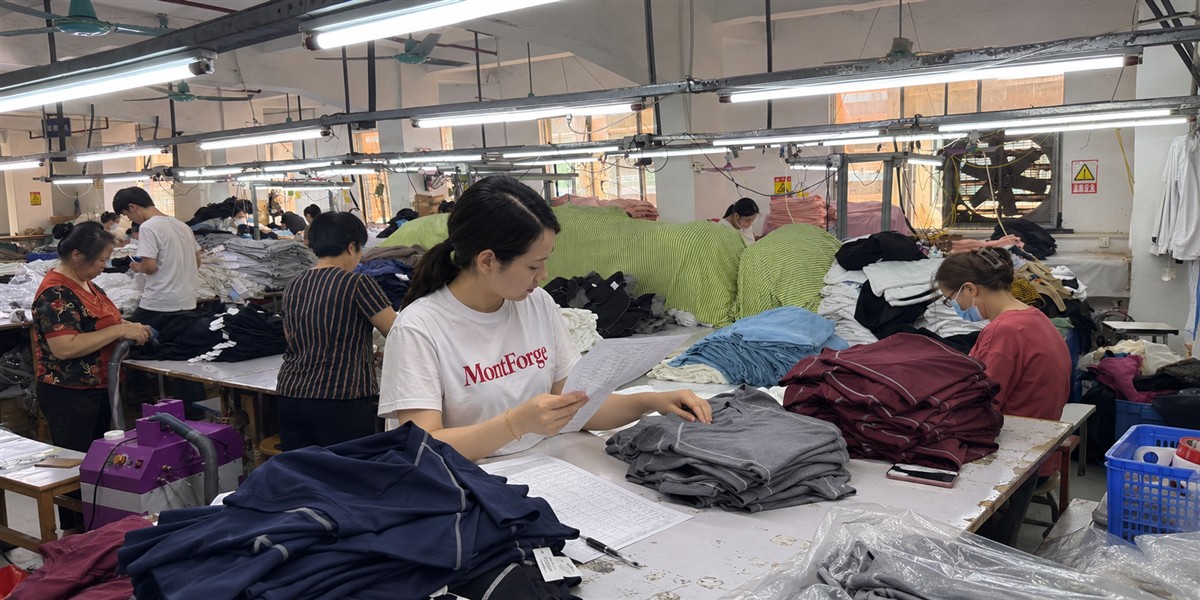
Give every style and color a separate row, with size quantities adding to a row total. Add the supplier-confirmed minimum and the unresolved condition beside it. The following example uses a hypothetical 100-piece style-color rule solely to show how a shortfall becomes visible.
| Style and color | S | M | L | XL | Total | Illustrative minimum | Decision |
|---|---|---|---|---|---|---|---|
| Training tee, navy | 20 | 40 | 40 | 20 | 120 | 100 | Quantity meets example rule; confirm other conditions |
| Training tee, gray | 10 | 15 | 15 | 10 | 50 | 100 | Consolidate, increase or request alternative |
| Running shorts, navy | 20 | 30 | 30 | 20 | 100 | 100 | Confirm liner, trims and size allocation |
| Running shorts, burgundy | 5 | 10 | 10 | 5 | 30 | 100 | Reconsider colorway before commitment |
The example totals 300 pieces, but two rows remain below the illustrative minimum. Keep quantities and requirements separate so a revised allocation can be checked without losing the supplier’s original conditions.
Which fabric minimums need separate confirmation?
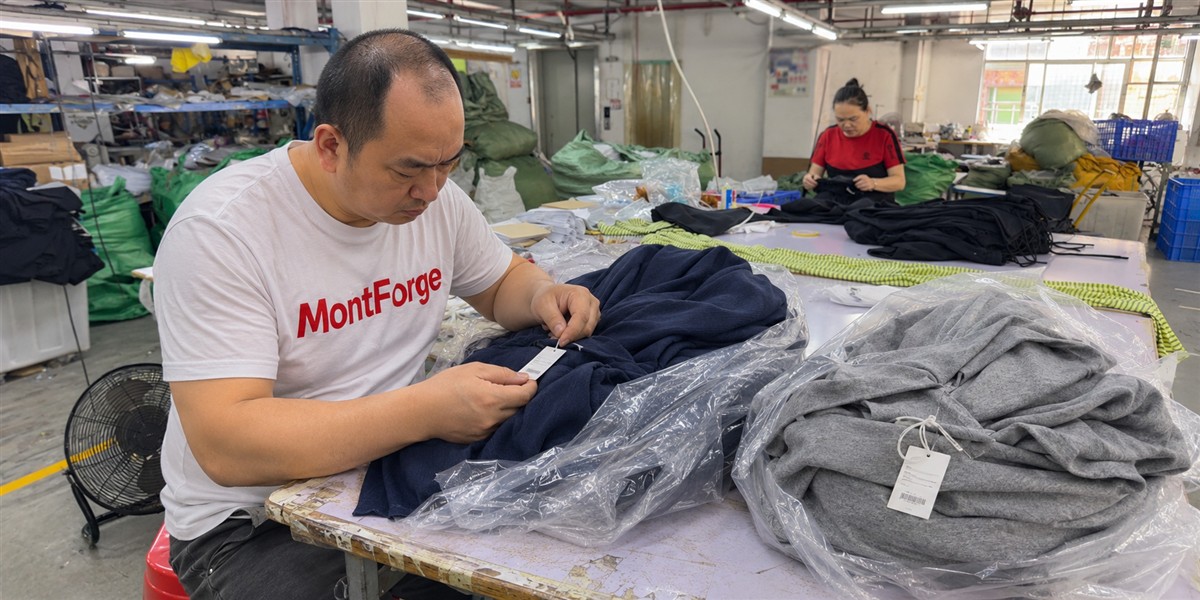
Ask whether the proposed material is available stock, an existing production color or a new custom purchase. Confirm its purchasing unit and how the requirement relates to usable garment quantities. Fabric minimums may be expressed differently from finished-garment minimums, so request the supplier’s calculation rather than converting by guesswork.
Shared fabric can be a discussion option across compatible styles, but it does not automatically make their construction or color matching interchangeable. For a coordinated top and shorts, review the actual material combination and outfit appearance before approving a shared-material simplification.
What about logos, labels and packaging?
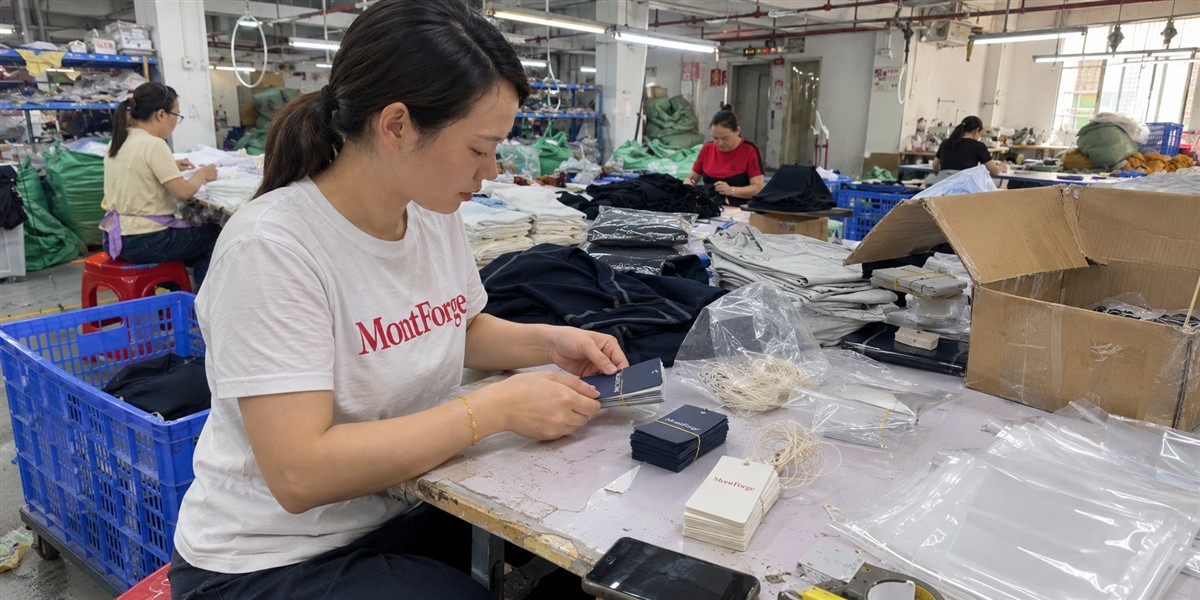
List decoration, neck labels, care information, hangtags and bags as separate quotation lines where relevant. Ask whether a component minimum creates unused stock, a setup charge or a required quantity increase. Identify who owns and stores any remaining branded components and how a future reorder would use them.
Do not assume a small garment run includes unrestricted private-label packaging. If a standard trim or simpler decoration is proposed, review the effect on the product and brand presentation. Approve the revised scope in writing instead of allowing an unrecorded substitution to solve the quantity issue.
When can stock materials help a smaller order?
MontForge’s MOQ FAQ explains that an existing fabric color can avoid a new dyeing minimum while leaving sewing, decoration and trim requirements unresolved. Ask which stock reference is available, how much usable material remains and whether that reference is expected to be reorderable.
Choose stock material when the actual sample meets your product needs and the availability conditions suit the launch. If the fabric defines your product’s fit or performance, review it before accepting a lower quantity.
Should you reduce colors or pay a setup charge?
Reduce colors when the assortment still serves your customer and fewer colorways resolve the actual constraint. Consider a separate setup charge when the supplier confirms that this is an available alternative.
Compare complete cash requirements, not unit price alone. Include development, materials, decoration, packing and delivery-related items where applicable. A larger quantity with a lower unit price can require more money and leave more inventory. Use your own launch plan to judge that tradeoff.
What should your written approval checklist contain?
| Item | Buyer input | Supplier confirmation | Evidence and acceptance | Owner or revision |
|---|---|---|---|---|
| Garment quantities | Style-color-size matrix | Minimum basis and allowed size mix | Accepted rows and unresolved exceptions | Buyer approver; dated matrix |
| Materials | Fabric and color references | Stock or custom requirements | Approved references and availability conditions | Material contact; specification version |
| Branding and trims | Artwork and component list | Setup costs and separate minimums | Approved decoration and trim samples | Branding approver; artwork revision |
| Packing | Label and bag requirements | Included scope and component quantities | Accepted packing reference | Order contact; packing version |
| Production release | Final scope and target date | Dependencies and schedule | Outstanding decisions closed before affected stage | Named release approver |
Keep open conditions visible. A supplier’s reply confirming the total order should not silently close an unresolved material or colorway requirement. Ask for a revised quotation when the matrix or customization package changes.
What should MontForge confirm for your project?
Send the quantity matrix with product references or a tech pack, target market, branding and delivery requirements. The company’s project-brief FAQ asks buyers to confirm development scope, minimums, sample charges, revision terms and schedule. Connect those answers to the same version of the order matrix.
Use the sportswear development service to discuss alternatives and the garment production process to define approvals. Published starting quantities describe particular offerings; they do not replace written acceptance of your materials, colorways, sizes and customization.
How should you make the final decision?
- Proceed with the proposed breakdown when every applicable minimum and condition is confirmed.
- Consolidate colors when the shortfall is tied to individual colorways and the revised range still works.
- Evaluate stock materials or shared trims when the supplier identifies them as feasible alternatives.
- Requote after changes to quantities, materials or branding rather than relying on an outdated unit price.
- Keep the affected purchase pending while a requirement or responsibility remains unresolved.
Frequently Asked Questions
Does ordering more pieces overall solve every MOQ issue?
No. Check the separate style-color, material, decoration and trim requirements against your actual allocation.
Can I mix sizes freely?
Submit the exact size breakdown and obtain acceptance.
Does stock fabric guarantee a small garment minimum?
No. It can address a material constraint while other production or component minimums remain.
Are setup charges always an alternative to buying more?
No. Ask whether that option exists and exactly which requirement it resolves.
Which MOQ number should I use from the website?
Use published information to start the discussion, then obtain a project-specific written quotation with a defined quantity basis.
About MontForge
MontForge develops custom sportswear for brands, including performance tops, shorts and coordinated apparel. Its published guidance recommends confirming quantities by style, color and size and checking material and customization conditions separately. Buyers can discuss a focused launch assortment against their own technical brief. Meet the MontForge team.