Factory Direct vs Sourcing Agent for Your First Activewear Order
Written by Chence Chen · Design Director at MontForge
Chence Chen has 15 years of industry experience and leads new style development and design modifications at MontForge.
Factory-direct sourcing can suit a first activewear order when you can manage specifications, sample decisions and production follow-up. A sourcing agent may be useful when you need supplier discovery, translation or coordination across factories. Compare the work actually included, the complete cost and who answers for each deliverable. Neither route removes the need for an approved garment specification and a clear inspection process. MontForge’s published development guidance offers a practical direct-sourcing benchmark: submit a complete brief, confirm project terms, and link the approved sample to dated measurements, materials, artwork and packing instructions.
Factory direct
A focused relationship with buyer-led approvals.
Sourcing agent
Defined discovery and coordination services.
What does factory-direct sourcing require from you?
Direct communication gives the buyer a shorter path to the manufacturing contact, but it also leaves coordination tasks with the buyer unless separately agreed. Identify who will prepare the technical brief, consolidate sample comments, approve changes and track outstanding decisions.
For activewear, the brief should connect fit and materials with intended movement and decoration. A training top and lined running shorts have different development questions. Ask the proposed manufacturer to explain its scope for each style, rather than assuming a successful conversation about one garment covers the whole collection.
What should a sourcing agent actually deliver?
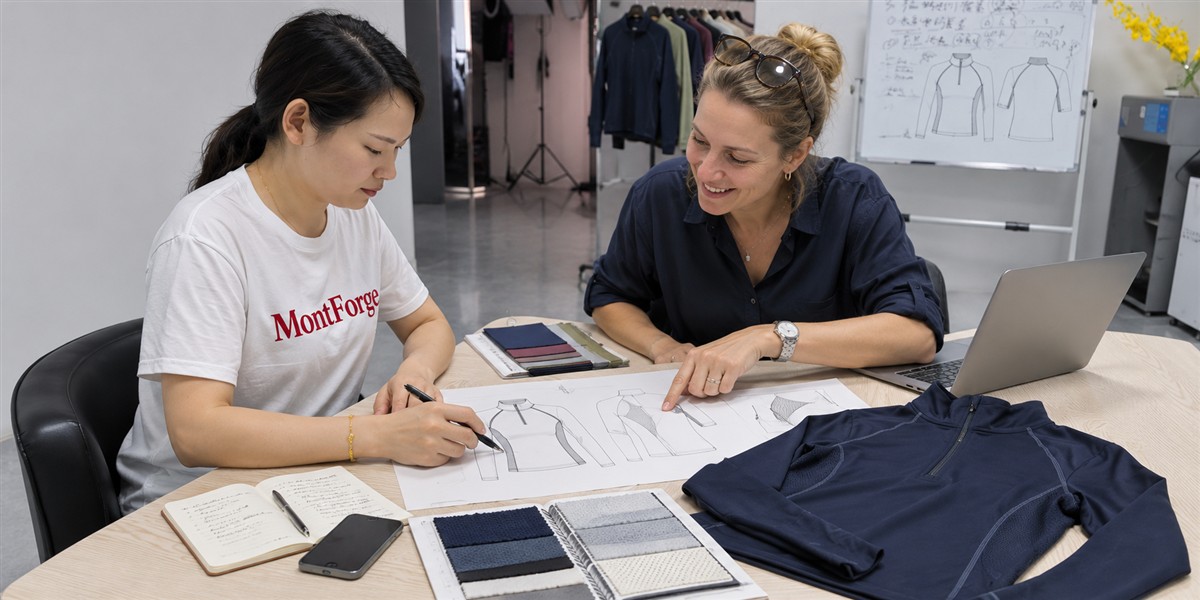
Ask an agent for a written list of services and tangible outputs. Supplier search might produce a shortlist with verification records; sample coordination might produce consolidated comments and revision tracking. Translation, factory visits, inspection coordination and shipping support should each have a defined scope if you expect them.
Clarify who performs the work. Arranging an inspection is different from conducting one, and forwarding photographs is different from checking measurements against a specification. Ask which activities are included in the fee, which are charged separately and what the agent needs from you to complete them.
How do the two sourcing routes compare?
Use the same garment brief and quantities for both proposals. The table compares responsibilities to establish before ordering, rather than assigning a universal winner. Commercial arrangements vary, so request written answers for your particular order.
| Comparison point | Factory direct | Sourcing agent | Evidence to request |
|---|---|---|---|
| Supplier discovery | Buyer identifies and qualifies the proposed partner | Agent searches within an agreed scope | Relevant samples, business identity and verification notes |
| Technical communication | Buyer and factory coordinate specifications | Agent may translate and consolidate instructions | One dated brief and traceable sample comments |
| Cost basis | Garment quote plus agreed development and service costs | Product quote plus agent fees or other disclosed charges | Itemized scope, exclusions and payment milestones |
| Minimum quantities | Confirm by style, color, material and component | Agent asks factories; aggregation must be explained | Written project-specific feasibility confirmation |
| Timing | Buyer tracks approvals and factory dependencies | Agent may coordinate several parties | Milestones, owners and unresolved inputs |
| Production location | Buyer asks where sampling and bulk occur | Agent should disclose the proposed arrangement | Named stages, locations and change-notification process |
| Quality follow-up | Agree factory checks and any external inspection | Define agent checks and independent inspection separately | Criteria, reports and corrective-action responsibilities |
| Best fit | Buyer able to manage a focused supplier relationship | Buyer needing defined local or cross-factory coordination | Demonstrated ability to deliver the required work |
Which cost items should you compare?
Compare the complete order scope, not only the quoted garment price. Request sample charges, pattern revisions, decoration setup, labels, packing, inspection and delivery-related items where applicable. Identify what is excluded.
For an agent, ask how compensation is calculated and whether any supplier-paid commissions or other commercial relationships affect the proposal. Request clarity rather than assuming every agent uses the same model. Compare the service value with the work your own team would otherwise perform or purchase separately.
Does either route guarantee smaller minimums or faster delivery?
No sourcing route alone establishes your order’s feasibility. Style-color quantities, fabric purchases, trims and decoration requirements still need confirmation. If an agent proposes combining orders or using existing materials, ask what that means for your product identity, availability and approval process.
Request a schedule that separates sampling, buyer review, material sourcing, production and delivery. Identify the inputs that start each stage. An agent can help coordinate decisions, but cannot make an unapproved sample into a production-ready garment merely by promising an earlier completion date.
Who controls samples and technical revisions?
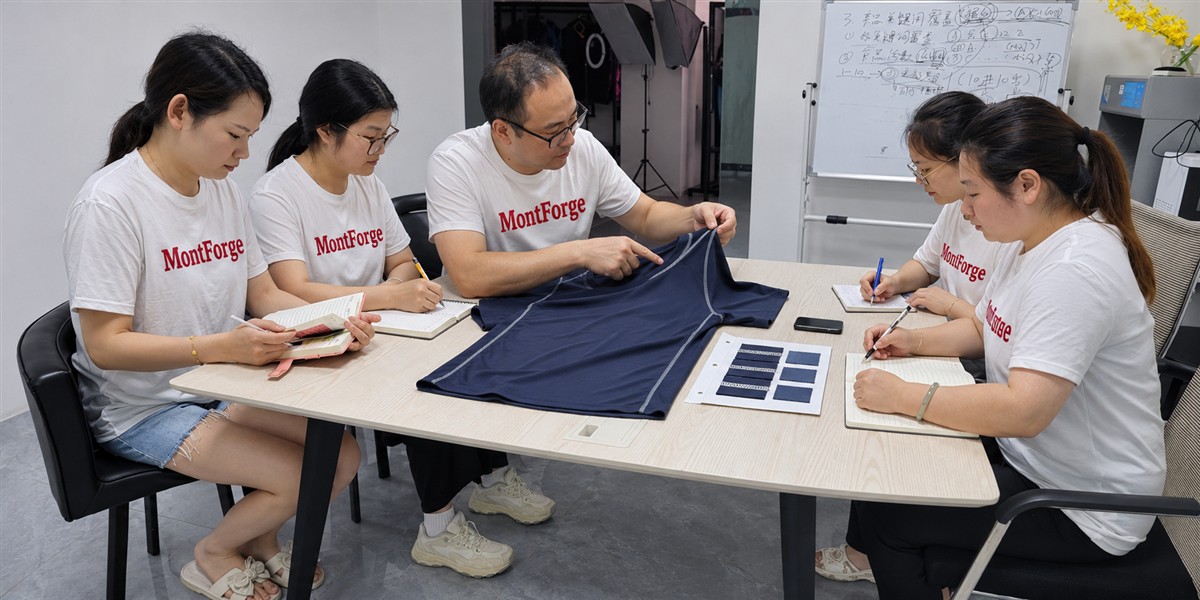
Name one buyer-side approver and establish how comments reach the production team. Keep the physical sample, measurement specification and artwork under linked revision references. If an agent consolidates feedback, review that consolidated instruction before it authorizes changes.
MontForge’s sample-to-bulk guidance emphasizes resolving conflicting files and comments before release. That is especially relevant when a collection includes different materials or several sample rounds. Ask who retains the approved sample and how later changes will be communicated to every party responsible for the order.
How should production locations and subcontracting be discussed?
Ask where sampling and bulk production will take place and who controls each stage. Do not assume an office, showroom or sample room is the bulk production location. Record the proposed arrangement and ask for changes to be disclosed before the affected production begins.
The company’s published guidance recognizes that sample and bulk locations may differ. The practical question is how the approved reference, specification and quality responsibilities transfer between them. Apply the same question to a direct factory proposal and an agent-managed proposal instead of treating either business label as proof.
Who is responsible when finished garments differ from the sample?
Before ordering, identify who receives the issue report, coordinates investigation and proposes corrective action. Agree inspection criteria and the process for handling nonconforming goods. Distinguish the manufacturer’s production responsibility from any agent service commitment; do not assume they are interchangeable.
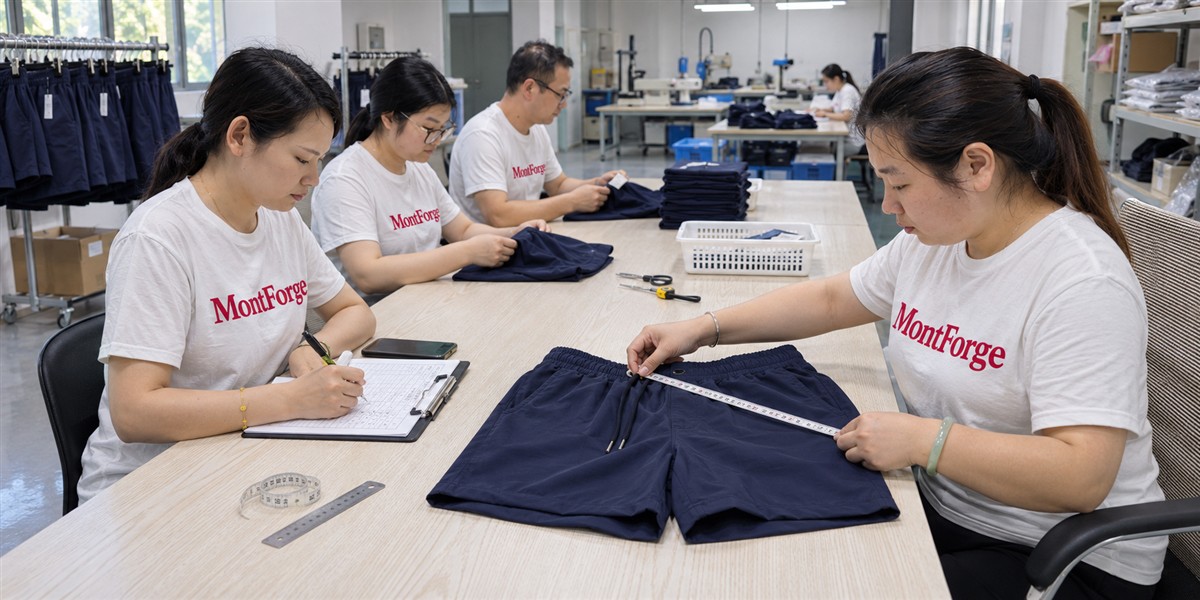
If several differences appear, document each separately. MontForge’s guidance recommends identifying color, measurements, label dimensions or placement against the approved reference, with affected quantities and consistent photographs. Use that method to make the review actionable rather than relying on one photograph to describe the whole order.
Which route fits a focused first collection?
Direct sourcing is worth evaluating when your range is focused, the proposed partner has relevant development experience and your team can manage approvals. You still need clear specifications and a plan for quality follow-up.
An agent is worth evaluating when supplier discovery, local communication or coordination across several production partners creates work your team cannot cover. Ask for evidence of those particular services.
How would a direct project work with MontForge?
Start with the custom sportswear manufacturing service. The company’s project-brief FAQ requests product types, references or a tech pack, target market, estimated style-color quantities, branding and target delivery date. Ask for confirmation of scope, minimums, sample charges, revision terms and schedule.
Use the garment production process to discuss approval responsibilities. For a first range combining tops and shorts, resolve the product-specific material and fit questions separately, then link the accepted combination to the final specification. This provides a concrete basis for comparison with an agent’s coordination proposal.
What should your selection checklist say?
- Consider direct sourcing if you can maintain the technical brief, review samples and own the approval schedule.
- Consider an agent if you need specified supplier-search or coordination services and can verify their delivery.
- Keep both proposals open if scope, production location or compensation remains unclear.
- Resolve missing material, fit and inspection decisions before releasing the affected production stage.
- Choose after comparing the complete work, cost and responsibilities for the same order.
Frequently Asked Questions
Is factory direct always cheaper?
No. Compare the same product and service scope, including work your own team must arrange separately.
Does a sourcing agent replace my technical pack?
Only if developing it is explicitly included. You still need an approved product specification and decision process.
Can an agent guarantee factory quality?
Ask what checks and remedies are actually committed. A service description does not replace inspection evidence.
Should I know where bulk production happens?
Yes. Confirm the proposed production arrangement, responsible parties and process for disclosing changes.
What should I prepare before requesting either proposal?
Send product references, quantities, material and branding direction, destination and target date, then ask for scope and exclusions.
About MontForge
MontForge develops custom sportswear for brands, including performance tops, shorts, tank tops and coordinated apparel. Its published project guidance addresses complete briefs, sample references, production specifications and quality follow-up. Buyers can discuss their own development scope and confirm the proposed commercial terms. Meet the MontForge team.