Custom Joggers Manufacturing: Tapered vs Relaxed vs Oversized
The difference between a tapered, a relaxed and an oversized jogger is not just a measurement on a spec sheet — it is a brand decision that changes pattern, fabric weight, cuff construction and who will wear it. One detail defines the category more than any other: the cuff. Change the cuff, and the entire leg reads differently, even when everything else stays the same. This guide covers the fit differences and what they signal, how to match fabric weight to the intended use, waistband and cuff details, the print versus embroidery decision, and a low-MOQ launch plan.
Tapered, Relaxed and Oversized: The Three Fits
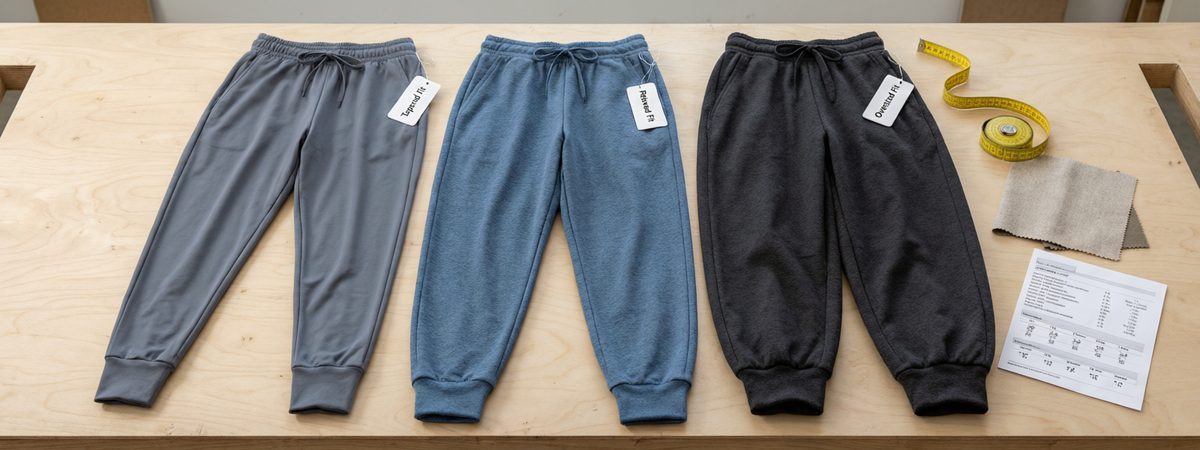
The three core constructions solve three different jobs, and choosing between them should start from brand positioning rather than trend. A tapered jogger narrows from knee to ankle into a ribbed cuff, reads clean and athletic, and crosses into smart-casual — the safest default for a broad customer and the easiest to style with sneakers. A relaxed jogger keeps more room through the seat and thigh but still finishes in a cuffed ankle; it is comfortable across most body types and its looser drape reads more casual and everyday. An oversized jogger is deliberately wide through the leg for a statement streetwear, skate or vintage silhouette, and it only works when the fabric is heavy enough to hold the volume — a light fabric on an oversized cut collapses and bunches at the cuff. Related but distinct: an open-hem style drops the cuff entirely so the leg falls like a traditional sweatpant, and a stacked or extra-long cut adds inseam so fabric deliberately stacks at the ankle. Pick the fit that matches the customer and the story before committing to fabric.
What Each Fit Signals
Silhouette is the first impression a buyer or customer reads, so the fit should carry a clear message. A tapered jogger signals clean, modern and gym-to-street versatility; it pairs naturally with a fitted tee or a technical top and suits brands selling a refined everyday product. A relaxed jogger signals comfort-first lifestyle and pairs with hoodies and oversized tees for an easy, lived-in look. An oversized jogger signals a bolder streetwear identity — skate, vintage or heavyweight fleece — and needs a matching oversized top to keep the proportion intentional rather than accidental. The risk to watch on the oversized end is volume without control: too much fabric, a rise or inseam that is off, or a cuff that cannot hold the leg makes the garment look accidentally baggy instead of designed. On the tapered end, the risk is the opposite — a cuff with weak recovery or a knee that is cut too tight turns a clean fit into a product that feels restrictive. Define the proportion against a named reference before sampling.
Matching Fabric Weight to Use
Fabric weight is the second half of the silhouette decision, and it is tied to climate and season as much as to fit. As a working range for streetwear fleece bottoms, most custom programmes sit between roughly 300 and 500 gsm. On the lighter side, a cotton or cotton-poly fleece at about 260–300 gsm gives a softer drape and works for transitional wear, warmer-season drops and relaxed joggers where drape matters more than structure. The everyday retail standard is roughly 300–320 gsm, and 340 gsm and above reads heavyweight and structured, holding a tapered or oversized leg shape through repeated washing. French terry, with its looped inner face, is lighter than fleece and suits year-round and warmer-climate wear, trading some structure for breathability. Heavyweight knits at 350–450 gsm deliver the premium, structured silhouette that baggy, stacked and winter streetwear pieces need, at the cost of warmth, price and shipping weight. The practical rule is to test the fabric on a real sample and confirm it holds the intended leg shape — a heavier unstabilised fabric will not out-perform a well-prepared midweight one. For the coordinating top, see our guide to fleece weight in custom hoodies, since a jogger-and-hoodie set should share one fabric system.
Waistband and Cuff Details
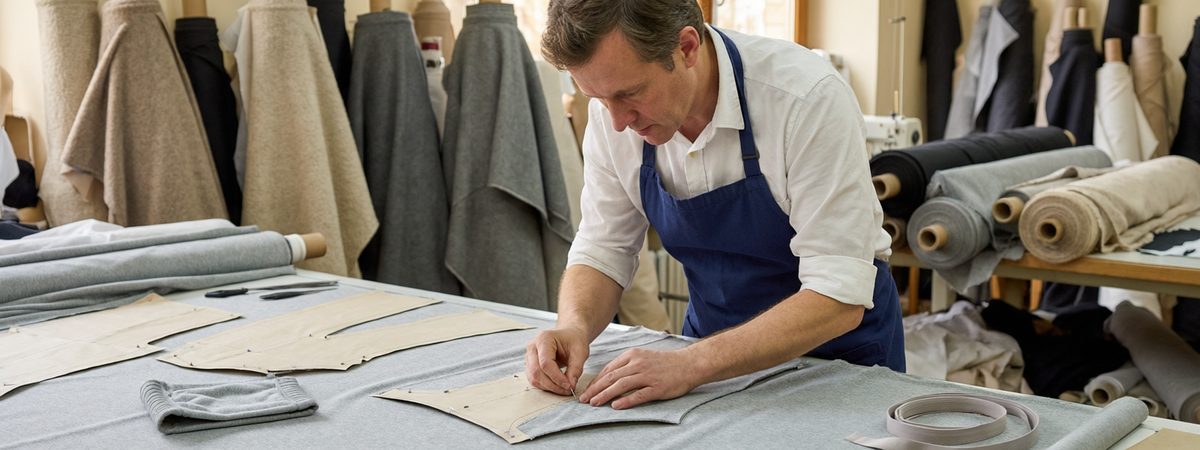
These two trims decide comfort and the longevity of the silhouette, and they deserve their own line in the tech pack. On the waistband, an elastic band with an external drawcord reads casual and sporty and is the standard for streetwear; an internal drawcord gives a cleaner, smarter line and suits travel or tailored-leaning joggers; a hybrid waistband — elastic at the back, flat at the front — adds comfort without losing a dressed-up look. The elastic strength should match the fabric weight, because a heavy jogger will pull a weak waistband down, and the drawcord holes should be bar-tacked for durability. On the cuff, the ribbed cuff is the classic jogger finish and keeps the leg clean over sneakers; an elastic hem without rib is lighter and suits woven fabric; a straight or open hem reads more like a trouser and suits tech or smart joggers; and a zippered or drawcord hem lets the wearer adjust the leg opening. Cuff quality matters most on heavyweight and tapered styles, where a weak rib stretches out and makes the whole garment look tired after a few wears.
Print vs Embroidery for Jogger Branding
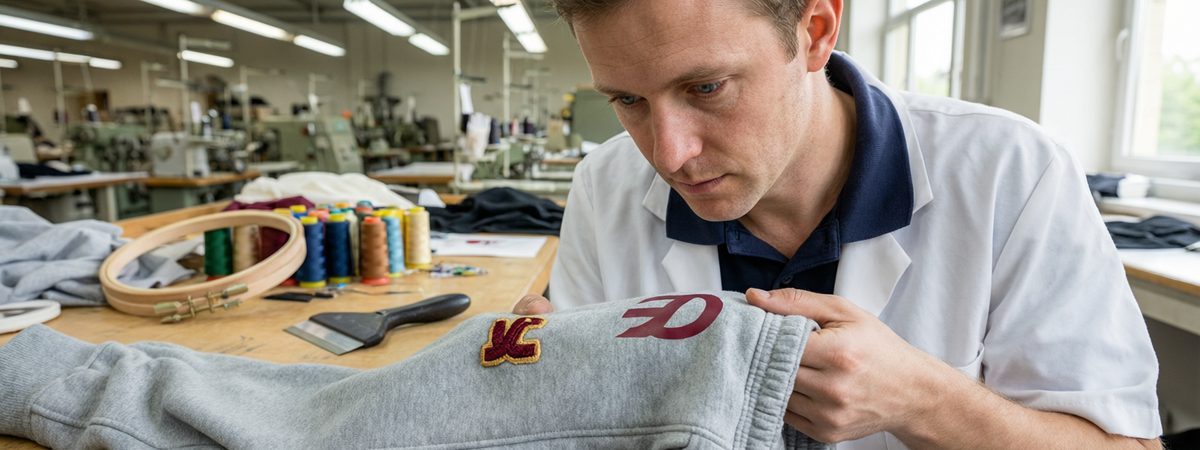
Branding on a bottom is more restrained than on a top, which makes placement and scale more noticeable when it is used, so the method decision carries real weight. Embroidery reads premium and durable, and it is the right call for a small logo on the thigh, hip or waistband of a heavier fleece jogger where the fabric can stabilise the stitching; it also adds a tactile, elevated finish that photographs well. Screen print is the economical choice for a bolder graphic on the leg or hip and works best on a smooth surface, but it is flatter and can crack on a heavily brushed fleece. Heat transfer and sublimation suit performance and stretch constructions and full-colour artwork, though sublimation is limited to polyester-rich fabric. A common production mistake is a large, stiff print on a stretchy or curved panel that then distorts or cracks in wear; keep the artwork proportional to the placement, and on a coordinated jogger-and-hoodie set, carry one branding treatment across both pieces so the pair reads as a system rather than two unrelated items.
Construction and Quality Checks
Joggers fail in the field on fit and recovery long before the fabric label explains the problem, so the quality checklist should target the moving parts. Confirm waistband recovery — the elastic stretches every time the jogger goes on and must return to shape, and once recovery fades the fit becomes unpredictable. Confirm cuff recovery — ribbing should hold its shape through repeated washing rather than gradually widening, especially on tapered and heavyweight styles. Check stretch recovery in the seat and knees, because fabric that does not recover bags out after wear. Verify shrinkage control on cotton fleece by washing the sample and measuring rise, inseam, thigh, knee and leg opening before and after. Reinforce pocket openings with stable stitching, and bar-tack the drawcord holes and pocket corners. Ask the factory for pre-wash and post-wash measurements and a shade standard, and seal a reference sample so bulk matches the approved garment.
Low MOQ Launch Plan
A jogger line suits a low-MOQ launch because the category is repeatable: once the pattern, fabric lot and trim pack are approved, a 50–100 piece run per style is straightforward, and scaling mostly changes unit price rather than product. The practical path is to launch one or two fits rather than all three at once — most brands lead with a tapered or relaxed jogger as the safe everyday style, then add the oversized cut as a statement piece in a second drop once sales data confirms the core fit. Sample fast on a qualified project using in-stock fabric and mature construction, approve the sample against the fit and quality checklist above, then release the core neutral first and the seasonal or bolder colours second. Archive the tech pack with the fabric lot, trim codes and shade standard so every reorder matches the first run. Locking the system once is what lets a small brand scale a jogger line without redeveloping it each season.
MontForge Custom Jogger Capabilities
MontForge manufactures custom joggers and pants for streetwear, athleisure and loungewear brands. We build tapered, relaxed and oversized constructions, plus athletic, open-hem and stacked variations, on cotton fleece, French terry, heavyweight knit and stretch blends from roughly 260 to 450 gsm. Construction is specified rather than assumed: waistbands in elastic, internal or hybrid styles with bar-tacked drawcord holes, ribbed, elastic, straight or adjustable cuffs, and reinforced pocket openings. Branding runs across embroidery, screen print, heat transfer and sublimation, with placement on the leg, hip and waistband. Low MOQ, fast sampling on qualified projects and archived tech packs keep a first drop and every reorder consistent. One fit, one fabric system, repeatable every run.
Frequently Asked Questions
What is the difference between tapered and oversized joggers?
A tapered jogger narrows from knee to ankle into a ribbed cuff and reads clean and athletic. An oversized jogger is deliberately wide through the leg for a statement streetwear look and needs heavy fabric to hold the volume. Relaxed sits between, with room through the seat and thigh but a cuffed ankle.
What fabric weight should a jogger be?
Most streetwear fleece joggers sit between roughly 300 and 500 gsm. Lighter fleece at 260–300 gsm suits warmer seasons and relaxed fits, 300–320 gsm is the everyday standard, and 340 gsm and above is heavyweight and structured. French terry is lighter and suits year-round wear.
Which waistband should I choose?
An external drawcord reads casual and sporty and is the streetwear standard; an internal drawcord gives a cleaner, smarter line; a hybrid waistband (elastic back, flat front) adds comfort without losing a dressed-up look. Match the elastic strength to the fabric weight.
Embroidery or screen print on a jogger?
Embroidery reads premium and durable for a small thigh, hip or waistband logo on heavier fleece. Screen print is the economical choice for a bolder leg or hip graphic. Heat transfer and sublimation suit stretch and performance constructions and full-colour artwork.
What is a low MOQ for custom joggers?
A 50–100 piece run per style is a practical low-MOQ starting point once the pattern, fabric and trims are approved. Launch one or two fits first, then add the oversized or bolder styles in a second drop once sales data confirms the core fit.
Ready to build a jogger line? Send us your fit and fabric direction or browse MontForge custom joggers — tapered, relaxed and oversized constructions, matched fabric weights and full trim packs at low MOQ.