Custom Hoodie Manufacturing: French Terry vs 500 GSM Fleece
The hoodie is the most category-defining garment in streetwear, and the single biggest decision in manufacturing one is the fabric. French terry and fleece look similar on a hanger but feel completely different in the hand, price differently at the factory, print and embroider differently, and sell in different seasons. This guide compares French terry versus 500 GSM fleece across weight, hand-feel and price, best use by season and brand, print and embroidery performance, garment wash effects, and how to choose the right one for your drop.
The Loop vs The Brush: Where the Difference Starts
Both fabrics are knitted, and both start with a looped reverse side — the difference is what happens to those loops. French terry leaves the loops intact: a textured, slightly raised surface on the inside, smooth knit face on the outside, and a crisp, structured drape that is the classic "sweatshirt" feel. Fleece is brushed: mechanical rollers raise and break the interior fibres into a dense, plush pile that traps air and provides far better insulation. That one finishing step changes weight, warmth, breathability, price, printing behaviour and how the garment ages. It is also the most common spec confusion on tech packs — always write "unbrushed loopback" or "brushed-back fleece" explicitly so the mill cannot substitute.
GSM: How Weight Changes Everything
Weight is measured in GSM (grams per square metre), and the tiers are well established. French terry typically runs 240–380 GSM, with 280–320 gsm lightweight (a substantial tee with a hood), 320–380 gsm the mid-weight sweet spot most brands choose for a core hoodie, and 380–450+ gsm heavyweight with real presence. Brushed fleece runs 280–500+ GSM: 300–350 gsm for everyday use, 380–420 gsm for the premium heavyweight feel, and 450–500+ gsm for ultra-heavyweight statement pieces. At the same nominal weight, fleece feels warmer and softer because the brushed pile traps more air; French terry feels firmer and breathes better because air circulates through the loops. Choose the GSM to the end use, not the other way around.
Hand-Feel and Price Differences
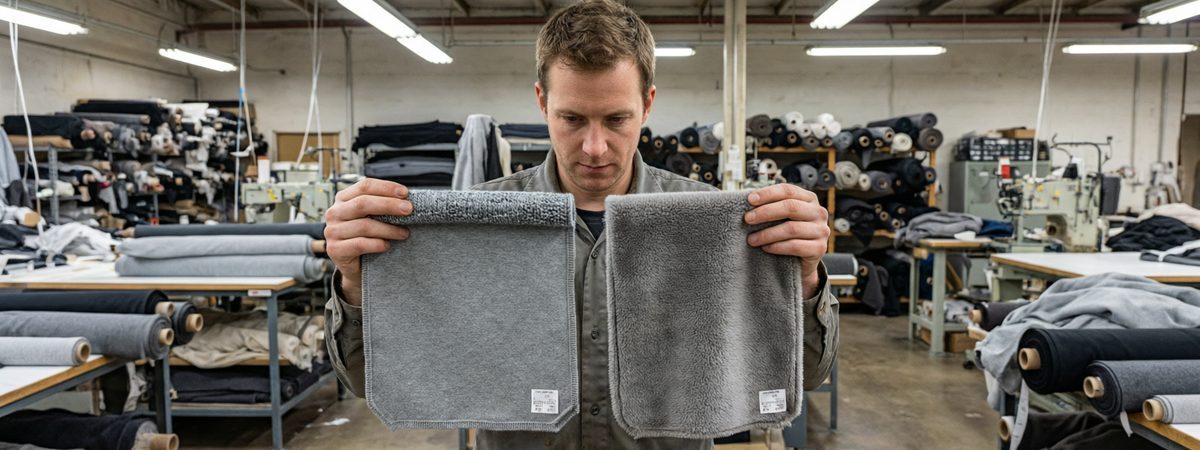
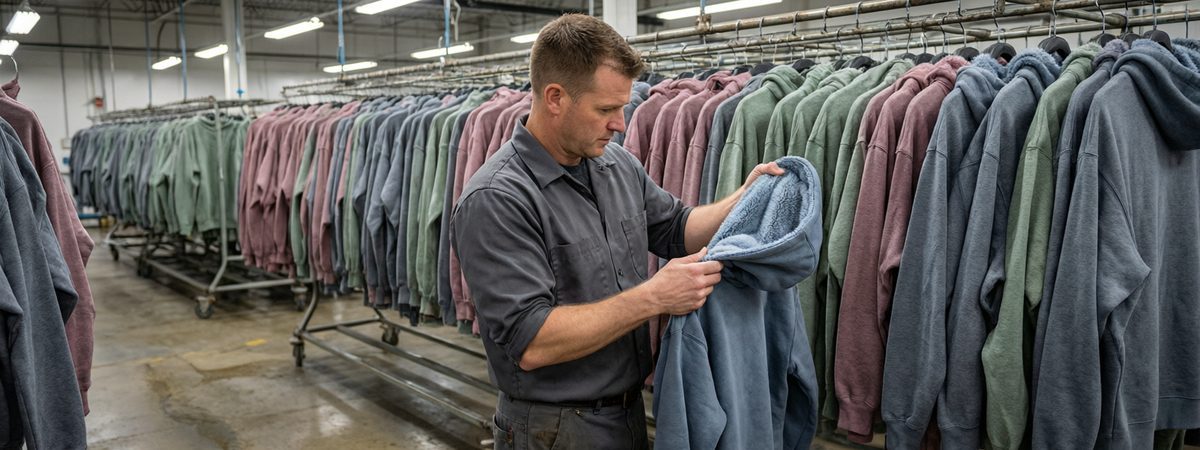
In the hand, French terry is smooth and structured on the outside with a slight loop texture inside; fleece is plush and fuzzy inside, immediately "cosy". Retail tiers follow the fabric: lightweight French terry supports $60–100 retail positioning, while premium brushed fleece carries $80–200. At the factory, the same logic holds. Typical FOB pricing at 200-piece MOQ runs roughly $5–7 for a 280 gsm hoodie, $6.50–8.50 for 320 gsm French terry, $7.50–9.50 for 380 gsm brushed-back fleece, $9–11 for 420–450 gsm premium, and $10–13 for a 500 gsm ultra-heavyweight. Heavier weights cost more because they consume more fabric — a 450 gsm garment uses close to 1.6 times the fabric weight of a 300 gsm garment of the same pattern — so the price ladder is real, not marketing.
Best Use by Season and Brand
Seasonal positioning is where brands get the biggest return from this choice. French terry is optimal around 15–27°C: it works for spring and summer drops, evening layering, and warm-climate markets, and it carries as a year-round staple without feeling seasonally misplaced. Brushed fleece is optimal at −1 to 18°C: it is the fall/winter and cold-climate choice, and at 400+ gsm it becomes an outerwear replacement. Map the fabric to your drop calendar and market — a temperate-market brand selling fleece all year risks dead stock in a mild winter, while a French terry-only brand loses the fall/winter premium tier. Many brands run both: French terry for the spring/summer line, brushed fleece for the autumn/winter collection, keeping the exterior aesthetic consistent while the interior changes with the season.
Print and Embroidery Performance
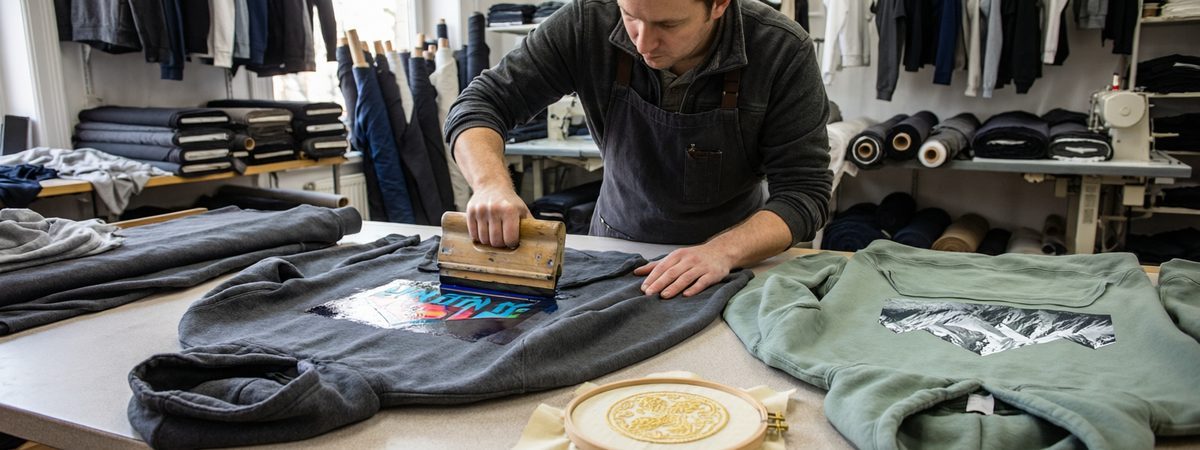
Decoration behaviour is a practical differentiator. French terry's smooth, stable outer face is the superior canvas for print-heavy designs: screen printing lays ink more evenly, high-mesh-count prints look crisper, and DTG (direct-to-garment) holds fine detail and colour accuracy better. Brushed fleece prints fine but the pile can "shadow" or absorb ink on heavily napped surfaces, softening fine detail over time. Embroidery is where fleece shines: the thickness swallows the backing so the design looks integrated, and heavyweight fleece provides a stable frame — though very fine embroidery details can get lost in the loft, and heavier fleece needs a heavier cutaway backing to prevent registration drift. Rule of thumb: print-heavy brand, lean French terry; embroidery-primary brand, fleece is your friend.
Garment Wash Effects
Washing transforms both fabrics, which is why washed hoodies dominate premium streetwear. Enzyme wash softens the surface fibres into a peach-skin feel with subtle, uniform fading and reduced pilling — the clean, controlled vintage look, and it typically shrinks only 1–3% versus 7–9% on cheap washed garments. Stone wash tumbles pumice against the fabric for a rugged, distressed finish, and it needs heavyweight fabric (roughly 320–450 gsm fleece) to survive the abrasion without thinning. Any wash changes the fit — the fabric relaxes and shrinks — so the pattern must be graded to the post-wash measurements and the approved sample judged after washing, not before. French terry is generally easier to garment-dye and wash consistently because its looped interior behaves more predictably than brushed pile.
The 500 GSM Special Case
500 GSM is the ultra-heavyweight tier that defines premium streetwear: below it you compete on price with the mass market, at 500 gsm you can charge €100–150 retail and consumers can feel why. The construction has to change to carry the weight — reinforced hood drawcords (standard plastic tips break under the weight), heavier-duty YKK metal zippers (#5 or #8 versus standard #5 plastic), a wider bottom hem (2 inches minimum to balance the hood visually), and reinforced sleeve cuffs. Sewing takes roughly 18–25% longer than a 280 gsm equivalent and lead times stretch to 28–38 days, so plan the drop calendar around it. Most 500 gsm hoodies are brushed-back fleece or premium loopback, and they are built for fall/winter positioning with limited spring carryover.
How to Choose for Your Drop
Work the decision in five steps. First, your market: warm or temperate climate, year-round wearability matters? Lean French terry. Second, your retail tier: $60–100 lightweight premium, or $80–200 heavyweight statement? The fabric must support the price. Third, your decoration: print-heavy design wants the smooth French terry face; embroidery-primary branding can take either, with fleece adding plushness. Fourth, your wash program: enzyme and garment-dye finish are cleaner on French terry; stone wash needs heavyweight fleece. Fifth, your drop size and calendar: heavier weights mean higher unit cost and longer lead times, so match the fabric to the quantity and season you actually plan. When in doubt, order a swatch of each — the difference in hand is immediately apparent, and it is cheaper than guessing wrong on a full run.
MontForge Hoodie Capabilities
MontForge manufactures custom hoodies for streetwear, CrossFit and teamwear programs. We build French terry from 240 to 450 gsm and brushed-back fleece from 280 to 500 gsm, in 100% cotton, 80/20 cotton-polyester and premium loopback constructions, pre-shrunk for fit stability. Our decoration floor covers screen printing, DTG, embroidery with proper backing for heavyweight pile, and high-density puff work; our finishing programs run enzyme wash, stone wash and garment dye with post-wash grading so the approved sample matches bulk. With low-MOQ support, a 10–12 day sample window and a tech-pack-to-bulk path, we help brands ship hoodies that feel exactly as heavy — or as light — as the positioning promises.
Frequently Asked Questions
What is the difference between French terry and fleece?
French terry leaves the interior loops intact — smooth face, looped back, crisp structured drape, breathable and lighter. Fleece brushes those loops into a plush pile that traps air — warmer, softer, heavier. Same knit family, different finishing step, completely different hand and seasonality.
What GSM should my hoodie be?
280–320 gsm French terry for lightweight year-round basics; 320–380 gsm for the mid-weight core hoodie most brands choose; 380–450 gsm for heavyweight streetwear; 450–500+ gsm for ultra-heavyweight premium statements. Fleece at the same GSM feels warmer and plusher than French terry.
Which fabric is better for printing?
French terry. Its smooth, stable outer face gives crisper screen prints, better high-mesh detail and sharper DTG results. Brushed fleece prints fine but the pile can soften fine detail over time. For embroidery, fleece is excellent — the thickness integrates the design, though fine details need heavier backing.
How much does a heavyweight hoodie cost to make?
At 200-piece MOQ, FOB pricing runs roughly $5–7 for 280 gsm, $7.50–9.50 for 380 gsm brushed-back fleece, $9–11 for 420–450 gsm premium, and $10–13 for a 500 gsm ultra-heavyweight. Heavier fabrics consume more material — 450 gsm uses about 1.6× the fabric of 300 gsm.
Should I wash my hoodies in production?
Enzyme wash gives the clean premium vintage feel with 1–3% shrinkage and reduced pilling; stone wash adds rugged distressing but needs 320–450 gsm fabric. Any wash changes fit, so grade patterns to post-wash measurements and approve the washed sample before bulk.
Ready to build your hoodie drop? Send us your tech pack or browse MontForge hoodies — French terry to 500 GSM fleece, print and embroidery, wash programs at low MOQ.