Coach Jacket Production: Snap-Front Heritage for Streetwear
A coach jacket has few places to hide poor development. Its snap line, collar and broad front and back panels put fabric, fit and branding in plain view. For a streetwear brand, successful custom coach jacket production starts by treating those details as one product brief: choose the silhouette, approve the shell and hardware together, and plan decoration before the lining closes the garment.
Develop Your Signature Coach Jacket
Discuss the shell, collar, snap front and branding direction for your next streetwear jacket.
Define the Coach Jacket Before Developing the Pattern
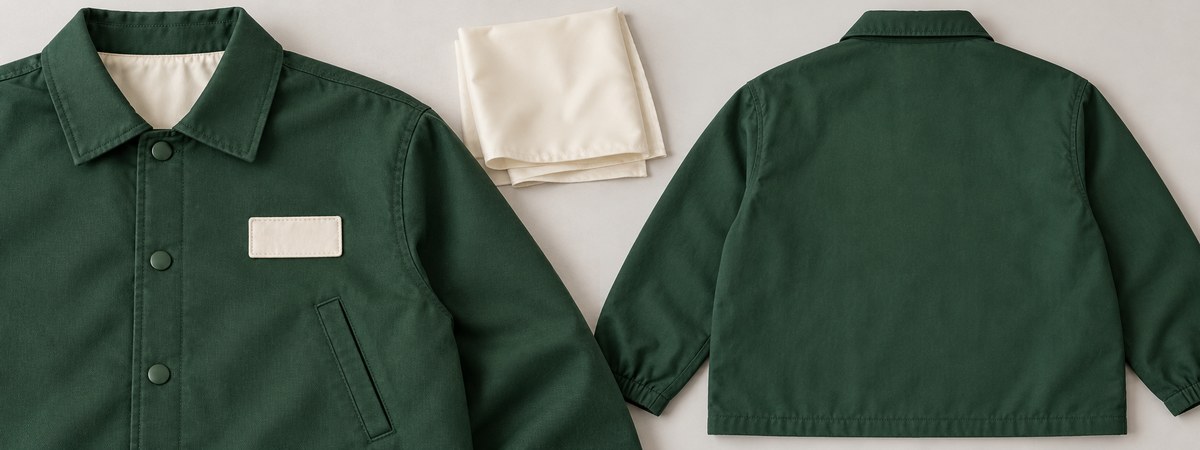
A coach jacket is a light outer layer built around a straightforward combination: a turn-down collar, snap-front opening, practical pockets and a relatively clean body. The appeal for a streetwear brand is the balance between recognisable shape and a useful canvas for graphics. Small changes to the collar, fabric or hem can push that balance towards sports uniform, workwear or fashion outerwear.
Start by choosing the product direction: a light team-style shell, a structured streetwear jacket or a lined transitional layer. Then browse windbreakers and light jackets to establish the construction and silhouette you want to discuss. A reference image helps, but a written brief should identify which details are essential and which are open to development.
Choose Woven Fabric for Drape, Surface and Decoration
“Premium woven fabric” is a buying intention rather than a specification. Translate it into composition, weave, fabric weight, finish, colour standard and the hand-feel you want the customer to notice. A crisp shell and a soft brushed surface can support very different brand positions, even when the garment pattern is similar.
| Shell direction | Design opportunity | Sample checks |
|---|---|---|
| Nylon taffeta | A smooth, light shell with a familiar athletic character | Shine, noise, opacity, puckering and decoration compatibility |
| Polyester or cotton-blend twill | A more textured, structured streetwear interpretation | Drape, crease appearance, shrinkage and finished garment weight |
| Nylon canvas or other structured woven | A fuller outerwear silhouette with a firmer surface | Stiffness at the collar, placket bulk and comfort over layers |
Compare finished swatches rather than composition labels alone. Carhartt WIP’s published Eightynine Coach Jacket, for example, uses unlined nylon canvas with a turn-down collar and snap closure. It is one product reference, not a universal specification for coach jackets. Your own shell should be approved together with its intended lining and decoration.
Keep the Classic Turn-Down Collar—or Specify a Hybrid
The collar decides how quickly a customer reads the jacket as a coach style. For the classic direction, specify a self-fabric turn-down collar, including collar-point shape, stand construction where used and the support needed to hold its line. Check it both fully fastened and worn open over a T-shirt.
A ribbed collar is a deliberate alternative. It moves the appearance towards a varsity or bomber-inspired hybrid, which may suit a brand collection but should be shown explicitly in the technical flats. Do not brief “classic coach jacket” and assume the factory will interpret a ribbed neckline the same way.
Ribbing can also be considered at the cuffs. Approve the relaxed opening, stretch, recovery, colour and attachment on the real shell. For an athletic collection, compare the neckline and cuff language with your tracksuits and sweatsuits so the pieces look related without becoming identical.
Engineer the Snap Front as a Complete Assembly
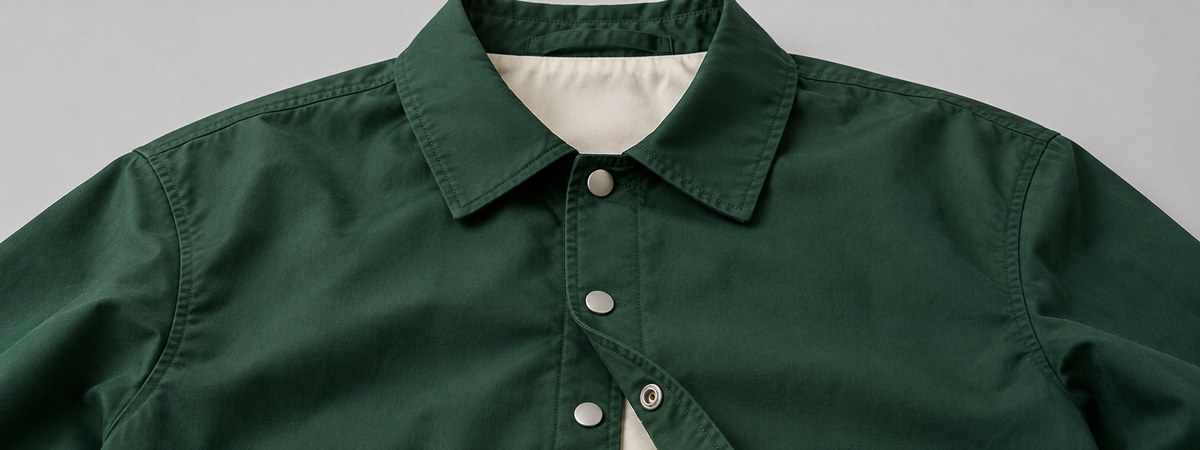
A clean row of snap caps is a visual signature; the attachment beneath it is a manufacturing decision. Specify the component system, cap diameter, finish, spacing, number of fasteners and the fabric layers under each attachment. Show the distance from the first and last snaps to the collar and hem.
Choose snaps with the component supplier for the actual fabric thickness and support layers. YKK’s fastening guidance highlights the importance of correct attachment and a suitable foundation. A trim that looks right on a loose card can still distort a thin placket or behave differently once installed.
On the sample, fasten the jacket on a person and inspect the front line. Open each snap while supporting the placket; look for local distortion, sharp edges, coating damage or fabric tearing. Agree attachment-strength and opening-force checks with the supplier or testing provider instead of inventing a single pass value for every jacket.
Develop Fit Around the Intended Layer
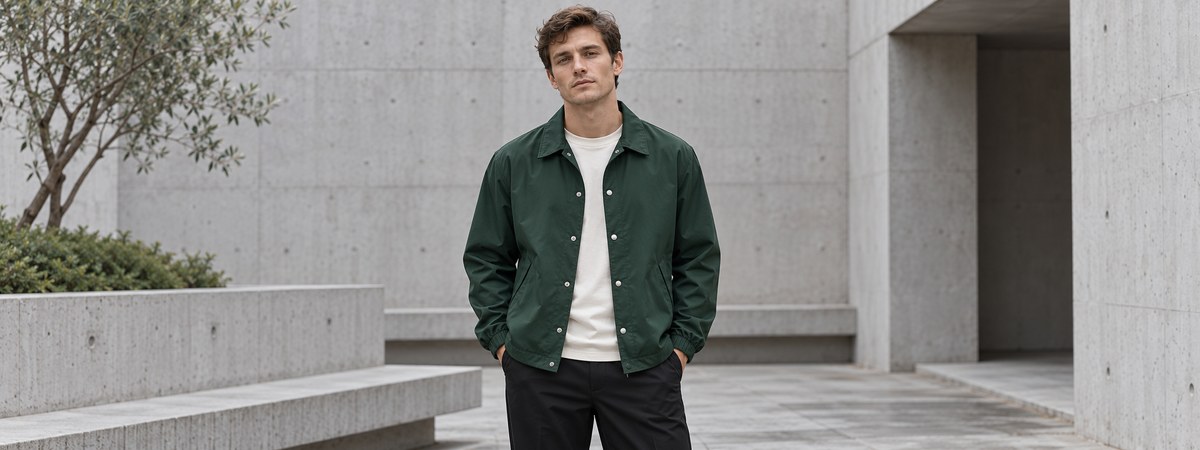
A coach jacket should be developed over the layer it is meant to cover. If the campaign shows a hoodie underneath, approve the fit that way. Extra chest width alone will not solve a tight armhole, a short sleeve or a collar that fights the hood.
Define chest, shoulder, sleeve, armhole, body length and hem opening on one reference size, with clear measurement points and tolerances. A relaxed fit can have room through the body while keeping a controlled shoulder. An oversized version needs intentional proportions rather than simply enlarging every measurement.
During fitting, sit down, reach forward and put both hands into the pockets. Check whether the front pulls between snaps, the collar lifts, or the hem rides up. Review at least one size towards each end of the proposed size range before signing off the grading approach. Describe the intended customer and fit preference directly; geography alone is not a sizing specification.
Choose Lining, Cuffs and Hem as One System
Lining changes the feel of the whole jacket. A smooth sleeve lining may make layering easier, while a softer body lining can change warmth and drape. An unlined construction exposes internal seams and decoration backing, so the inside finish needs deliberate attention.
United Athle’s 7059-01 provides a useful construction reference: a nylon taffeta shell, polyester lining, metal front snaps, gathered cuffs and a drawcord hem. Its body and sleeve lining choices differ. Those details show why “lined coach jacket” needs more information than a single fabric name.
For your own sample, check that the lining does not pull the shell out of shape at the sleeve or hem. Approve cuff tension with the intended base layer. If using a drawcord, specify the route, exit points and adjustment hardware, then check for snagging and visual bulk. A straight hem and a ribbed hem create different silhouettes; record the choice in the pattern brief.
Place Branding Before the Jacket Is Sewn
A chest mark and a back graphic should be planned with the pattern, pockets and lining. Set artwork dimensions and location from fixed garment reference points. “Left chest” is too vague when a seam, pocket edge or front placket can alter the available space.
Screen print, transfer, patch and embroidery all change the surface differently. On coated or water-repellent shells, confirm compatibility with the actual finish and the decoration supplier. United Athle specifically advises checking suitable printing materials on its repellent coach-jacket fabric; results on an untreated cotton T-shirt are not evidence for your shell.
Request a decoration strike-off on production-intent fabric. Inspect edge definition, puckering, backing comfort, colour and appearance after the agreed care procedure. For embroidery, check whether dense stitching distorts the shell. For a large back treatment, confirm press or printing access before the lining is closed. Keep a signed artwork sheet and an approved decorated sample.
Check Your Artwork Against the Shell
Bring your artwork and fabric direction into the sampling conversation before bulk production.
Build the Streetwear Story Through Consistent Details
A heritage direction works best when the details share a clear point of view. Start with the collar, shell surface and silhouette, then use the snap finish, pocket shape and label system to support it. Adding every vintage reference at once can make the product harder to read and harder to produce consistently.
One workable design exercise is to compare three samples of the same body: a tonal chest treatment, a small contrast patch and a back graphic. Assess them at the intended retail presentation distance as well as close up. This is a development exercise, not a claim that one decoration always sells better.
If the jacket belongs to a coordinated range, compare its colour and proportion with your trousers or custom tracksuit collection. Matching colour names across different fabrics is not enough; approve the actual materials together under agreed lighting.
Approve a Sample With a Written Quality Checklist
The useful outcome of sampling is a repeatable specification. Link the approved garment to its fabric reference, trim card, artwork and measurement sheet. Review the garment production process with the supplier so it is clear where fabric, construction and decoration decisions become fixed.
| Approval area | What to record |
|---|---|
| Shape and fit | Reference size, layering allowance, measurements and tolerances |
| Snap front | Component reference, positions, attachment method and agreed functional checks |
| Collar and lining | Collar shape, support, seam finish and lining allowance |
| Decoration | Artwork version, placement, approved strike-off and care results |
| Appearance after care | Shrinkage, colour change, puckering, trim condition and graphic appearance |
Review changes explicitly. A revised shell, different snap backing or replacement lining can affect more than its own line in the bill of materials. Recheck the affected areas and update the approved specification before bulk cutting.
Plan Quantity, Cost and Launch Timing Together
Keep the first collection focused enough to make the size and colour allocation workable. Two jacket colours, several sizes and two graphic options can create a much larger stock problem than the total order number suggests. Ask whether minimums apply to each style, colour, decoration or custom material.
MontForge’s custom windbreaker and light jacket manufacturing page lists an MOQ starting at 100 pieces per colour and style. Use it as an enquiry starting point, then confirm the actual coach-jacket specification and order conditions in writing. Custom fabric, branded snaps and unusual lining may introduce their own constraints.
Separate sample development, approval, bulk production and shipping in the schedule. Ask what starts the production clock and whether fabric availability or custom hardware affects it. Compare quotations against the same bill of materials, testing scope and packaging brief so a lower unit price is not simply a different product.
Prepare a Coach Jacket Brief for MontForge
Send technical flats with the collar, front closure, pocket layout, cuff and hem clearly marked. Add shell and lining references, intended fit, reference-size measurements, snap specifications, artwork files and quantity by colour and size. A short description of your target wearer and retail positioning helps keep development decisions connected.
Ask the MontForge light jacket manufacturing team to propose a shell-and-trim combination and a sampling plan for your brief. The purpose is to confirm what can be produced for this project, rather than assume every option shown across the website is already approved for your design.
For a useful first conversation, highlight your three priorities—for example, a crisp collar, a soft matte shell and clean chest embroidery—then identify where there is flexibility on cost or construction. You can also browse the custom windbreaker and light jacket product range to discuss comparable silhouettes and finishing directions.
Frequently Asked Questions
What makes a jacket a coach jacket?
The familiar combination is a turn-down collar, snap-front opening and a clean, relatively light outerwear body. Pockets, cuffs, hem adjustment and lining vary by design.
Does a coach jacket need a ribbed collar?
No. A self-fabric turn-down collar is the classic direction. A ribbed collar can be specified as a varsity or bomber-inspired variation.
Which fabric is best for a premium coach jacket?
Choose according to the intended surface, structure, weight and decoration. Compare finished taffeta, twill or canvas samples rather than assuming one fibre always gives a premium result.
Can I embroider a lightweight shell?
It may be suitable, but approve a trial on the actual shell with the proposed backing and stitch design. Review distortion, wearer comfort and appearance after care.
How do I stop snaps damaging the fabric?
Select the fastener system with its supplier, match it to the fabric assembly and use the correct attachment equipment and support. Verify the installed snap on the sample.
Is a water-repellent coach jacket waterproof?
Not automatically. A repellent finish does not establish complete garment waterproofness. For more on shell finishes, see our windbreaker manufacturing guide.
Ready to Build Your Coach Jacket Collection?
Share your tech pack, artwork and quantity by colour and size to discuss sampling and a project quotation.
Sources
- United Athle: 7059-01 coach jacket construction and decoration guidance.
- Carhartt WIP: Eightynine Coach Jacket material and construction details.
- YKK: snap and button testing methods.
- YKK: fastening attachment and inspection guidance.
- MontForge: custom windbreaker and light jacket manufacturing.
Sources checked 17 October 2026.