Windbreaker Manufacturing: DWR Shells, Packability and Zippers
A packable windbreaker succeeds when its shell, finish, pockets and zipper work as one system. For brands sourcing custom windbreaker manufacturing, the useful question is not simply how light the fabric feels: it is whether the finished jacket delivers the intended wind protection, comfort and packed size at a workable order quantity. This guide turns those decisions into a practical development and sampling brief.
Develop Your Custom Windbreaker
Explore shell, fit and construction options for your next lightweight jacket.
Start With the Use Case, Not the Fabric Swatch
A windbreaker for a running brand has a different job from a heritage anorak. Before asking for a fabric price, define who wears the jacket, how hard they move, what they wear underneath and how they carry it when the wind drops. Those answers determine the shell, closure, hood and pocket layout.
Write a one-sentence product brief: “An unlined, packable wind layer for recreational runners, worn over a T-shirt and carried in its own pocket.” That is a clearer development target than “premium outdoor jacket.” For a streetwear version, specify the intended silhouette, layering allowance and hand-feel instead. Keep heavy-rain protection as a separate requirement that needs its own construction and evidence.
DWR Shells: Water Repellency Is a Surface Property
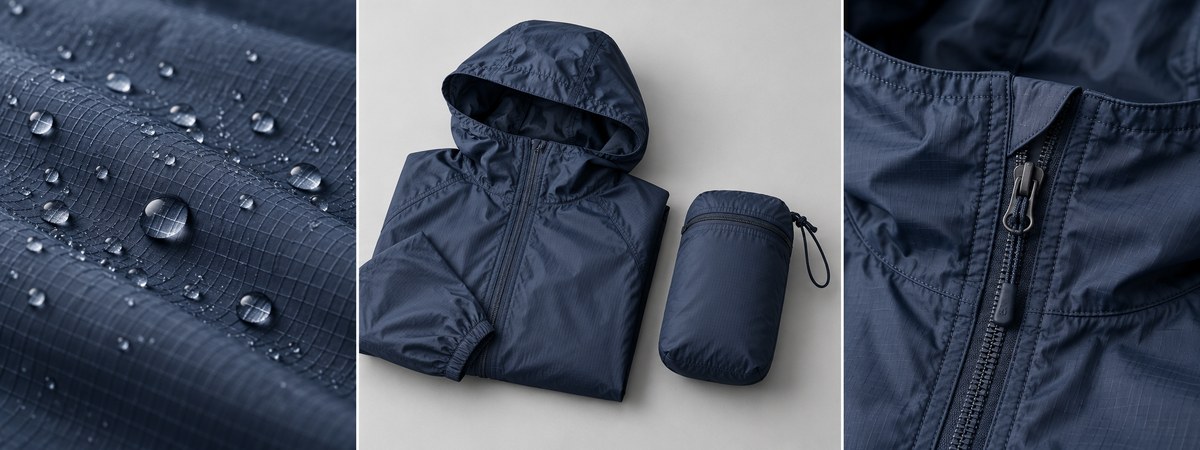
Durable water repellent, or DWR, is a finish that helps water bead on the fabric surface. It does not, by itself, establish that a jacket is waterproof. GORE-TEX explains that DWR and the waterproof membrane perform separate functions. A lightweight woven wind shell with a repellent finish should therefore be described according to its verified performance.
Ask the mill to identify the finish, its care requirements and the performance expected after an agreed laundering sequence. If your brief calls for a finish made without intentionally added PFAS, request a written declaration with a defined scope and appropriate supporting evidence. Do not infer the chemistry from water droplets in a photograph or treat a finish declaration as proof about every component of the garment.
Buyer decision: approve the intended claim before approving the hangtag. “Water-repellent shell” and “waterproof rain jacket” describe different expectations.
Choose Fabric Weight, Weave and Hand-Feel Together
GSM measures mass per square metre; denier describes yarn linear density. Neither figure alone tells you how breathable, durable or compact the finished jacket will be. Compare swatches with the proposed finish applied, then evaluate the assembled garment.
| Development direction | Why consider it? | What to check on the sample |
|---|---|---|
| Lightweight nylon taffeta | A smooth shell for a compact wind layer | Cling, opacity, seam puckering and noise during movement |
| Nylon or polyester ripstop | A grid texture for an outdoor product direction | Actual tear performance, surface feel and packed volume; the grid is not proof of indestructibility |
| More structured woven shell | A fuller silhouette for heritage or streetwear styling | Drape over layers, fold bulk and the effect of lining |
Set a target garment weight in a named reference size, alongside a target packed size. A lighter shell can lose its advantage when the design adds a mesh lining, oversized zipper, multiple pockets and heavy cord hardware. Use the complete bill of materials to control the result.
Balance Wind Resistance With Comfort in Motion
A jacket can feel protective while standing still and uncomfortable once the wearer starts moving. Fabric air permeability, garment openings, fit and ventilation all influence that experience. A coating or finish may change the result, so do not compare unfinished fabric with a finished production shell.
Ask the supplier or laboratory to propose a suitable air-permeability method and reporting conditions for the fabric. If comparing results, use the same method, units and pressure conditions. Avoid converting a fabric result into a universal promise that a jacket is “fully breathable.”
On the fit sample, walk briskly, raise the arms and wear the intended base layer. Check for cling across the back, excessive sleeve tension and hood movement. A back vent or underarm opening can help manage comfort, but it also adds construction decisions and should be evaluated in the intended use.
Engineer Packability Into the Pocket and Hood
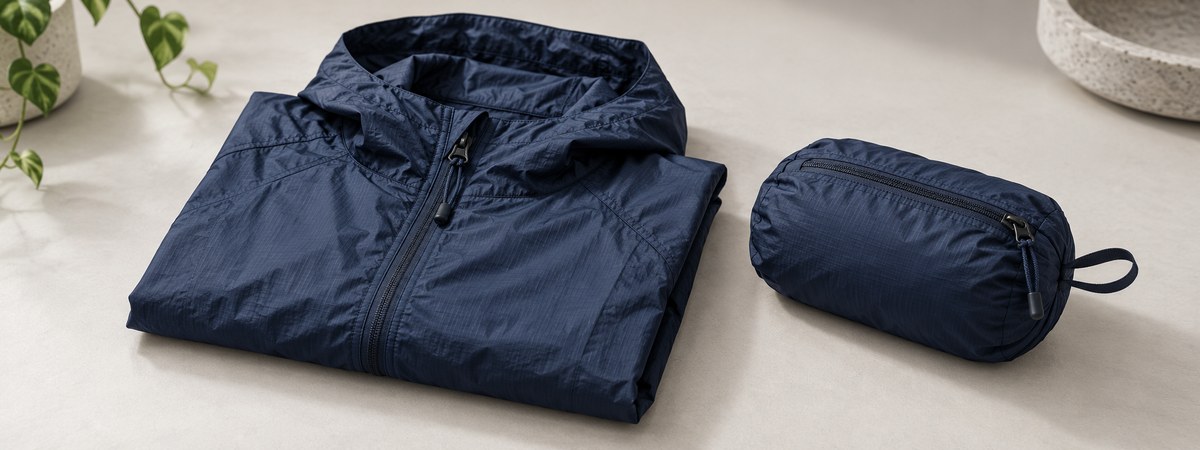
Packability starts with the pattern and trim package. Decide whether the jacket packs into a chest pocket, a hand pocket or a separate pouch. Then specify the usable opening, finished internal dimensions and closure orientation. If the pocket turns inside out to become the storage bag, check that the zipper can be operated in that position.
A simple acceptance check is to ask several people to pack and unpack the approved size without instructions. Record the packed dimensions using an agreed packing method; repeat with a larger garment size. Watch for forced zipping, strained seams and cord locks that create hard pressure points.
Keep a packable hood proportionate to its purpose. Test head turning, forward visibility and adjustment over the intended cap or hairstyle. A bulky stiffened peak may improve shape but compromise the packed size. A separate pouch can simplify construction, although the customer can also misplace it.
Full Zip vs Half Zip: Match the Closure to the Product
| Closure | Useful when | Development trade-off |
|---|---|---|
| Full zip | The wearer needs easy layering and a large ventilation opening | Check front waviness, hem alignment, slider access and chin protection |
| Half zip | An anorak silhouette and a cleaner lower front are central to the design | Check pullover access, opening length and room through shoulders and chest |
A shorter zipper may reduce some trim weight, but it does not guarantee a lighter or cheaper jacket. A large front pocket, storm flap or added side opening can change both the weight and sewing time. Compare complete samples against the same target cost and use case.
For either option, specify the zipper length by size, puller shape, zipper garage and backing where required. Test operation with the jacket worn, rather than only flat on a table.
For a golf-club or resort programme, compare club jackets and windbreakers while deciding which closure and layering features suit your collection.
Specify the Zipper Beyond the Brand Name
A useful zipper specification includes supplier, item code, chain size, tape colour, length, slider function, puller and any film or finish. “Use a premium zipper” leaves too much open to interpretation. Match the zipper to the shell weight and intended use, and approve a physical trim sample.
Water-repellent zipper tape should not become a shortcut to a waterproof claim. YKK describes the referenced AquaGuard coil zipper as water repellent rather than waterproof or watertight. The shell, seams, openings and complete garment still need to match the claimed protection.
Check that the slider runs smoothly around the wearer’s chest curve, does not trap the lightweight shell and remains usable after the agreed care process. Review top and bottom stops, the front hem junction and any zipper garage for sharp edges or rubbing.
Ready to Specify Your Shell and Zipper?
Share your intended use, target garment weight and closure preference to discuss a sampling brief.
Control Seams, Branding and Small Construction Details
Light shells expose small sewing problems. Inspect puckering beside the zipper, twisted hems, uneven pocket openings and needle damage around dense stitching. Agree seam construction, stitch density and reinforcement on the actual fabric instead of copying a specification from a heavy hoodie.
Approve decoration on the finished shell before bulk production. Heat-applied graphics can alter a delicate fabric; embroidery adds perforations and local stiffness. Ask for a trial showing adhesion, distortion and appearance after the specified care cycle. Place branding where it does not obstruct a packable pocket or rub against the wearer.
Finish the brief with elastic tension at cuffs, hem adjustment, cord routing and label placement. These details affect comfort and packed bulk. Require a fresh construction review if the project later expands into childrenswear; an adult trim package should not simply be scaled down.
Build a Sample Approval Plan With Measurable Checks
Use a signed approval record that separates appearance, fit and performance. For surface repellency, AATCC TM22 measures resistance to surface wetting using a spray test. It is not a whole-garment waterproofness result. Agree the method edition, conditioning, initial target and post-laundering target with the testing provider.
- Fit: name the reference size, measurement points, tolerances and intended layers.
- Weight and packing: record garment mass, packed dimensions and the agreed packing method.
- Construction: check seam appearance, pocket strength, zipper operation and hood adjustment.
- Care: review shrinkage, colour transfer, print adhesion and zipper function after the specified process.
- Claims: match each public performance statement to evidence for the relevant material or garment.
Keep the approved sample, fabric reference, trim card and test reports linked to the same specification version. If bulk fabric or a zipper component changes, review the affected checks before accepting substitution.
Plan a Low-MOQ Launch Without Splitting the Order Too Far
A small first order works best when the specification limits avoidable variation. Start with one shell platform, one closure system and a focused colour palette. Ask whether MOQ applies to the total order, each style, each colour or a custom fabric dye lot. These are different commercial constraints.
For an illustrative plan, two colours at 100 pieces each create 200 garments before the size allocation is divided. This is a planning example, not a quotation. Confirm how fabric minimums, custom trims and packaging affect the actual order.
MontForge’s windbreaker manufacturing page currently lists MOQ starting at 100 pieces per colour and style. Treat that as a starting reference and obtain a written project quotation covering materials, sample revisions, approval milestones, production time and shipping. Use the confirmed project schedule when planning a launch date.
Send a Quote-Ready Windbreaker Brief
A clear brief makes supplier quotations easier to compare. Include technical flats, intended wearer and activity, fabric composition and target weight, finish requirements, lining decision, zipper specification, hood and pocket construction, reference-size measurements, artwork and packaging.
Also include the quantity by colour and size, target selling market, required delivery date and evidence needed for product claims. Ask suppliers to identify assumptions and exclusions in their quotations. A lower unit price may leave out testing, sampling, special trims or freight.
Suggested next step: send your tech pack and target packed size to MontForge’s custom windbreaker team. Request a proposed shell-and-trim combination, a sampling plan and a costed order breakdown before committing to bulk.
Frequently Asked Questions
Does a DWR finish make a windbreaker waterproof?
No. DWR supports surface water repellency. A waterproof garment requires an appropriate fabric and construction system, with evidence for the finished product’s claims.
Is nylon always better than polyester for a windbreaker?
No. Compare the actual weave, finish, weight, hand-feel and test results. Fibre content alone does not determine the performance of the finished jacket.
What is the best fabric weight for a packable jacket?
There is no single best GSM. Set the intended use, garment-weight target and packed dimensions, then compare finished samples with their complete trims and pockets.
Should I choose a full zip or half zip?
A full zip suits easy layering and broad ventilation. A half zip supports an anorak design. Confirm access, comfort, weight and cost on a complete sample.
Can I claim waterproof protection with a water-repellent zipper?
The zipper description alone does not establish garment waterproofness. Review the complete material and construction system and the evidence supporting the intended claim.
How should customers care for a DWR windbreaker?
Follow the validated garment care label and finish supplier’s instructions. Do not apply another brand’s heat-reactivation procedure to an unverified shell, print or trim package.
Start Your Custom Windbreaker Project
Send your tech pack, target quantity and preferred delivery date to discuss materials, sampling and a project quotation.
Sources
- GORE-TEX: DWR treatment and its relationship to waterproof membranes.
- AATCC TM22: Water Repellency—Spray Test, published scope.
- YKK: AquaGuard coil zipper product guidance.
- MontForge: custom windbreaker and light jacket manufacturing page.
Sources checked 17 October 2026.