Anorak Jackets: Ripstop, Half-Zip and Utility Detail
An anorak earns its utility through the relationship between the shell, half zip and front pocket. For brands developing custom anorak jackets, those details need to work together: the opening must allow easy access, the pocket must carry real items, and the ripstop shell must deliver the feel and performance the product claims. This guide turns the familiar outdoor silhouette into a practical design and sourcing brief.
Develop Your Custom Anorak
Bring your ripstop, half-zip and pocket ideas into one sampling brief.
Start With the Anorak’s Intended Job
A modern anorak combines a pullover body with a partial front opening, usually a hood, and a strong pocket identity. That makes it a useful platform for outdoor-inspired streetwear: the uninterrupted lower front can carry a utility pocket or graphic while the upper zip controls access and ventilation.
Before sourcing custom anoraks and light jackets, decide whether your customer needs a compact wind layer, a structured city pullover or a weather-protective outer shell. The silhouette alone does not tell you which performance claims are justified. Write down the activity, intended base layer, carried items and expected weather before choosing the fabric.
A concise brief might be: a relaxed ripstop pullover for walking and everyday travel, worn over a sweatshirt, with a secure phone pocket and a half zip that opens comfortably over the head. This gives the pattern and sourcing teams something concrete to develop.
Ripstop Is a Fabric Structure, Not a Guarantee
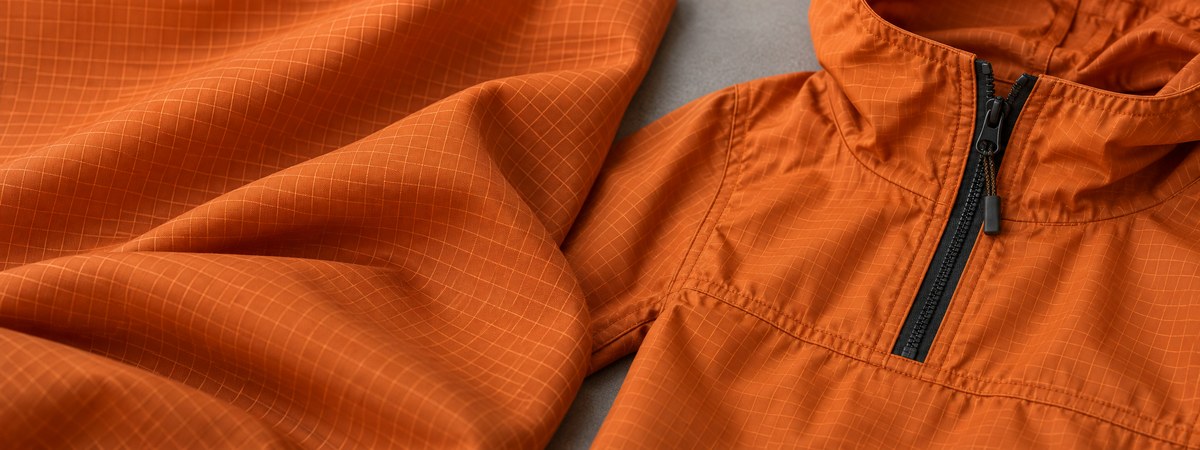
Ripstop uses a reinforcing grid within a woven fabric to help resist the spread of a tear. It is a reason to investigate a fabric, not evidence that the jacket cannot rip. Yarn choice, construction, weight, finishing and the way the garment is sewn all affect the result.
STRAUSS’s fabric comparison distinguishes ripstop construction from a branded fabric family and separates tear behaviour from abrasion resistance. For a sourcing brief, make that distinction practical: ask the mill for the composition, yarn specification, fabric mass and relevant test results. If abrasion matters at pocket edges or under a backpack, evaluate it separately.
The visible grid is also a design feature. A fine tonal grid can give a clean technical surface; a more pronounced grid gives a stronger utility appearance. Approve how it looks next to zipper tape, pocket flaps and printed artwork, rather than choosing solely from a magnified swatch photograph.
Choose Shell Weight and Finish Around the Silhouette
A light shell can fold compactly but may collapse around a large loaded front pocket. A firmer woven can hold a boxier streetwear shape while adding bulk at the hood and hem. Neither direction is automatically better: assess it against the product brief.
| Development direction | Useful priorities | Check before approval |
|---|---|---|
| Light ripstop shell | Low bulk and easy carrying | Opacity, cling, pocket sag and seam puckering |
| More structured ripstop | A defined utility silhouette | Drape, hand-feel, fold bulk and movement over layers |
| Lined construction | A different interior feel or seasonal role | Weight, sleeve drag, lining allowance and packing volume |
Specify the finish on the fabric you approve. Water repellency, a coating and a membrane describe different parts of a material system. Do not assume the ripstop weave itself provides rain protection. Compare the shell, lining and trims together before fixing a target garment weight.
Develop the Half-Zip Opening for Real Access
“Half zip” describes an appearance, but the usable opening needs measurements. State where the closed zipper begins and ends, how far the collar opens, and how the opening changes across sizes. The wearer must get the jacket on and off without forcing the lower stop or pulling hard on the fabric.
Test access over the intended sweatshirt or hoodie. Check head clearance, shoulder movement and whether the front pocket interrupts the opening. A narrow fit with a short opening can be difficult to remove even if its chest measurement seems generous on paper.
Where necessary, consider a longer front opening or a side-entry zipper. These options change sewing time, trim cost and the exterior line, so compare full samples rather than assume the shortest zipper is always the lightest or simplest answer. Fix the approved opening geometry in the pattern and technical flats.
Make the Front Pocket Useful Under Load
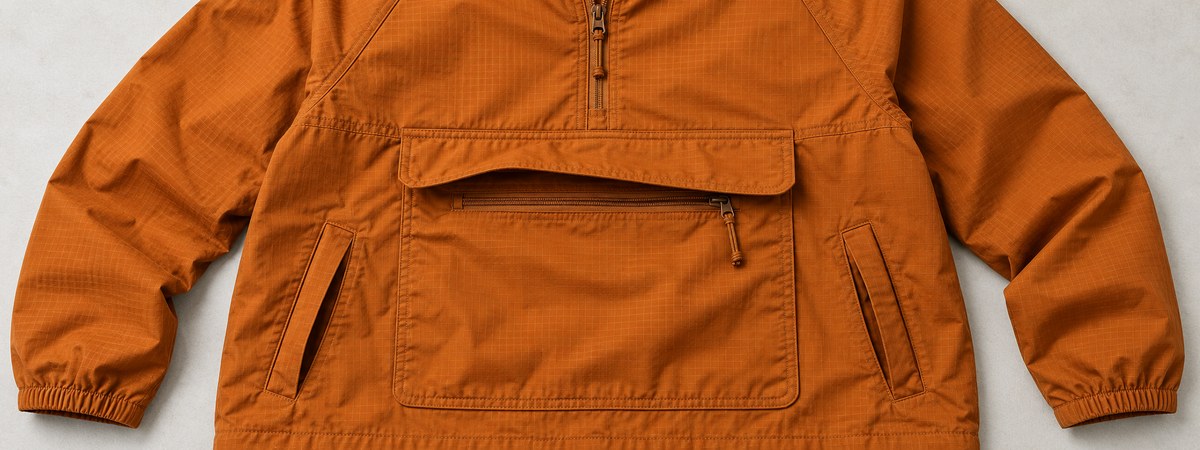
A large front pocket is one of the anorak’s clearest visual features, but its value depends on access and stability. Decide what it carries: a phone and keys need a different opening and security level from a place to rest the hands. Avoid treating one oversized compartment as a solution for every use.
Napapijri’s Rainforest Pocket Summer product description illustrates how side pockets can supplement an anorak layout. The useful development question for your own jacket is whether storage and hand access should be separate. Confirm that one opening does not accidentally expose valuables when the wearer reaches inside.
Load the sample with the items named in the brief. Walk, sit and bend forward. Check bounce, pulling at the pocket corners, access with one hand and interference with the main zip. Add reinforcement where the construction requires it, then inspect the actual result rather than use visible bar tacks as a substitute for an agreed strength check.
Specify Zippers, Flaps and Pocket Bags Together
Choose the main zip and pocket closure with the shell, lining and intended handling in mind. Record the supplier reference, length, tape colour, slider function and puller. A long puller may be convenient with gloves but can also strike the body or catch against other equipment.
YKK’s sewing guidance advises allowing enough space for the slider to move, especially where lining can be caught. On an anorak, inspect the main zip backing and the fabric under a pocket flap for the same problem. Operate both closures with the garment worn, not just laid flat.
Specify pocket-bag dimensions, attachment points and lining material. A bag that is too deep can hang below the intended hem; one that is too shallow can make a large exterior pocket misleading. Check the finished assembly after the proposed care process for distortion and restricted access.
Refine Your Half Zip and Pocket Layout
Share the intended layers and carried items so the opening and storage can be reviewed together.
Control the Hood, Cuffs and Hem Without Adding Clutter
The hood should turn with the wearer and preserve forward and side visibility. Approve it both raised and resting behind the neck, with the half zip open and closed. A high collar can look clean in a photograph but feel restrictive if its opening and hood attachment are poorly balanced.
For cuffs, choose between elastic, adjustment tabs or another finish based on the intended activity. Test tension around a base layer and the ability to raise the sleeves. At the hem, check whether adjustment changes pocket position or creates a ballooned front.
Keep cord routing and adjustment hardware purposeful. Too many exposed pulls can compete with the utility design and make packing awkward. If the range later expands to children’s garments, create a separate safety and construction brief rather than simply scale down the adult cord layout.
Adapt One Design for Outdoor and Street Use
For walking and travel, prioritise practical reach, secure storage and comfort in motion. For streetwear, body length, sleeve volume, pocket proportion and surface texture may carry more of the design story. Many jackets serve both, but the order of priorities still needs to be clear.
Fit the sample over the intended layer, then check reaching forward, sitting and bending. Record the reference size, measurement points and tolerances. Approve at least a representative smaller and larger size before assuming the same pocket and opening work across the range.
Where the brief requires sustained rain protection, compare the construction with the hardshell jacket product range and define the necessary fabric and garment evidence. A hood, flap and ripstop grid do not establish waterproof performance. Our windbreaker manufacturing guide explains the separate roles of DWR, zippers and construction.

Plan Branding Around the Half Zip and Utility Pocket
The half zip divides the upper front; the pocket occupies the lower front. Mark those boundaries before approving chest artwork. Set artwork dimensions from fixed pattern reference points and show its clearance from the zipper, flap seam and pocket opening.
Approve a decoration trial on the finished shell. Embroidery can add local stiffness and perforation; heat-applied decoration depends on compatibility with the fabric, finish and process. Review distortion, adhesion and the result after the specified care cycle before decorating bulk pieces.
For a cleaner range, compare a small chest treatment, sleeve placement and a back graphic as separate design options. Keep a signed artwork sheet, colour reference and decorated sample linked to the garment specification. Coordinate label and patch placement with access to the lining so the intended decoration remains practical to manufacture.
Turn the Sample Into a Repeatable Specification
A good sample review covers what the jacket does as well as how it looks. Connect the approved sample to the fabric reference, trim card, measurement sheet and artwork version. Use the garment production process to agree when each approval is required and how changes are recorded.
| Approval area | Practical check |
|---|---|
| Pullover access | Put on and remove over the intended layer without forcing the opening |
| Storage | Load the specified items, then check bounce, access and pocket distortion |
| Movement | Reach, sit and bend; check sleeve tension, hood visibility and hem ride-up |
| Construction | Inspect zipper operation, stress points, seam appearance and lining allowance |
| Care and claims | Review agreed care results and evidence for each advertised performance claim |
Ask the material supplier or laboratory to recommend relevant test methods and acceptance criteria for the intended use. Keep comparison results under equivalent conditions. If the shell or trim changes after approval, review the affected areas before accepting the substitution.
Plan Sampling in Stages, Not Just Calendar Days
The outline’s 7–15-day sampling window should be treated as a discussion point, not an unconditional promise. MontForge’s windbreaker and light jacket manufacturing page lists sample lead times in that range for some order tiers. The schedule for your anorak needs written confirmation.
Send the tech pack, size specification, fabric direction, artwork and trim requirements together. Ask which materials are available, what the first sample will prove and whether decoration trials run in parallel. Clarify the start point of the quoted sample period and how revision rounds affect the launch plan.
The same page lists MOQ starting at 100 pieces per colour and style. Confirm how custom fabric, colour matching and branded trims affect the actual project. Keep sampling, approval, production and freight as separate milestones, with a responsible person and a clear approval requirement for each.
Frequently Asked Questions
Is ripstop the best fabric for every anorak?
No. It is a useful construction option when its texture and tear behaviour match the brief. Compare weight, hand-feel, finishing and relevant test results against other woven shells.
Does ripstop make an anorak waterproof?
No. The weave does not establish waterproofness. Rain protection depends on the material system, seams, closures and evidence for the intended claim.
How long should the half zip be?
Long enough for the intended wearer to put on and remove the jacket comfortably over the planned layers. Define and approve the opening on a complete sample.
Should the utility pocket and handwarmer pocket be separate?
They can be, particularly when secure storage and convenient hand access are both important. Test the actual layout with the items the customer is expected to carry.
Can an anorak be a streetwear piece?
Yes. Fit, fabric surface, pocket proportion and branding can support a streetwear direction while retaining the pullover format. Explore the windbreaker and light jacket collection for related silhouettes.
Can my sample be ready in 7–15 days?
Use that as a quoted reference only after the supplier confirms the brief, material availability, scope and start date. Additional revisions or custom trims can change the schedule.
Ready to Sample Your Anorak Jacket?
Send your technical flats, target fabric, pocket layout and quantity by colour and size to discuss development and a project quotation.
Sources
- STRAUSS: fabric construction, tear behaviour and abrasion considerations.
- Napapijri: Rainforest Pocket Summer Anorak product details.
- YKK: zipper sewing clearance and fabric handling guidance.
- MontForge: windbreaker and light jacket materials, sampling and minimums.
Sources checked 18 October 2026.