Your Complete Checklist for Evaluating Sportswear Manufacturers in China
Why a Structured Evaluation Matters
Choosing the right sportswear manufacturer in China is not about finding the cheapest quote. It is about identifying a partner who meets your quality standards, understands your market, and can scale with your brand. With thousands of factories spread across Guangdong, Fujian, Zhejiang, and Jiangsu, the selection process can feel overwhelming without a structured approach.
Brands that rush into production without a systematic evaluation often face late deliveries, inconsistent sizing, fabric substitutions, and compliance gaps that can damage their reputation in competitive Western markets. This checklist-based guide walks you through every critical checkpoint, from initial factory qualification to final shipment quality control.
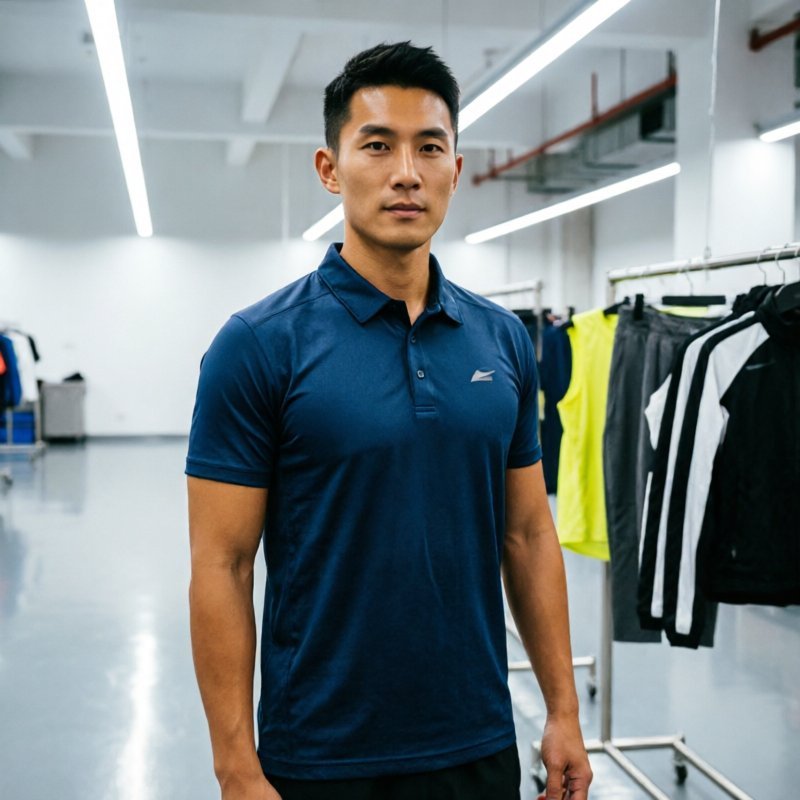
A systematic evaluation process saves time and reduces sourcing risk.
1. Define Your Production Requirements Before You Search
Before contacting any sportswear manufacturer in China, document your product specifications in detail. Factories specialize in different categories: some excel at compression wear and seamless knitting, while others focus on woven outerwear or customized team uniforms. Submitting a clear tech pack with fabric composition, GSM requirements, stitching details, size grading charts, and trim specifications will filter out factories that cannot handle your product type.
Key items to prepare include a design sketch or reference sample, a bill of materials listing every component from main fabric to zippers and labels, target FOB price range, and minimum order quantity expectations. The more complete your brief, the more accurate the factory's quotation and feasibility assessment will be.
2. Verify Business Licenses and Export Qualifications
A legitimate sportswear factory in China must hold a valid business license registered with the State Administration for Market Regulation. For export transactions, the manufacturer should also possess an import-export license and customs registration. Request copies of these documents and cross-reference them through the National Enterprise Credit Information Publicity System, which allows free online verification of registration status, legal representative, registered capital, and any administrative penalties.
Pay attention to the factory's registered business scope. If the license only lists "domestic trade" without export authorization, the factory cannot legally ship goods overseas under its own name and may rely on trading companies, adding cost and communication layers you may not want.
3. Evaluate the Factory's Sportswear Specialization
Not every garment factory can produce high-performance sportswear. A factory that primarily manufactures casual woven shirts may struggle with the four-way stretch fabrics, flatlock stitching, moisture-wicking treatments, and compression grading tables that athletic apparel demands. When you evaluate a sportswear factory, ask specifically about the categories they produce most frequently: yoga wear, running apparel, training gear, team uniforms, or outdoor activewear.
Look for evidence of specialization: dedicated sportswear production lines, in-house fabric testing for stretch recovery and color fastness, experience with technical finishes such as anti-bacterial, UV protection, and water-repellent coatings. A specialized factory will have invested in the right machinery and trained workforce for your product category.
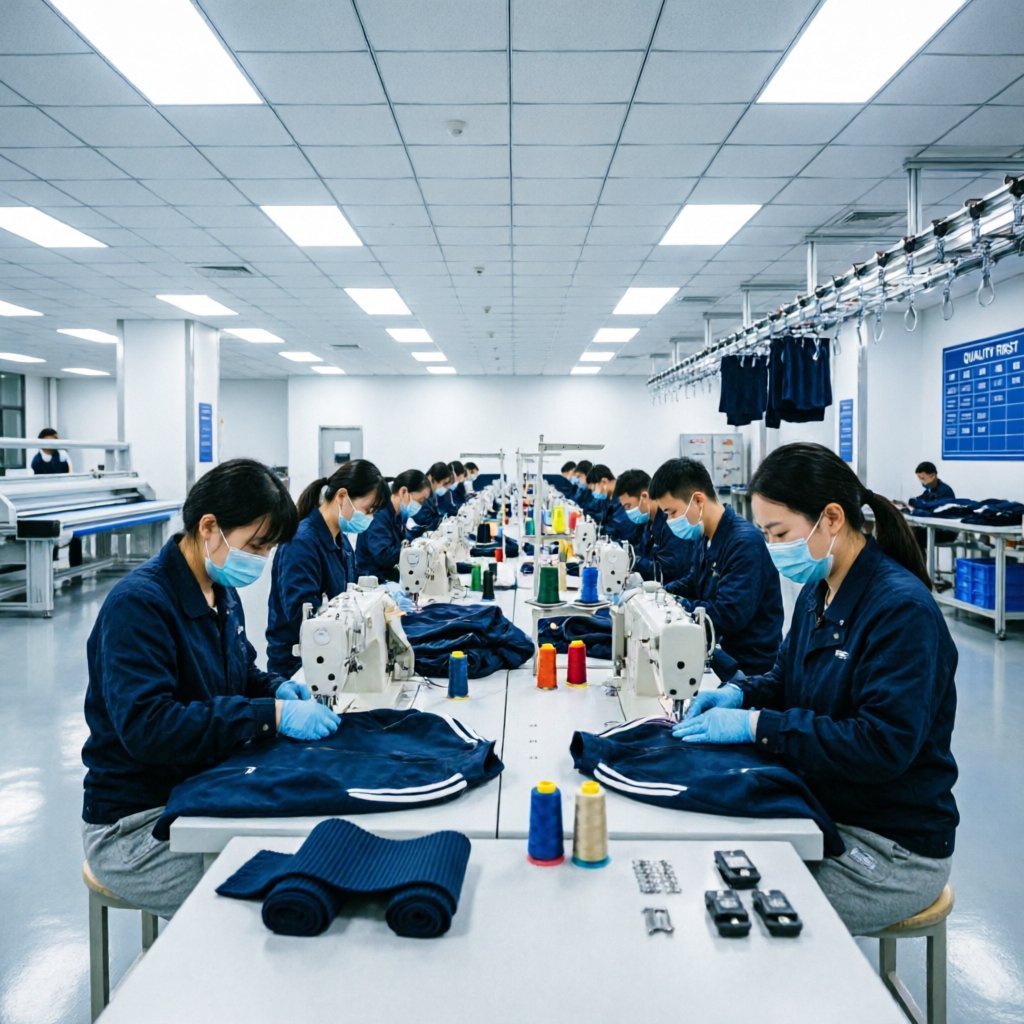
A modern sportswear production line with organized workstations indicates strong operational management.
4. Assess Production Capacity and Lead Times
Factory capacity directly impacts your supply chain reliability. Ask about monthly output measured in pieces, the number of production lines dedicated to sportswear, current capacity utilization, and typical peak-season lead times. A factory running at 95 percent capacity in August may not be able to accommodate your Q4 holiday orders without pushing lead times from 45 days to 75 days or more.
Understand the factory's order acceptance pattern. Some sportswear manufacturers in China operate seasonal cycles aligned with global brand buying calendars. If your launch timeline falls during their peak production window, negotiate capacity reservations in writing and include penalty clauses for late delivery in your manufacturing agreement.
5. Inspect Raw Material Sourcing and Fabric Quality
The performance of your sportswear starts with the fabric. A thorough evaluation of a sportswear manufacturer in China must include a review of their fabric supply chain. Do they source from certified mills with documented quality records? Can they provide mill certificates for each batch? What testing protocols do they follow for color fastness, pilling resistance, dimensional stability, and wicking performance?
Request fabric swatches and have them independently tested at a third-party laboratory such as SGS, Intertek, or Bureau Veritas. Compare the test results against your specified standards. A factory that resists independent testing or cannot trace fabric lots back to their mill source should raise immediate concern.
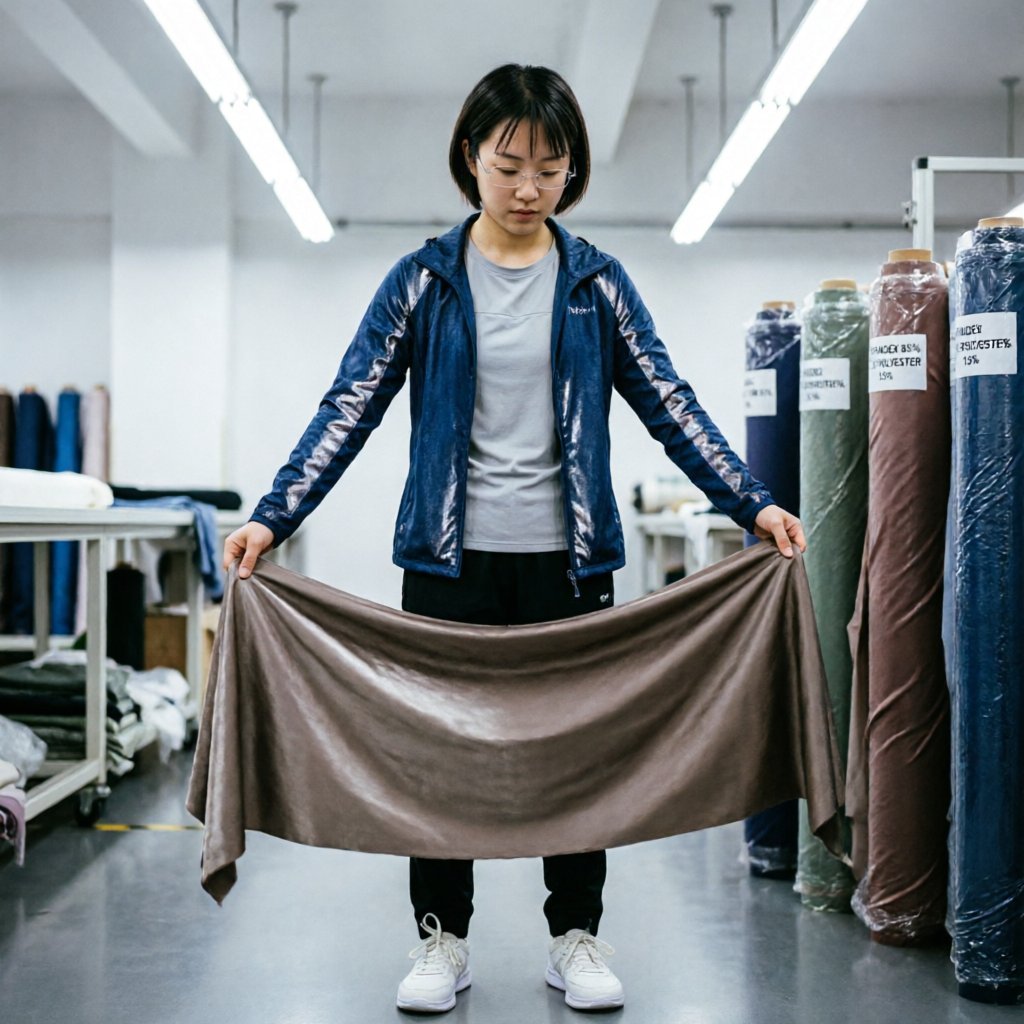
Thorough fabric inspection ensures consistency and performance across production batches.
6. Audit In-House Quality Control Systems
A structured quality control system separates reliable OEM partners in China from inconsistent suppliers. During your factory evaluation, ask to see their QC manual, inspection checkpoints along the production line, and defect classification standards. A well-run sportswear factory should have inline inspection at cutting, sewing, and finishing stages, plus a dedicated final random inspection team that follows AQL 2.5 or stricter sampling standards.
Inquire about their defect tracking system. Do they maintain statistical process control charts? How do they handle root cause analysis when a recurring defect is identified? The answers reveal whether quality is embedded in their production culture or treated as an afterthought.
7. Verify Compliance with International Standards
For brands selling into the European Union, REACH regulations govern chemical substances in textiles. For the United States market, CPSIA sets requirements for children's products, and California Proposition 65 mandates warnings for certain chemicals. Your sportswear manufacturer in China should demonstrate familiarity with these regulations and provide test reports from accredited laboratories.
Additionally, check for social compliance certifications such as BSCI, SMETA, WRAP, or SA8000. These audits verify that the factory meets minimum standards for working hours, wages, health and safety, and prohibition of forced labor. Many Western retailers and brands now require social compliance as a precondition for supplier onboarding.
8. Evaluate Communication and Project Management
Cross-border manufacturing relationships succeed or fail on communication. When you evaluate a sportswear factory, assess the English proficiency of their merchandising and sales team. Can they understand your tech pack without repeated clarification? Do they respond to emails within 24 hours? Do they use professional project management tools or rely on WeChat for all communication?
Request a sample of their production tracking reports. A factory that can provide weekly progress updates with photos, fabric consumption data, and clear milestone tracking demonstrates the organizational maturity needed for a long-term OEM partnership in China.
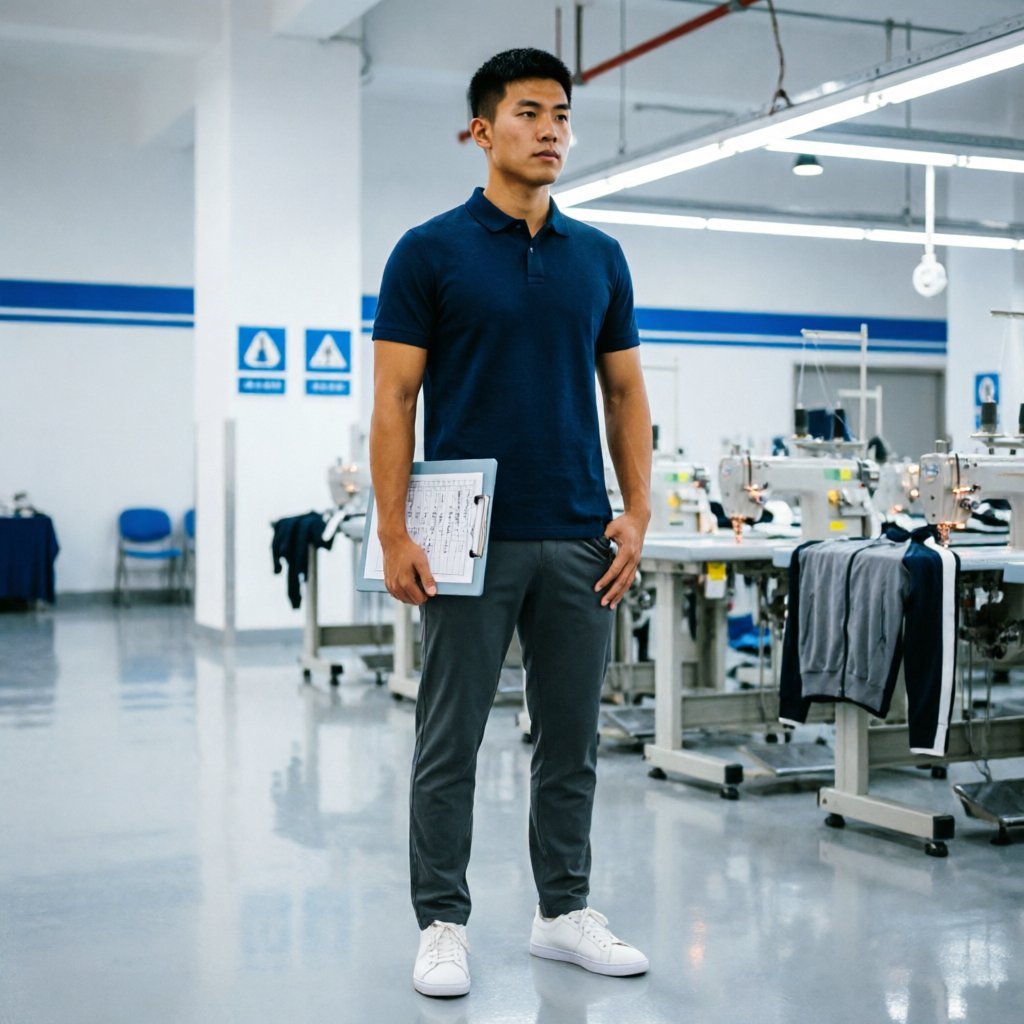
A structured on-site evaluation using a standardized checklist ensures no critical area is overlooked.
9. Conduct an On-Site Factory Audit
Digital vetting can only take you so far. An on-site audit provides irreplaceable insight into the actual working conditions, equipment maintenance, housekeeping standards, and workforce stability of a potential OEM partner in China. If you cannot visit personally, engage a third-party inspection company to conduct the audit on your behalf.
During the walkthrough, observe material storage conditions, cutting table organization, sewing line layout and workflow, finished goods inspection area, and worker demeanor. A clean, well-lit, organized factory with workers who appear engaged and professional is a positive indicator. Disorganized material flow, excessive work-in-progress inventory, and visibly unhappy workers signal deeper management issues.
10. Review Sampling and Development Capabilities
The sampling process reveals more about a factory's capabilities than any sales pitch. A sportswear manufacturer in China that can interpret your design concept into an accurate first sample, provide constructive feedback on construction feasibility, and suggest cost-effective material alternatives without compromising quality demonstrates genuine development competence.
Evaluate their sample turnaround time, pattern-making accuracy, fit consistency across size grades, and their willingness to iterate. A factory that requires three or more sampling rounds to achieve basic fit approval may not have the pattern engineering expertise your brand requires for consistent sizing across production runs.
11. Understand Pricing Structure and Payment Terms
When you evaluate a sportswear factory in China, do not accept a single bottom-line price without understanding the cost breakdown. Request a detailed quotation that separates fabric cost, trims and accessories, labor, overhead, profit margin, and any additional charges such as testing fees, packaging, or export documentation.
Standard payment terms in the industry range from 30 percent deposit with 70 percent before shipment to letter of credit arrangements for larger orders. Be cautious of factories demanding 100 percent upfront payment or offering prices significantly below market rates. Unrealistically low prices often translate to fabric substitutions, skipped quality inspections, or corner-cutting that you will only discover when products arrive.
12. Check References and Track Record
A reliable OEM partner in China should willingly provide references from existing clients. Contact these references and ask specific questions: How long have they worked with this factory? Have they experienced quality or delivery issues? How did the factory handle problems when they arose? What is their repeat order rate with this manufacturer?
Also research the factory's digital footprint. Check their presence on B2B platforms, industry trade show participation history, and any public quality certifications. A factory with a transparent, professional online presence and verifiable client references is more likely to be a trustworthy long-term partner than one that operates with minimal public information.
13. Plan for Long-Term Partnership Development
The best sportswear manufacturers in China are not vendors to be switched every season but strategic partners who grow alongside your brand. During your evaluation, consider the factory's willingness to invest in the relationship: will they reserve capacity for your forecasted growth? Do they offer design input and material innovation suggestions? Are they transparent about challenges and proactive with solutions?
A long-term OEM partner in China should align with your brand values, adapt to your quality evolution, and contribute ideas that improve your products. The time invested in a thorough upfront evaluation pays dividends through years of consistent quality, on-time delivery, and a supply chain partnership that becomes a competitive advantage.
Frequently Asked Questions
How long does it take to evaluate a sportswear manufacturer in China properly?
A thorough evaluation typically takes 3 to 6 weeks. This includes initial research and shortlisting, document review and reference checks, sample development and quality assessment, and, ideally, an on-site audit. Rushing this process to save a few weeks often leads to costly problems during production.
What is the minimum order quantity for a sportswear OEM partner in China?
MOQs vary significantly by product type and factory scale. For basic activewear such as t-shirts and shorts, MOQs typically range from 300 to 500 pieces per style and color. For specialized performance wear with custom fabrics, expect MOQs of 500 to 1,000 pieces. Some mid-sized factories offer lower MOQs for new brand partnerships, though unit pricing will be higher.
Can I use my own fabric supplier when working with a Chinese sportswear factory?
Yes, most sportswear manufacturers in China accept customer-nominated fabric suppliers. However, this arrangement shifts fabric quality and availability risk to you as the buyer. The factory will typically charge a cutting-making-trimming fee and may not accept liability for defects originating from your supplied fabric. Many brands prefer to specify fabric standards and let the factory manage sourcing under agreed quality parameters.
What is the difference between evaluating a large factory versus a mid-sized sportswear manufacturer?
Large factories with 1,000-plus workers offer scale, established compliance systems, and the capacity for high-volume orders, but smaller brands may not receive priority attention. Mid-sized factories with 200 to 500 workers often provide more flexibility, faster communication, and greater willingness to accommodate custom requirements and evolving designs. The best choice depends on your order volume, product complexity, and the level of partnership support you need.
Should I hire a sourcing agent to evaluate sportswear factories in China?
A sourcing agent can add value if you lack China market experience, need local language support, or want on-the-ground factory verification without traveling. However, agents add cost, typically 5 to 10 percent of order value, and introduce an additional communication layer. For brands with experienced sourcing teams, direct factory relationships often yield better pricing and faster problem resolution.
Take the Next Step
Evaluating a sportswear manufacturer in China is a significant investment of time and attention, but the payoff is a supply chain that delivers consistent quality, meets your timelines, and supports your brand's growth. Use this checklist as your framework, adapt it to your specific product category, and remember that the best partnerships are built on mutual transparency and shared commitment to excellence.
At MontForge, we work with brands of all sizes to turn their sportswear concepts into commercial reality. Our factory network is pre-vetted, our quality systems are proven, and our English-speaking team ensures clear communication at every stage.