Tracksuit Manufacturing: Slim European vs Vintage American Silhouettes
There are really two tracksuits, not one — and mixing them up is the most common mistake in the category. The slim European tracksuit is a tailored, close-cut piece built around clean lines and a technical, matte finish, while the vintage American tracksuit is a loose, roomy, heavyweight piece built around cotton terry and bold side stripes. They photograph almost identically at a glance and behave like completely different garments on a body. This guide breaks down the cut and fabric differences, side stripe and trim detail, zipper and cuff choices, branding strategy, and a low-MOQ launch plan.
Two Silhouettes, Two Cutting Philosophies
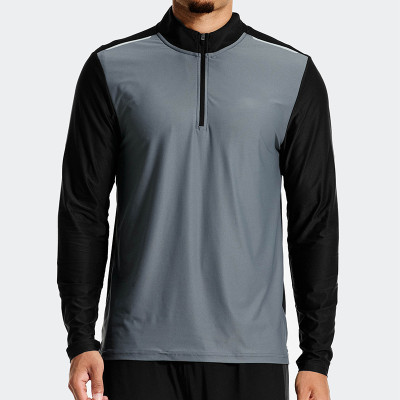
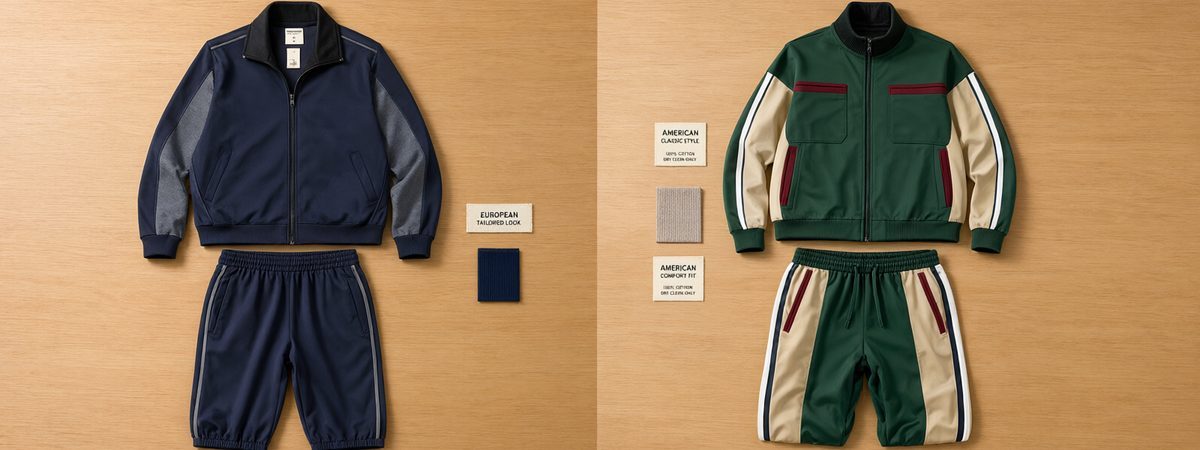
The slim European silhouette descends from Italian and French designer sportswear: clean lines, a tailored body, tapered legs and minimal branding, in technical nylon, polyester tricot or soft-knit blends with a matte rather than shiny face. The vintage American silhouette descends from 80s and 90s hip-hop and athletic warm-ups: a loose, roomy chest and thigh, a tapered ankle, and bold colour-block panels in heavyweight cotton terry or fleece. The practical difference is in the cut, not just the size: a slim set is graded to contour the body, while a vintage set is graded with real volume through the chest and thigh. That is why simply buying a larger size in a regular fit reads wrong — the sleeves and legs end up too long. Choose the silhouette, then buy your true size in that cut.
Fabric That Defines the Silhouette
The fabric is what makes each silhouette work. For a slim European fit, a lightweight technical fabric holds the tailored shape — polyester tricot gives the classic warm-up sheen and stretch, stretch-woven nylon gives a crisp, wind-resistant face, and a 220–260 GSM blend reads sleek and modern. For a vintage American fit, a heavyweight cotton terry or fleece carries the volume — French terry at 300–380 GSM and brushed fleece up to 460 GSM give the drape and substance that make an oversized cut look deliberate rather than saggy. Velour is the third, more luxurious lane: plush, slightly fuzzy, and best reserved for a Y2K statement piece. Matching the fabric to the silhouette is the single decision that decides whether the whole suit reads premium or cheap.
Side Stripe and Trim: Detail That Carries the Identity
The side stripe is the detail that turns a tracksuit into a system. Specify it as sewn-in tape (a separate woven strip inserted into the seam), contrast piping, or a cut-and-sewn panel, and echo it on the sleeve and outer leg so a team or brand identity runs shoulder to ankle. The three-stripe look is so weighted because it is genuinely visible down a moving limb — which is why it reads as athletic heritage rather than decoration. Trim matters as much as the stripe: rib cuffs and waistband, the drawcord and its aglets, and the zipper colour should all be specified against the body fabric in the same dye lot, so a white stripe, a black body and a matching drawcord read as one palette. For the bottoms-only version of this logic, see our guide to coordinated tracksuit bottoms.
Zipper and Cuff Choices: The Functional Signatures
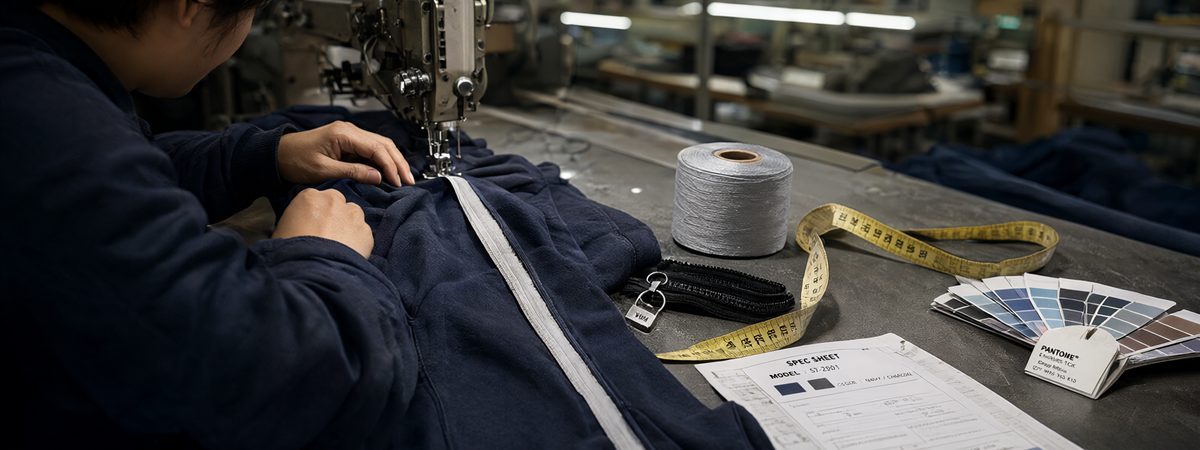
The zipper and cuff are where a tracksuit reveals its quality. Specify a YKK #5 zip with a custom-branded puller, plus a zip garage and chin guard on the jacket, so the hardware reads premium the moment a customer picks it up. On the bottoms, choose between a rib-knit ankle cuff for the classic tapered jogger look, an ankle zip for a technical athletic finish, or a snap tearaway leg for teamwear that has to come off over shoes. The collar and cuff can be rib or self-fabric, and the waist is best built as elastic with an internal drawcord plus zip pockets. A weak plastic zip or a flimsy cuff is the fastest way to make an otherwise strong suit look cheap — spend the money on the hardware.
Branding Strategy: Match the Method to the Fabric
Branding is not one decision but a series of method-to-fabric choices. Embroidery — chest and back, worked through the shell, with chain-stitch for period-correct logos — gives a durable, premium crest and suits French terry, fleece and nylon. Sublimation dyes the design into the fibre so it will not crack or peel, and is the right call for all-over polyester graphics. Heat transfer and screen print suit smaller runs but need a bonding agent on nylon. A woven back-neck tape and a branded zip puller are the small details that read premium and cost little. Keep branding restrained: European styles lean minimal, American styles lean bold, and bottoms always carry smaller, better-placed marks than tops.
A Low-MOQ Launch Plan
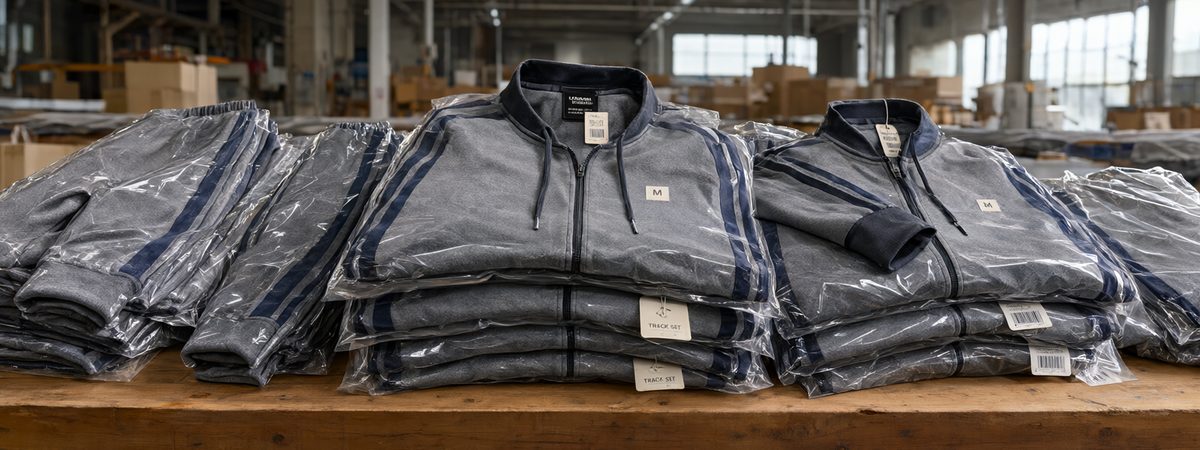
A tracksuit is unforgiving to launch — the jacket and pant have to land as one product — but a small first run is the right way to test a silhouette. Start around 50 sets per design and colour, which is the standard low-MOQ floor; track jackets and pants can often be ordered separately at the same minimum, which suits brands that sell more tops than bottoms. Expect a sample in 7–16 days and bulk in 2–4 weeks, with a rough unit cost of $18–42 per piece depending on fabric and decoration. Sign off a full-set pre-production sample before bulk, because a set has more failure points than any knit top: the zip, the panel seams, the lining and the sheen all have to survive wear and washing.
Frequently Asked Questions
What is the difference between a slim European and a vintage American tracksuit?
A slim European tracksuit is tailored and close-cut, in technical nylon, polyester tricot or soft-knit blends with a matte finish and minimal branding. A vintage American tracksuit is loose through the chest and thigh with a tapered ankle, in heavyweight cotton terry or fleece with bold colour-block panels and side stripes.
Should I size up to get a vintage fit?
No. A true vintage silhouette is graded with real volume through the chest and thigh, so buy your true size in that cut. Sizing up a regular fit just produces sleeves and legs that are too long.
Which fabric should I choose for each silhouette?
Use a lightweight technical fabric — polyester tricot, stretch-woven nylon or a 220–260 GSM blend — for a slim fit, and heavyweight French terry (300–380 GSM) or brushed fleece for a vintage oversized fit. Velour is a third, more luxurious lane.
How do I specify the side stripe and trim?
Specify the stripe as sewn-in tape, contrast piping or a cut-and-sewn panel, echoed on the sleeve and outer leg, and match the rib, drawcord and zipper trims to the body fabric in the same dye lot.
What is the MOQ and lead time for a custom tracksuit?
Low-MOQ tracksuits start around 50 sets per design and colour, with a sample in 7–16 days and bulk in 2–4 weeks. Track jackets and pants can often be ordered separately at the same minimum.
Choose your silhouette, then build it to last. Explore MontForge custom tracksuits or send us your spec — slim European or vintage American, side stripes and trims, YKK hardware and a low-MOQ launch.