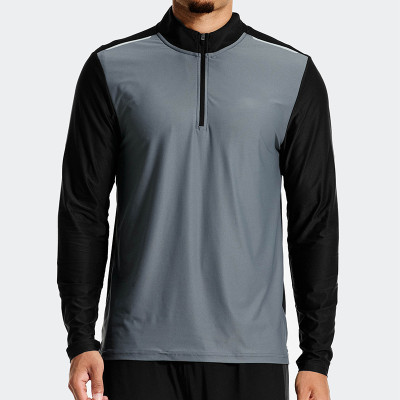
The Rise of Athleisure: Manufacturing High-Performance Streetwear for Men
A decade ago, "athleisure" was a women's-lead trend built around the yoga legging. Today the fastest-moving edge of the category is men's: performance fabrics engineered into joggers, hoodies, and windbreakers that move from the gym to the street without a costume change. At MontForge we manufacture athleisure for emerging and established brands, and the demand signal is unmistakable—men want garments that perform and look intentional. This guide walks through what makes men's high-performance streetwear manufacturable, from fabric science to 3D texture decoration and the brands that proved the category.
Exploring men's athleisure manufacturing? Talk to Our Sourcing Team →
Why Athleisure Became a Men's Wardrobe Staple
The numbers explain the urgency. The global men's athleisure segment was valued at roughly USD 158.6 billion in 2025 and is projected to grow at a 10.1% CAGR through 2033. The broader athleisure market sits near USD 368–428 billion in 2025 with a 9%+ CAGR, and more than 78% of consumers now wear athleisure outside of physical activity. Two forces drive it: rising health consciousness and the normalization of casual dress codes, amplified by remote and hybrid work. For men specifically, the shift means technical comfort is no longer reserved for the gym—it is the default for commuting, travel, and social life.
The Core Categories: Joggers, Hoodies, Windbreakers
Three silhouettes anchor almost every men's athleisure line, and each carries distinct manufacturing requirements:
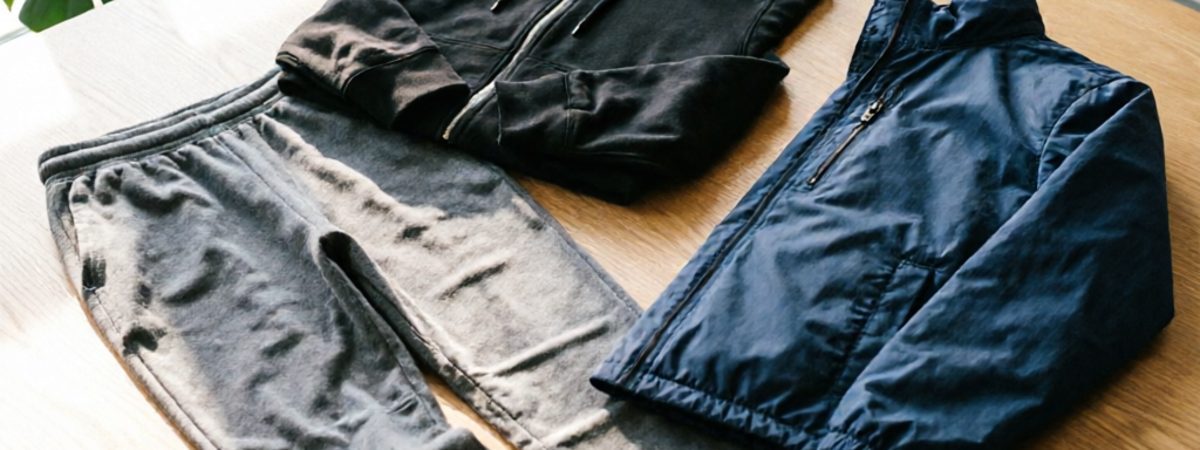
- Joggers — tapered sweatpants with elastic or drawstring waist, ribbed or cuffed ankles. The hero of the category; fit at the knee and taper to the ankle defines the look.
- Hoodies — pullover or zip-up, from lightweight French terry to heavy fleece. The "oversized" cut is a persistent streetwear signal; premium versions add brushed interiors and tonal hardware.
- Windbreakers — packable outer shells with water-repellent coatings, often in technical nylon. They bridge performance and street style and reward precise seam-sealing and zipper quality.
Round out the matrix with performance tees, crewneck sweatshirts, and 5-pocket training pants—the latter a direct response to consumers who want the polish of denim with the comfort of knit.
Performance Fabrics That Make Streetwear Wearable
The reason athleisure works is that the fabric does invisible heavy lifting. The most relevant constructions for men's streetwear are:

| Fabric technology | What it does | Why men's streetwear needs it |
|---|---|---|
| 4-way stretch knit | Stretches and recovers in every direction | Keeps joggers and hoodies moving with the body, not against it |
| Moisture-wicking (Dri-FIT-style) | Transports sweat to the surface to evaporate | All-day comfort from commute to workout |
| Odor resistance | Inhibits bacterial growth on the fiber | Garments stay fresh across long, mixed-use days |
| UPF / UV protection | Blocks harmful sun rays on covered areas | Outdoor-ready without a second layer |
| Recycled polyester | Repurposed from bottles; ~30% lower carbon than virgin | Meets the sustainability baseline buyers now expect |
Leading references include Nike's PerfectStretch (four-way stretch, recycled content) and Polartec's Power Stretch platform (dynamic stretch with shape retention). The takeaway for a brand: specify the fiber blend and finish, not just the garment—your supplier should quote composition (e.g., 78% polyester / 22% spandex) and the performance finish by name.
The 4-Way Stretch Revolution
Stretch is the single biggest differentiator between "sweatpants" and "performance streetwear." True 4-way stretch uses elastane-integrated knits that extend horizontally and vertically and return to shape after repeated wear. In manufacturing, the risks are pilling, bagging at the knee, and waistband roll—all controlled by elastane percentage, knit structure, and a pre-shrink / heat-set process. A reliable OEM validates recovery with stretch-and-recover testing and advises on the right spandex ratio per garment type. Get this wrong and the jogger looks great on day one and tired by week three.
Moisture Management and Odor Control
Moisture-wicking and odor control are where function earns its keep in daily wear. Wicking is achieved through hydrophobic fiber treatment or channeled knit structures that pull sweat to the surface; odor control uses silver-ion or bio-based antimicrobial finishes. For men's streetwear, where a single garment may serve a workout, a commute, and a dinner, these finishes are not a nice-to-have—they are the difference between a product people re-buy and one they quietly replace. Specify the finish and ask for the performance claim to be substantiated by a test report.
3D Embossing and Texture Innovations
If fabric is the foundation, decoration is the identity—and 3D texture is the most premium direction in men's streetwear right now. 3D embossed silicone printing applies silicone ink to fabric, then heat-presses it (typically 150–160°C for 12–15 seconds) into a raised, tactile structure 0.5–1mm+ high. The result is a logo or pattern you can feel, not just see.
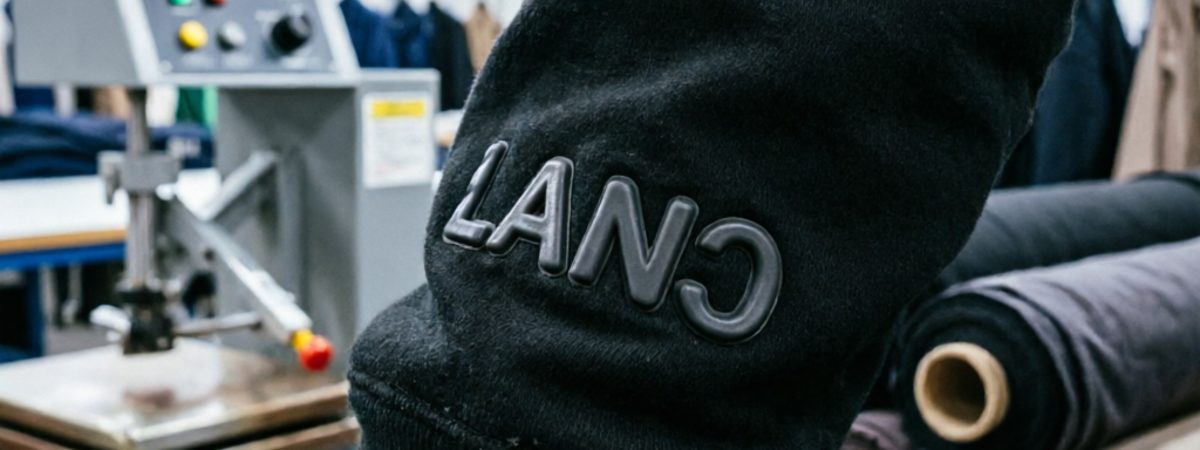
Advanced factories now run four related processes—3D craft, 3D silicone printing, 3D printing, and 3D embossing—often in a single facility with monthly capacity in the hundreds of thousands of pieces. For a streetwear brand, this means premium texture is accessible at scale, not just in small boutique runs.
Ready to develop your streetwear line? Request a Tech Pack Review →
Balancing Fashion Aesthetics with Performance Fabrics
The hard part of athleisure is the balance. Lean too technical and the garment reads as gym gear; lean too fashion and it fails the first time it's worn to train. The brands that nail it treat aesthetics and performance as one brief:
- Color discipline — grounded palettes (charcoal, navy, olive, cream) read as intentional and pair across a wardrobe.
- Silhouette — tapered, not baggy; structured, not stiff. The "studio-to-street" look lives in the taper.
- Hardware and trim — tonal zippers, clean drawcords, and minimal branding signal premium without shouting.
- Hand-feel — a garment can test perfectly and still feel cheap. Brushed backings and peached finishes are what make wearers keep reaching for it.

Color, Fit, and Silhouette for Men's Streetwear
Fit is the product. For men's athleisure, the five anchor fits are slim, tapered, standard, relaxed, and oversized—and the right choice depends on the garment and the audience. Joggers should taper from a standard thigh to a close ankle; hoodies can run oversized for street credibility or standard for broad wearability. A frequent manufacturing miss is inconsistent grading: a medium that fits and an XL that doesn't, because tolerance standards weren't locked. Insist on a graded size spec and fit samples before bulk, every season.
Sizing and Fit Considerations
Sizing drift is expensive in any apparel category, but athleisure amplifies it because stretch hides errors until the garment is worn and washed. Control it with: a signed fit standard, measurement tolerances per point (±0.5–1cm typical), pre-production fit approval, and a sealed golden sample the bulk is measured against. For elastane blends, account for relaxation shrink after the first wash and bake recovery into the spec. The correction cost of skipping fit samples is almost always higher than the sampling itself.
Sustainability: The New Baseline
Sustainable athleisure is no longer a premium differentiator—it is the expected floor. Recycled polyester (from PET bottles), organic cotton, and bio-based finishes are now standard requests, and buyers increasingly ask for chain-of-custody documentation such as GRS (Global Recycled Standard) and OEKO-TEX® Standard 100. For a brand, the manufacturing implication is clear: choose a supplier who can source certified fabrics and produce the transaction certificate per shipment, not just the fabric mill's generic claim. Greenwashing is the fastest way to lose a modern menswear customer.
Case Studies: Brands That Got It Right
Three brands show what disciplined product strategy looks like in men's athleisure:
Vuori — Launched 2015 in California as "men's performance lifestyle," built on the yoga short and jogger, reached a ~USD 5.5 billion valuation by 2024. Notably asset-light: no owned factories, partnering with manufacturers in China and Vietnam.
Lululemon — Proved the category with fabrics like Align (naked-feel) and Fast & Free (quick-dry), plus community "ambassador" marketing. Now aggressively expanding men's and international.
Alo Yoga — "Studio to Street" positioning fuses gym and streetwear with fashion-forward silhouettes and celebrity-driven launches, pulling yoga wear into everyday menswear.
The common thread: each treated fabric and fit as the product, and each built a brand story consumers wanted to belong to. Manufacturing partnerships—often with Asian OEMs—did the quiet work behind the spotlight.
Manufacturing Challenges for Athleisure
Athleisure is deceptively hard to make well. The recurring manufacturing challenges are:
- Stretch consistency — elastane relaxes; control it with heat-setting and recovery specs.
- Decoration durability — prints and embossing must survive stretch and 40+ washes.
- Color matching across blends — the same dye reads differently on polyester vs. cotton.
- Minimums vs. flexibility — streetwear thrives on small, frequent drops; suppliers must support low MOQ and fast sampling.
A production partner earns trust by naming these risks up front and showing the test data, not by promising they won't happen.
How to Choose the Right Manufacturing Partner
Sourcing men's athleisure is a capabilities question, not just a price question. Before you commit, verify: certified fabric sourcing (GRS / OEKO-TEX), in-house or reliable knit supply, 4-way stretch recovery testing, embossing and silicone-print capability, low-MOQ flexibility (often 100–200 pcs/style/color), sampling in 7–15 days, and AQL 2.5 quality control. Ask for component-level proof—a mill certificate is not the same as a finished-garment test. The right OEM acts as a development partner who protects your fit, your hand-feel, and your delivery date.
The Future of Men's Athleisure
The category is maturing from trend to staple. Expect three shifts: deeper integration of smart textiles (biometric-tracking yarns), sharper sustainability documentation as regulation tightens, and a continued blur between performance and premium casual as men adopt "one garment, many contexts" dressing. For brands and manufacturers, the opportunity is no longer "make athleisure"—it is "make athleisure that performs, lasts, and tells a credible story." The suppliers who can deliver certified, consistent, texture-rich product at flexible volumes will define the next decade of men's streetwear.
Planning your next drop? Get a Free Consultation →
Frequently Asked Questions
What is the typical MOQ for men's athleisure production?
Capable low-MOQ partners commonly run 100–200 pieces per style per color, with sampling in 7–15 days and bulk in 25–45 days. Confirm the exact minimum, since web listings often overstate flexibility.
Which fabric technologies matter most for streetwear?
4-way stretch, moisture-wicking, odor resistance, and UPF protection form the core. Recycled polyester addresses the sustainability baseline most buyers now expect.
What is 3D silicone embossing and why use it?
It is a raised, tactile logo or pattern created by printing silicone ink and heat-pressing it into the fabric. It is durable (40+ washes), crack-resistant, PVC/phthalate-free, and gives streetwear a premium, feel-able identity.
Conclusion
Men's athleisure is no longer a side trend—it is a structurally growing category where fabric science, fit discipline, and decoration innovation decide who wins. The brands that scale treat performance and aesthetics as one brief, verify their supply chain, and partner with manufacturers who protect consistency at volume. Use the framework above to brief your next collection, and explore more production playbooks in our blog or see how MontForge builds certified, consistent athleisure on our about page.