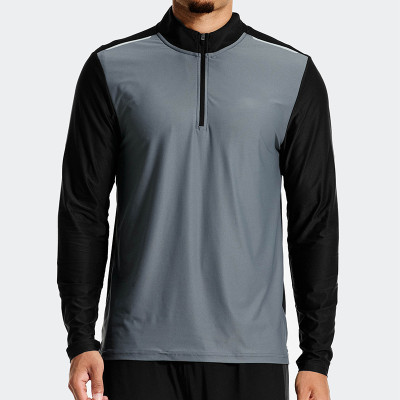
Streetwear Quarter-Zip Drops: Fabric and Finish for Premium Feel
Streetwear quarter-zips stopped being a functional layer and became a statement piece: the drop, the fabric weight, the zipper finish and the wash all tell the same story before a customer even touches the fabric. This guide breaks down the decisions that make a quarter-zip feel premium — heavyweight knits and texture, matte versus shiny zippers, garment wash and hand-feel, coordinated set strategy, and the small-batch release cadence that builds demand.
Why Premium Feel Decides the Sale
In streetwear, perceived quality is the product. A buyer deciding between two similar quarter-zips cannot test GSM in a thumbnail — they read the weight in the listing, the finish on the zipper and the hand-feel at the counter. That is why premium streetwear is built around heavy, textured knits and washed, broken-in finishes rather than basic jersey. The good news: every one of these cues is a spec you can control in the factory, from the yarn weight to the zipper grade to the final wash cycle.
Heavyweight Knits and Texture: The GSM Story
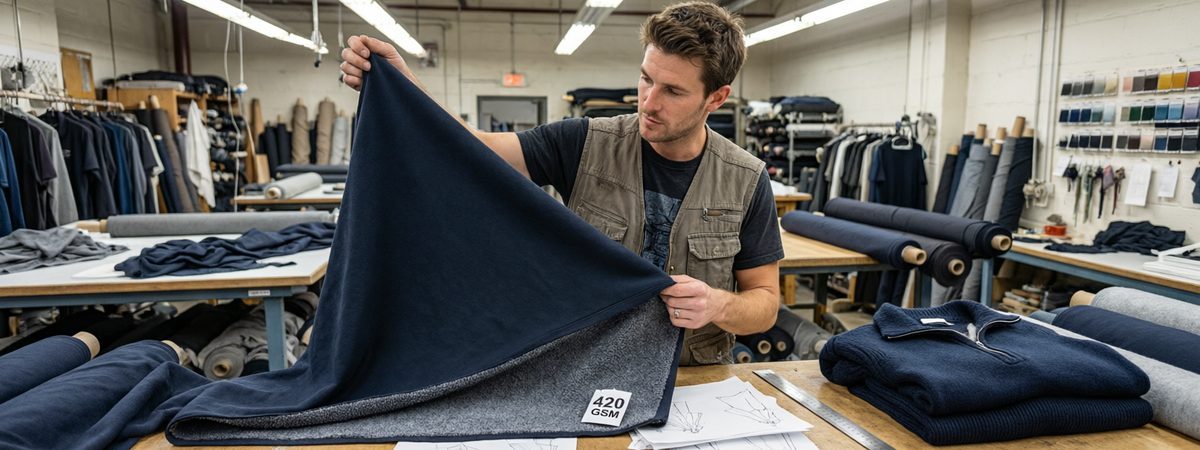
Fabric weight is measured in GSM (grams per square metre), and the tiers are well established. Lightweight French terry runs 180–240 gsm — breathable, drapey, closer to a tee. Midweight 240–320 gsm is the versatile range most hoodies, sweatshirts and joggers use. Heavyweight 320–400+ gsm is where premium streetwear lives: a 300 gsm knit reads like a premium mid-weight sweatshirt, while a 400 gsm version feels substantial and structured, almost like a lightweight layer with real presence. A 400–500 gsm organic-cotton French terry is exactly the base premium brands spec for a flagship quarter-zip, with the looped back giving warmth and the dense face giving body.
Texture is the second half of the story. French terry with a brushed interior and a smooth, dense outer face delivers softness against the skin and a clean surface for print and embroidery. High-loft loops on the inside trap warmth, while the smooth exterior reads refined rather than athletic. Specify both the GSM and the knit construction when briefing — two fabrics at the same weight can feel completely different depending on yarn quality, knit density and finishing.
Fiber Blends That Balance Feel and Stability
Fiber choice shapes hand-feel and how the garment ages. 100% cotton is the softest and most natural, but it shrinks more (potentially 5–10% without proper pre-shrinking) and holds weight when wet. The industry workhorse is an 80/20 cotton-polyester blend: it keeps the soft cotton hand while polyester adds dimensional stability, reduces shrinkage and speeds drying. For a more luxurious drape at high GSM, cotton-rayon or cotton-modal blends add softness and fluidity that pure cotton lacks, at the cost of slightly lower wet strength and more pilling care. For streetwear drops, pre-shrunk heavy cotton or an 80/20 base is the sweet spot — premium feel with predictable fit through the drop cycle.
Matte vs Shiny Zippers: The Finish Tells the Story
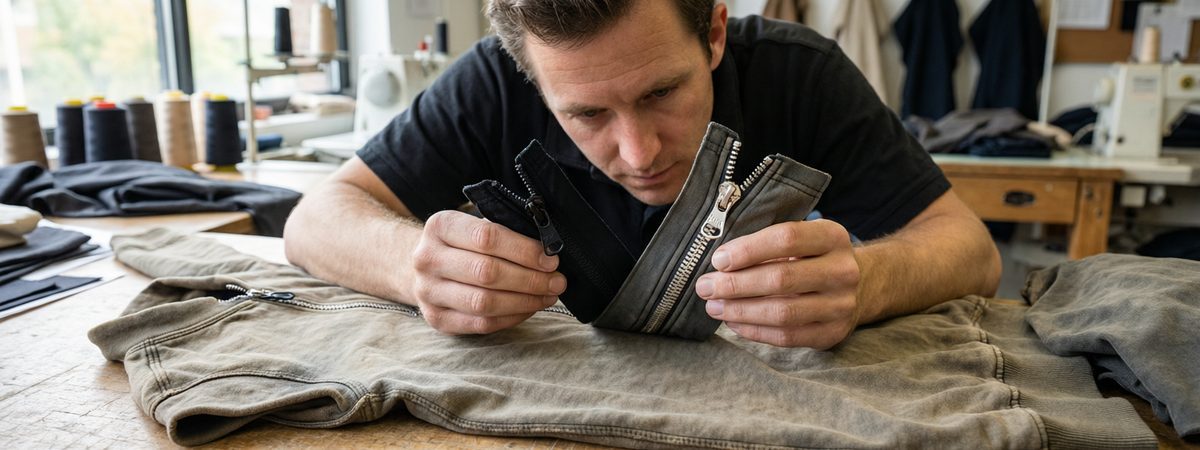
The zipper is the first metallic detail a buyer sees, and its finish sets the garment's tone. A shiny nickel or gold metal zipper catches the light and reads as a deliberate decorative accent — attention-grabbing on a fashion-forward piece. A matte black or antique finish does the opposite: it adds a vintage, understated character that suits washed fabrics and muted tones. Premium brands lean on YKK metal zippers for the quarter-zip placket — a #5 gauge metal zip in nickel or matte black — paired with a double-layer stand collar that holds its structure. YKK's METALLION line makes the choice explicit: shiny elements for statement, matte elements for vintage depth, with gunmetal bridging the two. Budget rule of thumb: upgrading from a nylon coil zip to a quality metal zip adds a small per-unit cost but lifts the perceived value by a full price tier — the same logic as brushed trims and double-needle stitching.
Garment Wash and Hand-Feel: Enzyme, Pigment and Stone
Garment washing happens after the garment is fully sewn, which is what softens it and creates that lived-in look from day one. Enzyme wash is the gentlest and most controllable: cellulase enzymes break down surface fibres (typically pH 4.5–5.5 at 45–55°C for 30–90 minutes) to produce a smooth, peachy-soft surface with subtle, uniform fading — the closest thing to "worn and washed twenty times" without looking overdone. Pigment dye, applied to the finished garment, creates a tone-on-tone, slightly uneven colour with seams and ribs picking up depth — a premium vintage effect that is popular for muted drop palettes. Stone wash uses pumice in the drum to abrade stress points, and it suits heavyweight cotton fleece of roughly 380–500 gsm that is substantial enough to take the abrasion. Whichever route you choose, require an in-house wash capability and a washed sample across the full size run before bulk, because shrinkage and shade consistency are decided in the wash house.
Coordinated Set Strategy: One Fabric, One Dye Lot
Premium streetwear sells sets: a quarter-zip with matching joggers or shorts reads as a designed collection rather than a random top. A single French terry base can carry tops, bottoms and matching sets, which keeps the collection consistent and simplifies sourcing — one fabric, one supplier, one dye program. The catch is colour consistency: piece-dyed fabric needs careful shade control, and garment-dyed sets must be cut from the same dye lot or batch so the top and bottom match exactly. Garment dyeing supports small-batch flexibility and low MOQ — you can stock neutral blanks and dye per order, cutting overproduction — but always lock the set to a single dye run and approve a lab dip against your Pantone reference before bulk.
Small-Batch Release Cadence: Scarcity as a Strategy
Streetwear runs on drops: limited quantities released on a fixed schedule, where selling out is the proof of desirability. The cadence maps to brand stage: emerging brands typically run 50–200 units per drop every 6–8 weeks, growing brands 100–500 units every 4–6 weeks, and established names 500–2,000 units weekly. Small runs keep upfront production costs low, leave minimal dead stock and make every sellout a story for the next drop. The discipline is to pair scarcity with quality — an artificial-feeling drop fails, but a genuinely premium small batch sells itself and builds the resale chatter that drives the next release. Plan the run sizes with your manufacturer early so the MOQ tiers, lead times and wash program align with the release calendar.
Sampling and Wash Tests Before Bulk
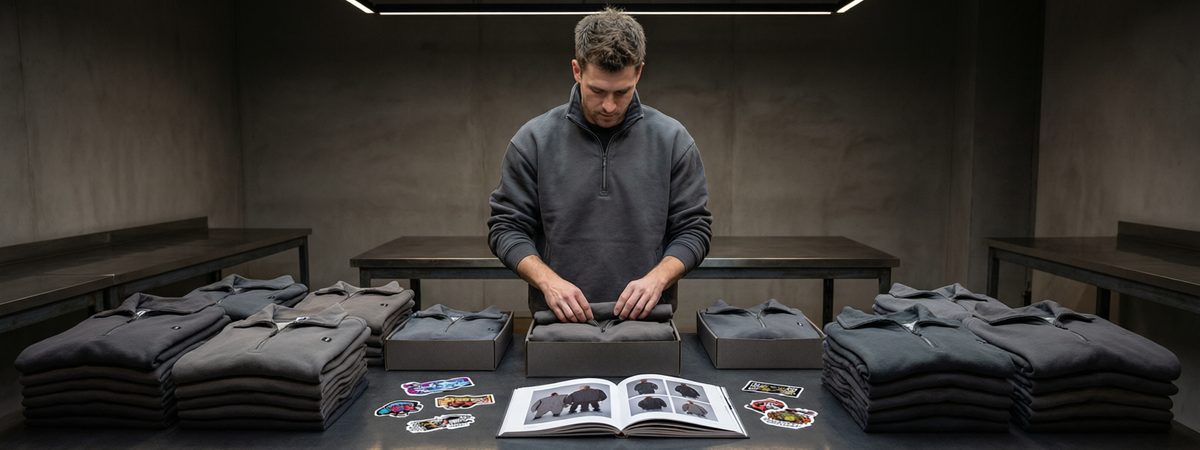
Premium feel cannot be verified on a computer screen. Order a sample in your target GSM and fabric, and put it through two wash cycles before you approve bulk: that two-wash test surfaces real shrinkage, stretch recovery, colour fastness and any pilling far better than a fresh showroom piece. Check the zipper action after washing (metal zips should run smooth, no puckering at the placket), the collar structure, the brushed-back hand after drying, and the shade against your approved lab dip. A typical custom sample runs 7–15 days, which is short enough to iterate on hand-feel before committing a full drop run.
MontForge Quarter-Zip Capabilities
MontForge develops custom quarter-zip pullovers for streetwear, CrossFit and teamwear programs. We build heavyweight French terry and brushed-back performance knits from 240 to 400+ gsm, with 100% cotton, 80/20 cotton-polyester and cotton-modal bases, pre-shrunk for fit stability. Our trim program covers YKK metal zippers in shiny nickel, matte black and gunmetal, double-layer stand collars, 2×2 heavy rib cuffs and hems, and twin-needle stitching. We run enzyme wash, pigment dye and garment-dyed programs with low-MOQ batch flexibility, coordinated set production from a single dye lot, and a 7–15 day sample window with two-wash review. From a 50-piece test drop to a full release calendar, we help brands ship quarter-zips that feel as premium as they look.
Frequently Asked Questions
What GSM makes a quarter-zip feel premium?
Heavyweight French terry from 320 to 400+ gsm is the premium tier. A 300 gsm knit reads like a mid-weight sweatshirt, while a 400 gsm version feels substantial and structured. Pair the weight with a brushed interior and a smooth outer face for the classic premium streetwear hand.
Matte or shiny zipper — which should I choose?
It sets the tone. A shiny nickel or gold metal zip reads as a decorative accent on fashion pieces; a matte black or antique finish adds vintage, understated character that suits washed fabrics. Either way, spec a YKK metal zip (typically #5 gauge) — upgrading from nylon coil lifts perceived value by a full price tier.
What is garment washing and why does it matter?
Garment washing treats the finished garment after sewing, softening the fabric and creating a broken-in look. Enzyme wash gives a smooth peachy-soft surface with subtle fading; pigment dye adds tone-on-tone vintage depth; stone wash abrades stress points and suits 380–500 gsm heavy fleece. Always approve a washed sample before bulk.
How do I keep a matching set colour-consistent?
Cut the top and bottom from the same dye lot or batch and approve a lab dip against your Pantone reference. Garment-dyed sets must come from one dye run — mixing lots is the most common cause of mismatched sets.
What drop size works for a small streetwear brand?
Emerging brands typically run 50–200 units per drop every 6–8 weeks, growing brands 100–500 units every 4–6 weeks. Small runs keep cost and dead stock low, and every sellout becomes the story that drives the next release. Plan run sizes with your manufacturer so MOQ and lead times match the calendar.
Ready to build a premium quarter-zip drop? Send us your brief or browse MontForge quarter-zips — heavyweight knits, YKK metal zips and garment wash programs at low MOQ.