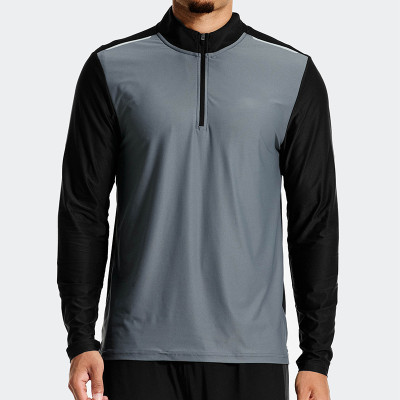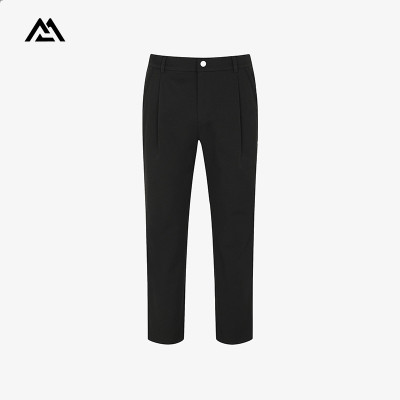
Running Apparel Manufacturing: What Makes Gear for Runners Different?
Running looks simple: lace up and go. But the apparel a runner wears is the product of a very different manufacturing logic than gym wear, lifestyle activewear, or team uniforms. A runner's body repeats a narrow, high-impact movement cycle for minutes to hours, often in heat, cold, wind, or darkness. That demands gear engineered for weight, breathability, visibility, and fit in ways ordinary sportswear never attempts. This article breaks down exactly what makes running apparel manufacturing different, with the materials science, construction methods, and 2025-2026 market data behind it.
Planning a running apparel line? Talk to our manufacturing team about reflective and moisture-wicking specs →
1. The Runner's Non-Negotiables: Lightweight, Reflective, Breathable
Three properties sit at the top of every serious running garment brief, and each one pushes manufacturing in a specific direction:
- Lightweight. Every extra gram is carried for the whole run. Salomon's Exo running line switched from knit to a woven fabric that weighs roughly 100 g less per garment while improving moisture management — proof that fabric architecture, not just fiber, drives weight down.
- Reflective. Most training happens at dawn or dusk. Reflective placement is now a design discipline in itself (see Section 2), governed by safety standards rather than decoration.
- Breathable. Heat is the enemy of endurance. Brands like Goldwin's 0 Performance lab build "dynamic cooling systems" from laser-cut vents mapped to the body's heat zones, so airflow reaches exactly where sweat pools.
2. 3M Reflective Technology and Night-Run Safety
Reflectivity is where running gear diverges most sharply from fashion activewear. It is a safety system, not a trim option. The science is precise: 3M's biomotion research shows that placing retroreflective material on the body's points of motion — wrists, ankles, knees, and torso — makes a runner recognizable to drivers far sooner than brightness alone. As a rule of thumb, activewear should carry about 15 square inches of reflective area per viewing angle, front, side, and back.

Performance benchmarks from the field:
- Brooks Run Visible uses 3M™ Scotchlite™ Carbon Black Stretch reflectivity in critical motion zones, helping a runner be identified as a runner from up to 600 feet away.
- EN ISO 20471 is the high-visibility standard referenced by suppliers such as Fungsports for 360° reflective shorts with broad reflective tape on front and back hems.
- 3M Scotchlite 5410 is OEKO-TEX Standard 100 certified, bonds seamlessly without stitching (snag-free), and survives home washing at 60°C for 75 cycles — durability that matters for repeat-use gear.
Manufacturing takeaway: Reflective application method matters. Heat-transfer film (no stitching) keeps the garment smooth and snag-resistant, while woven-in reflective yarn survives the most wash cycles. Choose based on whether the piece is a premium technical layer or a high-turnover training basic.
3. Laser Perforation for Targeted Cooling
Laser cutting lets a factory remove precise holes from finished fabric without fraying, creating ventilation exactly where the body needs it. Unlike printed mesh, laser perforation is engineered per pattern: underarms, upper back, and behind the knees are common hot spots for runners.
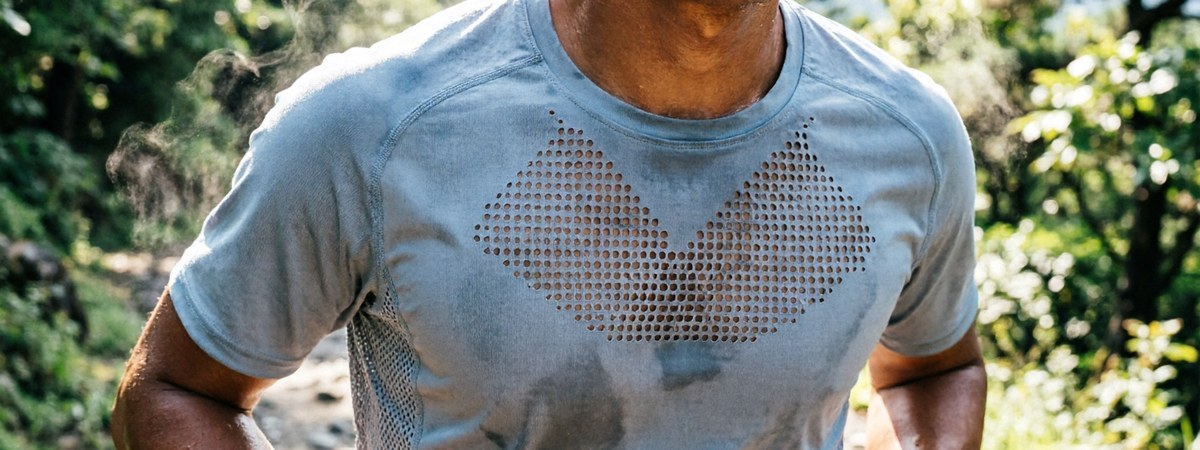
Goldwin's 0 Performance capsule maps vents to a "heat-map" of the body, turning functional cooling into a recognizable design language. The same logic appears in racing vests and lightweight singlets where gram-level weight and airflow decide comfort over a 10K or marathon. Laser perforation also supports sustainability: it is a zero-waste process that needs no extra trims or adhesives.
4. Moisture Management for Long-Distance Gear
"Wicking" is more than a marketing word — it is a fiber-and-construction problem. Long-distance runners need fabric that moves sweat from skin to surface fast and dries without chilling the body in wind. Two engineering approaches dominate:

- Engineered knit structures. Peloton's marathon capsule uses a Tech Mesh fabrication that is quick-drying and all-over breathable, moving moisture away from the body across long efforts.
- Finished-fabric treatments. HOKA's 2025 AIROLITE 2.0 tee pairs a 3D support structure with HeiQ Mint anti-odor technology, and the brand reports roughly 30% faster drying than the previous generation.
For distance gear, the goal is not just "dry" but "stable" — fabric that holds its fit and weight as it gets saturated, so the runner is not carrying heavy, clinging cloth at mile 20.
5. Ergonomic Fit Engineered for Running Mechanics
Running is a forward, repetitive, single-plane motion. A garment built for the gym will ride up, chafe, or restrict the arm swing. Running-specific pattern making addresses this directly:
Articulated seams
Panels are cut to follow the stride, so seams sit off high-friction points like the nipples, waistband, and inner thigh.
4-way stretch mapping
Salomon's Motion Fit 360 uses four-way stretch in muscle zones while holding structure elsewhere, so the short moves with the body instead of against it.
Flatlock construction
Peloton's design team removes center-back and high-chafe seams and uses seam-soft thread to cut irritation over long runs.
Graduated compression
2XU's PWX and MCS technologies (23-25 mmHg) contain muscle vibration and support blood flow, reducing fatigue late in a race.
The result is a garment that "disappears" — the standard elite runners use for a good race kit. Achieving it requires pattern libraries built from real runner movement, not scaled-up casualwear blocks.
6. Running Accessories: Arm Sleeves, Headbands, Reflective Vests
Accessories are where running-specific manufacturing shows its range. Each solves a narrow problem:
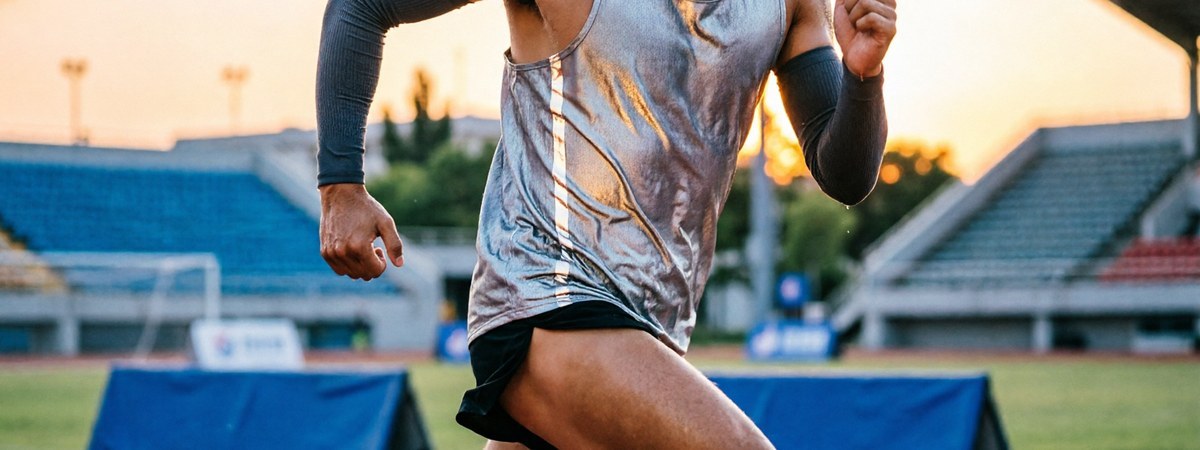
- Arm sleeves combine UV protection, light compression, and cooling. The cooling arm sleeve market was about USD 1.33 billion in 2025 and is forecast to reach USD 2.49 billion by 2034 (CAGR 7.1%), driven by outdoor-sport participation.
- Headbands manage sweat and keep it out of the eyes without the pressure of a full cap.
- Reflective vests remain the largest product type in the reflective running gear segment (about 35.2% share in 2025), because they deliver body-worn visibility that works over any outfit.
These pieces are small, high-margin, and ideal for low-MOQ test launches before a full apparel line.
7. Why Men's Running Apparel Deserves Its Own Pattern
Men's running gear is not "unisex with a different label." Male runners carry mass and sweat differently, and the shoulder/back chafe points, inseam needs, and torso length differ from women's patterns. Manufacturing a credible men's line means independent block development — separate chest, shoulder, and inseam grading — rather than scaling a women's draft. It also means styling cues that read as performance: clean lines, minimal labels, and reflective accents placed for motion visibility rather than logo display.
8. 2026 Trends in Running Apparel Manufacturing
The category is growing and professionalizing. Recent market readings:
- Reflective sportswear was valued at about USD 1,620 million in 2025, with a forecast of USD 1,706 million in 2026 and USD 2,208 million by 2031 (CAGR 5.3%); running and jogging is the leading application at roughly 35% of the 2025 market.
- Reflective running gear specifically was about USD 1.2 billion in 2025 and is projected to reach USD 1.9 billion by 2034 (CAGR 6.8%), with Asia Pacific the fastest-growing region at 38.5% revenue share in 2025.
- North America led reflective running gear in 2025 with about 38.5% share (roughly USD 277.7 million), while vests and apparel together accounted for about 53.4% of segment value.
What this means for brands: Demand is shifting from passive retroreflective trim toward LED-integrated and smart textiles, and from unbranded budget options toward differentiated, safety-certified performance gear. Manufacturers that can combine certified reflectivity, moisture engineering, and low-MOQ flexibility are best positioned.
9. How MontForge Builds Running Gear That Performs
At MontForge we treat running apparel as a systems problem. Our workflow covers fabric development (moisture-wicking and recycled poly blends), reflective application (heat-transfer and woven-in 3M-compatible options), laser perforation for cooling, and flatlock ergonomic construction — all under one roof to keep lead times and quality consistent. We work to OEKO-TEX and REACH-compliant standards, support low-MOQ sampling so new brands can validate a running line before scaling, and provide tech-pack-to-bulk support for both men'sperformance and athleisure crossover pieces.
Want specs tailored to your runners? Request a running apparel manufacturing quote →
10. Choosing the Right Running Apparel Manufacturer
When you shortlist a factory for a running line, check these points:
Reflective capability
Can they apply heat-transfer film and woven reflective yarn, and to what standards (EN ISO 20471, OEKO-TEX)?
Moisture fabric library
Do they stock or develop wicking knits, not just generic poly?
Laser & flatlock
Is laser perforation and flatlock stitching in-house, or outsourced?
Fit data
Do they use running-specific blocks, not scaled casualwear?
MOQ flexibility
Can you start small (300 units) and scale without re-tooling?
Certifications
OEKO-TEX, REACH, GRS for recycled content — verified, not claimed.
11. Frequently Asked Questions
What fabric is best for running apparel?
Lightweight polyester or nylon-spandex knits with engineered wicking structures perform best. Recycled poly (rPET) is widely available at up to 90% recycled content for brands with sustainability goals.
How bright does reflective running gear need to be?
Brightness follows standards like EN ISO 20471; the bigger lever is placement. Reflective material on motion points (wrists, ankles, knees, torso), about 15 sq in per viewing angle, makes a runner recognizable sooner than a brighter but poorly placed logo.
Is laser perforation durable in the wash?
Yes. Laser-cut holes do not fray, and when paired with stable knit structures they survive normal wash cycles. Durability depends more on the base fabric than the perforation itself.
What MOQ should I expect for custom running apparel?
Many technical suppliers start around 300 units per color/style, with 25-day bulk turnaround common for established factories. Low-MOQ sampling lets new brands validate fit and fabric before committing to volume.
Conclusion
Running apparel is manufactured differently because runners ask different things of cloth: less weight, more breathability, certified visibility, and a fit that vanishes under motion. The brands winning in 2026 are those pairing materials science — 3M reflective, laser cooling, moisture engineering — with running-specific patterns and agile, low-MOQ manufacturing. If you are building or scaling a running line, the right factory partner is the one that treats these as engineering requirements, not optional trims.
Ready to build your running apparel line? Start your running gear project with MontForge →