Outdoor Sportswear Manufacturing: Building Gear for Adventure and Exploration
1. The Outdoor Apparel Market Is Booming
Outdoor is no longer a niche. The global outdoor apparel market was valued at roughly USD 26.7 billion in 2025 and is forecast to reach USD 57.3 billion by 2035, a CAGR of about 7.9% (Global Market Insights). A separate outdoor sports-clothing track sized the 2025 market at USD 45.2 billion, projected to USD 70.24 billion by 2032 (CAGR 6.49%). North America is the largest regional buyer at around 32% share, with The North Face, Columbia, Patagonia, Helly Hansen, and Arc’teryx leading the field. In China alone, outdoor participation has passed 400 million people, pulling a related industry worth over RMB 1.44 trillion and growing at 15%+ annually. For a brand, that is a large, fast-expanding audience willing to pay for gear that performs.
This article breaks down what outdoor sportswear manufacturing actually requires — the membranes, the insulation, the durability engineering, and the production discipline — so you can brief a manufacturer with confidence.
2. Waterproof + Breathable: The Heart of an Outdoor Shell
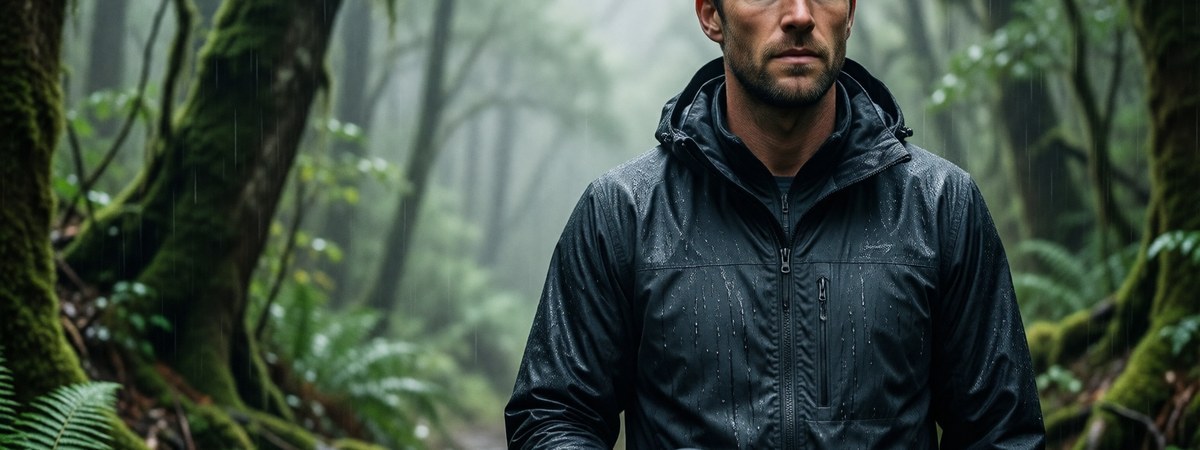
The single most important property of outdoor gear is keeping rain out while letting sweat vapor escape. The gold-standard solution is a laminated waterproof-breathable membrane. GORE-TEX’s membrane, for example, is a bi-component layer (expanded polyethylene ePE, or ePTFE bonded with polyurethane) that consistently meets a water column above 28,000 mm. It carries roughly 9 billion pores per square inch, each about 20,000 times smaller than a water droplet — too small for liquid water to push through from outside, large enough for moisture vapor to leave from inside. The result is durably waterproof, fully windproof, and reliably breathable.
3. DWR and Seam Taping: Where Protection Is Won or Lost
A membrane alone is not enough. The outer face textile gets a Durable Water Repellent (DWR) treatment — an ultra-thin layer that makes water bead and roll off instead of saturating the fabric and creating that cold, clammy "wet out" feeling. The industry is now moving to PFAS-free DWR to cut chemical footprint without losing beading performance. Just as critical are heat-sealed waterproof seams: every stitch hole is a potential leak, so taped seams are what keep a jacket watertight in sustained rain. Manufacturers that skip seam taping quietly compromise the whole garment.
4. Windproof Softshells and the Weather-Protection Layer
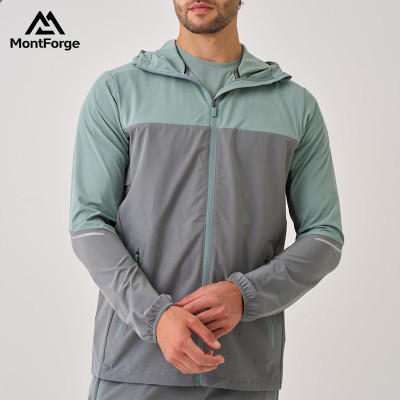
Not every outdoor layer needs a hard shell. Windproof softshells block convective heat loss on exposed ridges and bike commutes while staying flexible and quiet. Technologies such as The North Face’s WindWall use a purpose-built wind-resistant weave to cut airflow without a stiff membrane. These mid-weight pieces bridge the gap between a base layer and a rain shell, and they are where fit and four-way stretch earn their keep on the trail.
5. Lightweight Insulation for Layering Systems
Outdoor comfort is built in layers: a wicking base, an insulating mid-layer, and a protective shell. The insulating layer is where material science shines. PrimaLoft, originally developed for the U.S. Army in the 1980s as a synthetic alternative to down, traps body heat in millions of air pockets yet keeps over 90% of its warmth even when soaked — something natural down cannot do. PrimaLoft Gold Eco uses 55–90% recycled content and reports up to 98% thermal efficiency, and the fibre is roughly 30% lighter than traditional down at equal warmth.
Weight is tuned by zone: 40–60 g/m² fills suit active use and mild cold, 100 g/m² is the normal insulating jacket, and 200 g/m² is for serious winter parkas. A well-engineered piece may even vary fill — more at the core, less at the arms — to balance warmth with mobility, the same logic behind pieces like the Patagonia Nano Puff (60 g/m²).
6. Durability: The Non-Negotiable for Outdoor Gear
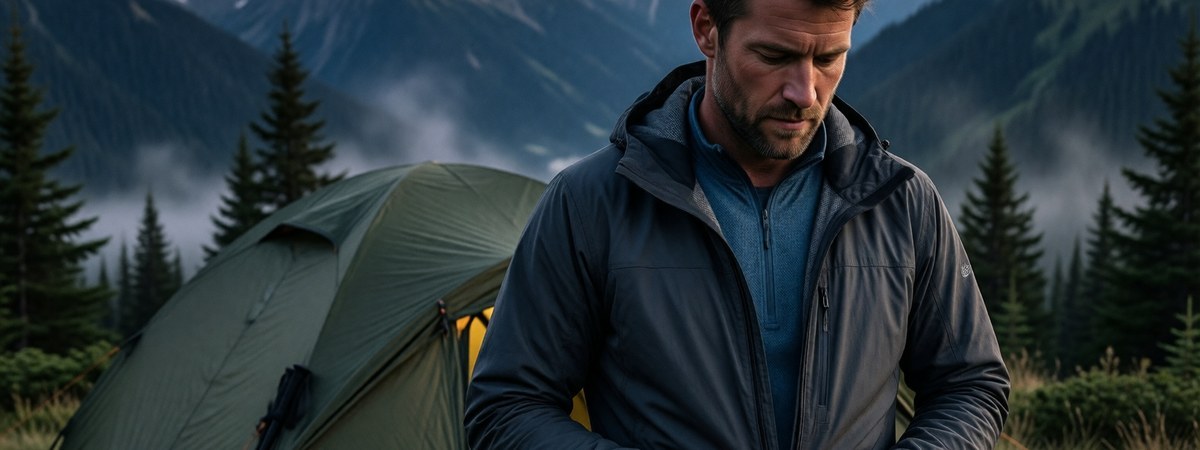
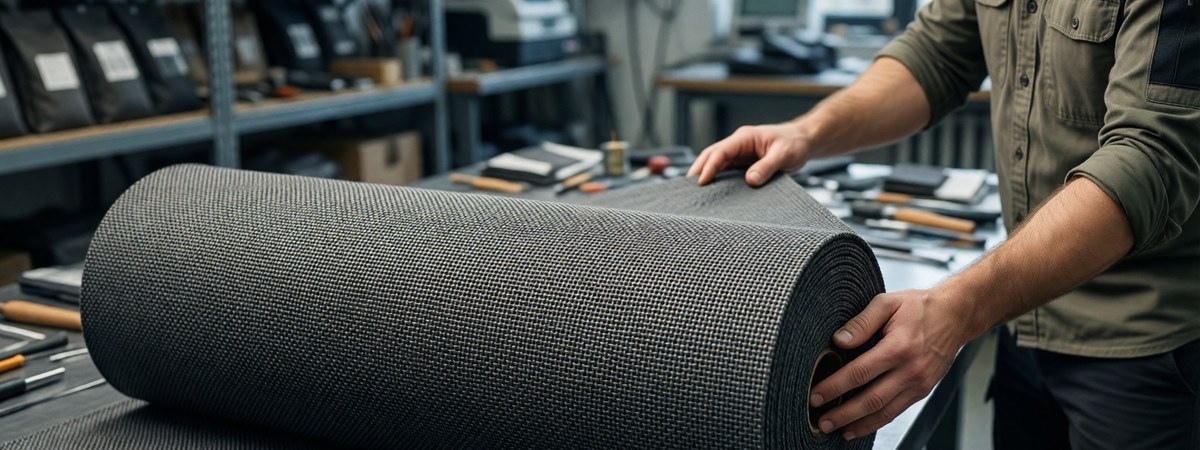
Outdoor clothing is abused — dragged over rock, brushed by pack straps, scraped on branches. Abrasion and tear resistance decide whether a garment lasts one season or ten. The benchmark is CORDURA® Advanced Fabric, with a 55-year durability heritage built on high-tenacity Nylon 6,6. It comes in deniers from 330D to 2250D; a 1000D CORDURA grade is rated for roughly 100,000 Martindale abrasion cycles (EN ISO 12947-2). A ripstop grid weave stops a puncture from spreading into a tear, and coatings add UV resistance and waterproofing from 500 mm up to 20,000 mm (TPU lamination).
7. Sourcing Outdoor-Specific Fabrics
Standard activewear cloth will not survive the backcountry. Outdoor sourcing means specifying the right substrate for the job: ripstop nylon for high-wear panels, softshell blends for wind resistance, laminated membranes for shells, and recycled options such as CORDURA re/cor™ (100% reclaimed yarns) or PrimaLoft Eco (recycled fibre). Sustainability is now a purchase driver — industry surveys show 70%+ of outdoor buyers favour recycled or low-impact materials — so PFAS-free DWR, bluesign®-approved mills, and GRS-certified recycled content are moving from nice-to-have to expected.
8. Custom Outdoor Collection Design
A custom outdoor line is usually a coordinated system, not a single SKU. Typical pieces a brand develops together:
- Hard shells — waterproof-breathable jackets with taped seams and adjustable hoods.
- Insulated mid-layers — PrimaLoft or fleece jackets and gilets for the layering system.
- Softshells — windproof, stretchy pieces for high-output movement.
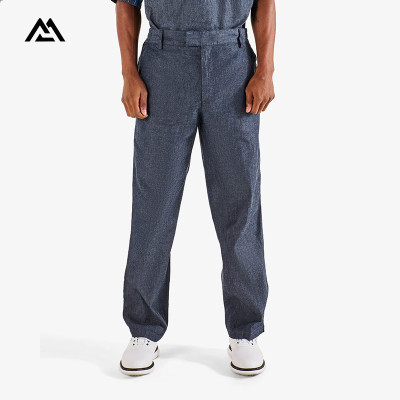
- Technical trousers and shorts — ripstop, articulated, with reinforced knees and UPF options.
- Accessories — caps, gaiters, and pack-compatible layers that complete the look.
Design discipline matters: a collection should share a colour story, a consistent membrane/fill strategy, and compatible fits so the pieces layer cleanly together.
9. Manufacturing Considerations for Outdoor Brands
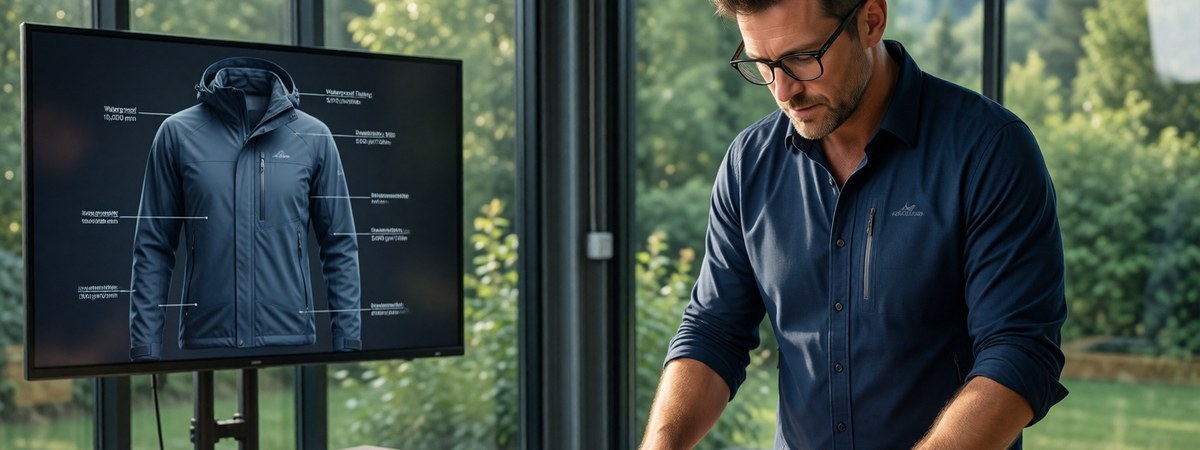
Building outdoor gear well is a manufacturing problem before it is a design problem. Key production markers:
- Lamination control — bonding membrane to face and backer textiles without delamination or stiffening.
- Seam taping accuracy — every needle hole sealed at the right temperature and pressure.
- Durability testing — tear (ASTM D5587), Martindale abrasion (ASTM D4157), and weather cycling to MIL-STD-810H for temperature, UV, and salt-spray resistance.
- Low-MOQ flexibility — start a capsule at small batch to validate the market, then scale without re-tooling.
These are the gates that separate a jacket that "looks technical" from one that survives a multi-day storm.
10. How MontForge Builds Outdoor Gear
At MontForge we manufacture outdoor lines as a vertically integrated operation: in-house membrane lamination, automated laser cutting, flatlock and welded seam construction, and seam taping under controlled parameters. Our QC lab runs tear, Martindale abrasion, and weathering protocols (ASTM / EN ISO / MIL-STD references) so durability claims are evidenced, not asserted. We support recycled and PFAS-free material pathways and start outdoor capsules at low MOQ, so a new brand can prove the gear in the field before committing to volume.
Planning an outdoor capsule? Talk to MontForge about your outdoor line →
11. How to Choose an Outdoor Apparel Manufacturer
When you brief a factory, use this short checklist: Can they laminate and seam-tape membranes in-house? Do they specify denier and abrasion cycles (e.g. 1000D CORDURA, 100,000 Martindale)? Can they source recycled and PFAS-free options? Do they run instrumented durability tests against ASTM/EN ISO standards? And can they start small and scale? A partner who answers yes to all five is the one worth a sample run.
12. Frequently Asked Questions
12.1 What makes outdoor fabric waterproof and breathable?
A laminated membrane with pores far smaller than a water droplet but large enough for vapour — rated by water column (GORE-TEX exceeds 28,000 mm) — plus a DWR outer treatment and taped seams so stitches do not leak.
12.2 Is synthetic insulation better than down for outdoors?
For wet and high-output use, yes. PrimaLoft keeps 90%+ of its warmth when soaked and is about 30% lighter than down at equal warmth, while down collapses once damp. Down still wins for dry, weight-critical cold.
12.3 How durable should outdoor gear be?
Look for high-tenacity nylon such as 1000D CORDURA rated near 100,000 Martindale abrasion cycles, ripstop weaves to stop tear spread, and documented testing to ASTM D5587 / D4157 and MIL-STD-810H weathering.
12.4 Can a new brand launch outdoor gear at low MOQ?
Yes. Many manufacturers, including MontForge, support low-MOQ sampling and small-batch capsules so you can validate the market and field-test durability before scaling production.
13. Conclusion
Outdoor sportswear manufacturing is the discipline of making gear that performs when conditions do not. It combines waterproof-breathable membranes and PFAS-free DWR, lightweight PrimaLoft insulation, and CORDURA-grade durability — all held together by lamination, seam taping, and instrumented testing. Choose a manufacturer who controls those processes in-house and can start small, and your adventure-ready collection will earn the trust of people who depend on it.
Ready to build your outdoor line? Start your custom outdoor sportswear project with MontForge →