How to Brief a Manufacturer for Custom Training Shorts
A training short looks simple — an elastic waist, a liner, two seams — but the tech pack is where a $12 pair and a $48 pair separate. The manufacturer can only build what you specify, and every omission becomes a default that may not match your brand. This guide is a briefing checklist for custom training shorts: the fabric, inseam and liner decisions that matter, how to spec artwork for print and embroidery, the 7–15 day sampling loop, the fit approval process, and the bulk-readiness checks that keep a reorder identical to the first run.
Tech Pack Essentials: Fabric, Inseam, Liner, Trims
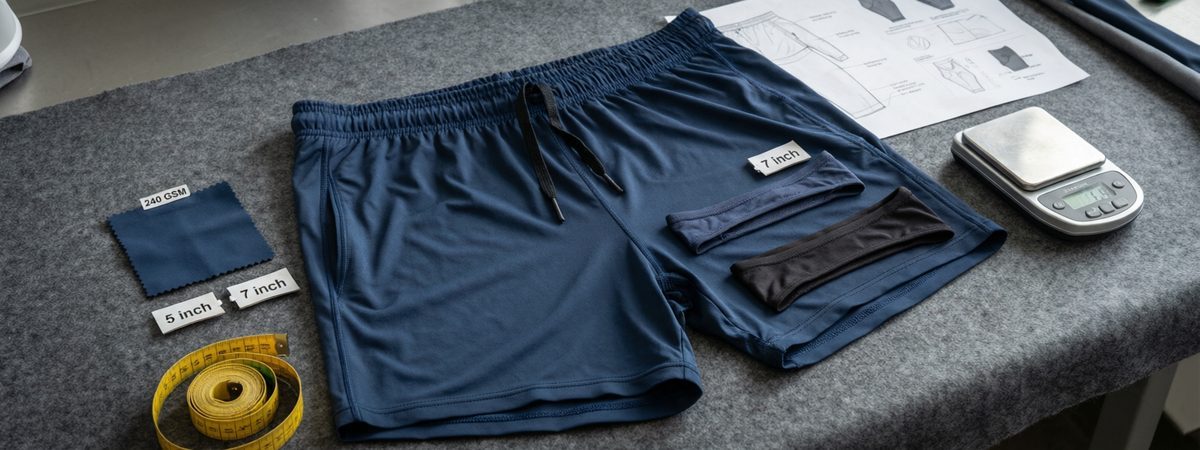
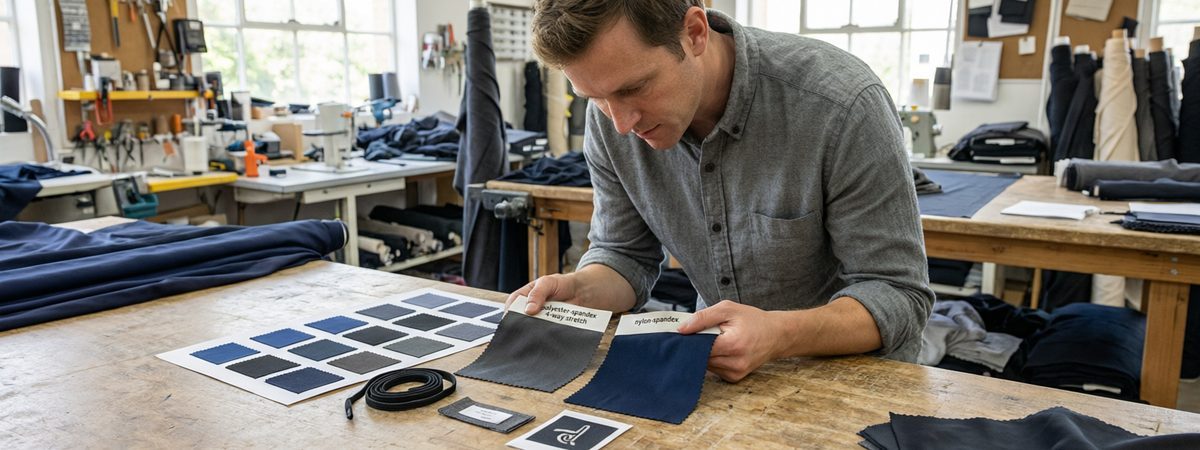
A usable tech pack for a training short locks four variables before anything else. Fabric: state the fibre blend and weight, not just the trade name. The workhorse is a polyester-spandex shell at roughly 86–90% polyester to 10–14% spandex for four-way stretch, sitting between about 120 and 200 gsm — lighter for summer and running, heavier for a premium gym feel. A nylon-spandex shell gives a silkier, more abrasion-resistant hand. Name the liner fabric separately, because it is a different material spec. Inseam: 5 inch for maximum leg freedom and a bodybuilding or runner audience, 7 inch as the versatile all-round default, 9 inch for taller customers or more coverage. Liner: brief, compression or none. A brief liner is a lightweight mesh for basic support; a compression liner (typically 15–25% spandex) is a longer second-skin short that reduces chafe and can carry a thigh phone pocket. Trims: an elastic waistband with an internal or external drawcord, flat-lock seams on the liner and inner thigh, and a gusseted or diamond crotch panel for range of motion. If any of these is left blank, the factory will pick its own default — and that default is rarely your brand position.
Specifying Artwork for Print and Embroidery
Decoration on a training short lives on small, curved, high-stretch surfaces, so the artwork brief has to be more specific than a front-chest logo. Decide the method first: sublimation suits all-over or panel prints and full colour with no hand feel; screen print and heat transfer are the economical choices for a single small logo; embroidery reads as premium but needs a stabilised panel and works best on a woven or slightly heavier knit rather than a very thin mesh. Then specify placement with measurements — a left-thigh print, a waistband logo, a right-hem embroidery, or a liner waistband print — plus a maximum print size so a design does not bridge the inseam seam or a pocket opening. Supply vector artwork (AI, PDF or high-resolution EPS) with Pantone references for brand colours, and note the ink or thread type you want against the fabric, because a stretchy polyester shell and a nylon liner take ink differently. The most common production mistake is a raster logo dropped onto a curved, stretchy panel that then distorts in wear; a clear vector file and a stated placement avoids it.
The 7–15 Day Sampling Window
Sampling a training short should land inside 7–15 days from an approved tech pack, and the first sample is your chance to test decisions that look good on paper. Order one sample in the final fabric and grade, not a substitute cloth, then test the things the spec sheet cannot tell you: does the liner ride up, does the waistband roll, do the flat-lock seams sit flat against the skin, and does the drawcord actually tighten without bunching the elastic. For a lined short, wash the sample before approving it, because liner shrinkage and elastic recovery only show after the first wash cycle. Ask the factory for a lab dip if you are running a custom or brand-matched colour, and approve it against a physical swatch rather than a screen, since a monitor will never match a dyed knit. The sample stage is also where you catch a grading issue early — a size M that fits will not automatically scale correctly to XS or 2XL, so confirm the full size run is graded before bulk.
Fit Approval Loop
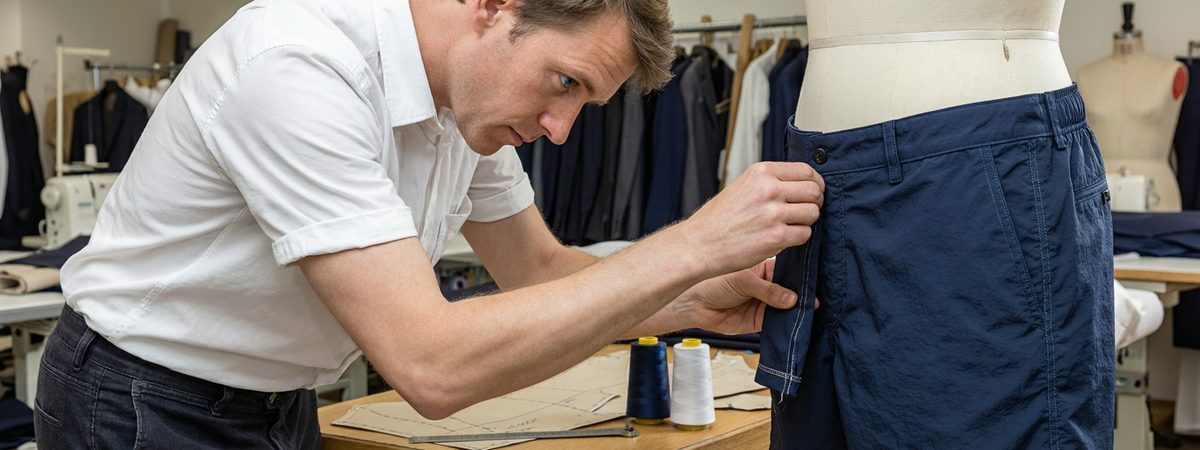
Fit approval is a loop, not a single sign-off, and training shorts have three common failure points worth checking deliberately. First, the crotch and gusset: a deep squat, lunge and high-knee test should produce zero restriction and zero seam digging, and the gusset should not pull tight. Second, the waistband: it should sit wide, flat and secure through burpees and box jumps without rolling, and the drawcord should adjust cleanly. Third, the liner: brief liners should offer support without pinching, and compression liners should reach the stated length on the thigh without riding up. Test the pocket logic too — a phone should sit secure and bounce-free in the liner pocket during a run or jump sequence, and nothing should fall out of a zippered outer pocket during a burpee. Document every change on the sample with measurements and photos, and re-approve after each revision. Skipping this loop is how a brand ships shorts that look right on the rail and fail in the first workout.
Bulk Readiness Checklist
Before you release the order, run a short checklist that protects the whole run. Confirm the approved sample is the sealed reference and that the factory works to that sample rather than re-interpreting the tech pack. Lock the fabric lot and the trim pack — elastic, drawcord, labels and thread — so reorders match, and agree the inspection standard up front, with AQL 2.5 as a common bulk acceptance level. Confirm the full size run is graded and that colour consistency is guaranteed across sizes, which is the most frequent field complaint on activewear. Specify the packaging: each piece in a polybag, custom hang tags or woven labels if the brand requires them, and the carton pack for retail or bulk. Finally, record the reorder path — the archived tech pack, fabric codes and trim codes — so a second run is a confirmation rather than a new development. A short that is specified completely is a short that reorders cleanly.
MontForge Custom Training Short Capabilities
MontForge manufactures custom training shorts for performance, CrossFit and running brands. We build polyester-spandex and nylon-spandex shells from roughly 120 to 200 gsm with four-way stretch, moisture-wicking finishes and anti-odor treatments, in 5, 7 and 9 inch inseams with brief, compression or no liner. Construction is specified, not assumed: flat-lock seams, gusseted crotch panels, elastic or drawcord waistbands, and zippered or liner phone pockets. Branding runs across sublimation, screen print, heat transfer and embroidery, with vector artwork, Pantone colour matching and full size-run grading. Low MOQ, a 7–15 day sampling window and archived tech packs keep a first run and every reorder consistent.
Frequently Asked Questions
What should a training short tech pack include?
At minimum: the fabric fibre blend and GSM, the inseam length, the liner type (brief, compression or none), and the trims — waistband, drawcord, seam type and gusset. State each one explicitly, or the factory will choose its own default.
Which inseam should I choose?
5 inch for maximum leg freedom and a runner or bodybuilding audience, 7 inch as the versatile all-round default, and 9 inch for taller customers or more coverage. Match the inseam to the activity and the customer base.
Brief liner or compression liner?
A brief liner is a lightweight mesh for basic support and airflow. A compression liner, typically 15–25% spandex, is a longer second-skin short that reduces chafe, adds support and can carry a thigh phone pocket. Pick by activity intensity.
How long does sampling take?
7–15 days from an approved tech pack is standard. Order the sample in the final fabric and grade, wash a lined short before approving it, and confirm the full size run is graded before bulk.
What fabric weight suits a training short?
A polyester-spandex shell at roughly 120–200 gsm covers most programmes: lighter for summer and running, heavier for a premium gym feel. A nylon-spandex shell gives a silkier, more abrasion-resistant hand at a similar weight.
Ready to brief a training short? Send us your tech pack and fabric spec or browse MontForge custom shorts — 4-way stretch shells, brief or compression liners and full trim packs at low MOQ.