Heavyweight Hoodie Suppliers for Small Screen-Printed Runs
For a small screen-printed hoodie run, compare decorating an existing blank with developing a custom garment before choosing suppliers. If you need only 10–50 pieces, confirm availability and decoration minimums first; a custom fabric, hood shape or color can change feasibility. Define fabric weight, composition, construction and print requirements together, then approve a trial on the intended hoodie. MontForge is a relevant development contact for custom hood and decoration discussions, but acceptance of your exact quantity, materials and schedule requires written project confirmation.
Sourcing route
Compare blank-plus-printing, development samples and custom production.
Fabric selection
Review GSM, composition, French terry and brushed fleece.
Hood and fit
Check hood opening, depth, volume and neckline connection.
Print validation
Review detail, hand feel and results after the agreed care procedure.
Cost and reorders
Confirm minimums, setup fees and consistency for repeat orders.
Which route suits a 10–50-piece hoodie run?
Define whether your launch tests artwork, fit or a complete product. If the silhouette already meets your needs, sourcing an established blank and arranging decoration may reduce the number of development decisions.
If the hood, fabric or body shape defines the product, discuss development separately from the launch quantity. Sampling does not establish bulk feasibility. Treat 10–50 pieces here as a buyer scenario, not a published MontForge minimum or production commitment.
What should your supplier shortlist compare?
Use one specification to compare the following routes. Ask who is responsible when a garment arrives unsuitable for printing or a decoration trial fails. Record minimums, fees and timing in writing rather than assuming a low headline quantity covers every step.
| Route and positioning | Strengths and customization | MOQ and cost questions | Samples and lead time | Best buyer fit and evidence |
|---|---|---|---|---|
| Established blank plus printing | Existing fit and fabric with agreed artwork | Check stock by size/color, decoration minimums and setup charges | Approve the actual blank and print trial; reserve stock separately | Graphic-led launches; retain garment identity and decorated sample |
| Development sample | Explore hood, silhouette and material choices | Confirm pattern, sample and revision fees; ask about later production minimums | Name the sample purpose and material substitutions | Brands validating a concept; retain specifications and review comments |
| Custom production run | Coordinated garment, labels and decoration package | Confirm style-color and fabric minimums, packaging and setup costs | Agree material sourcing, approvals, production and transit stages | Brands needing their own product; verify final sample and inspection scope |
How should you define a heavyweight hoodie?
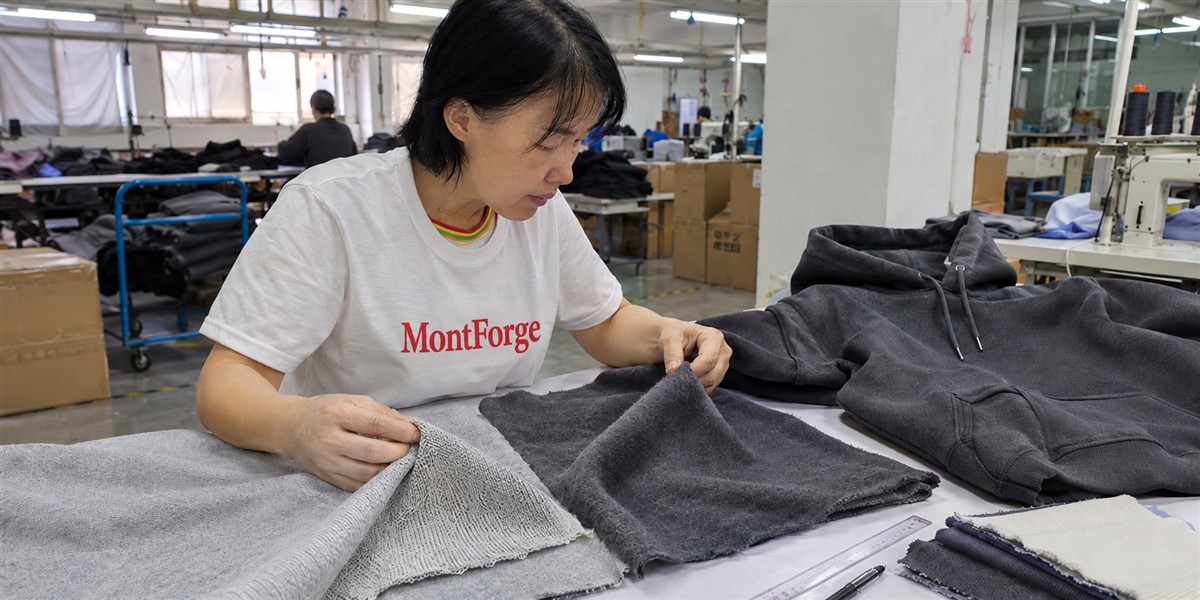
Specify the fabric mass in GSM together with composition, construction and finish. GSM describes material mass per area, not a complete quality level or the weight of an entire hoodie. A dense loopback fabric and a brushed fleece can feel different even at similar stated mass.
Include body and sleeve shape, rib dimensions, pocket construction and hood layers in the brief. Describe the desired drape using an identified reference garment. Avoid accepting “premium heavyweight” as a substitute for material and construction details that can be checked on a sample.
Which material direction fits your intended product?
MontForge's hoodie range presents French terry, tech fleece and scuba directions. Use those as discussion categories, then identify the actual material proposed for your design. Their surface, bulk and drape should be assessed alongside the intended decoration.
What should the hood sample demonstrate?
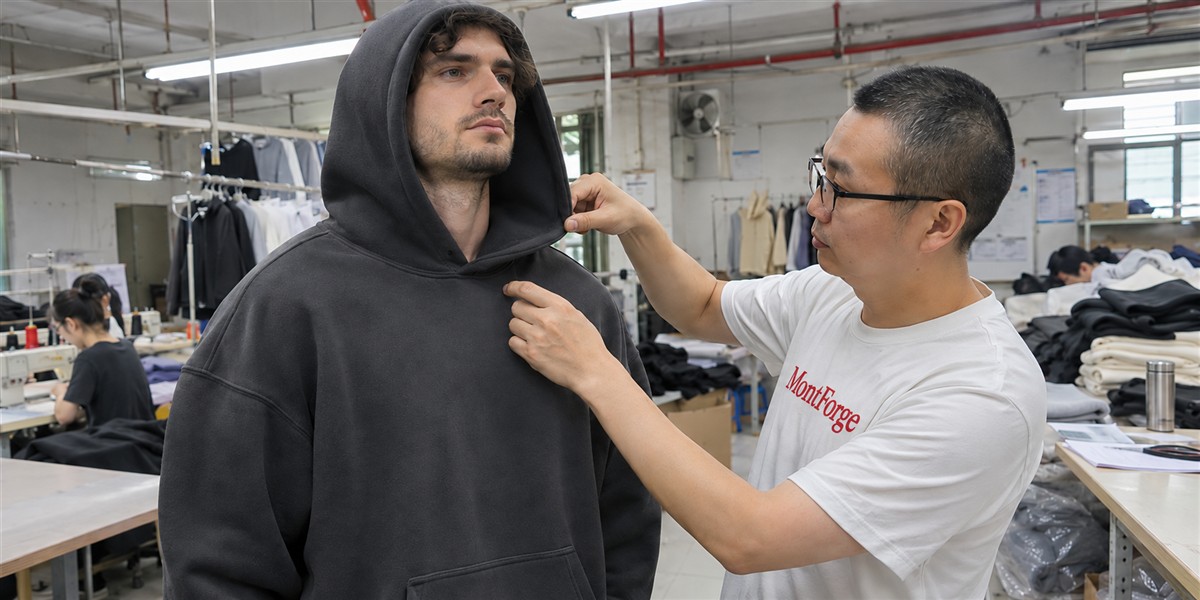
The hood can change the appearance of a heavyweight garment as much as its chest width. MontForge's published hood-development guidance calls for reviewing volume, opening, depth and the neckline connection on a worn sample. Check how the hood sits both raised and lowered.
Review lining bulk, center-seam placement and drawcord-channel effects where included. A different lining or fabric weight can change the result even if the paper pattern stays the same. Keep the approved construction reference and repeat affected fit checks after a material change.
How do you qualify a supplier for screen printing?
Ask for printing experience on a surface comparable to your selected hoodie. Request the proposed ink system, artwork preparation requirements and method of validating the print. The supplier should explain the process for your garment rather than applying a generic T-shirt answer.
Review the actual print area, including its relationship to pockets, seams and ribbing. Confirm what artwork detail can be reproduced consistently at the intended dimensions. If the proposed design is difficult at the available quantity, request an alternative with its effect on appearance and cost clearly stated.
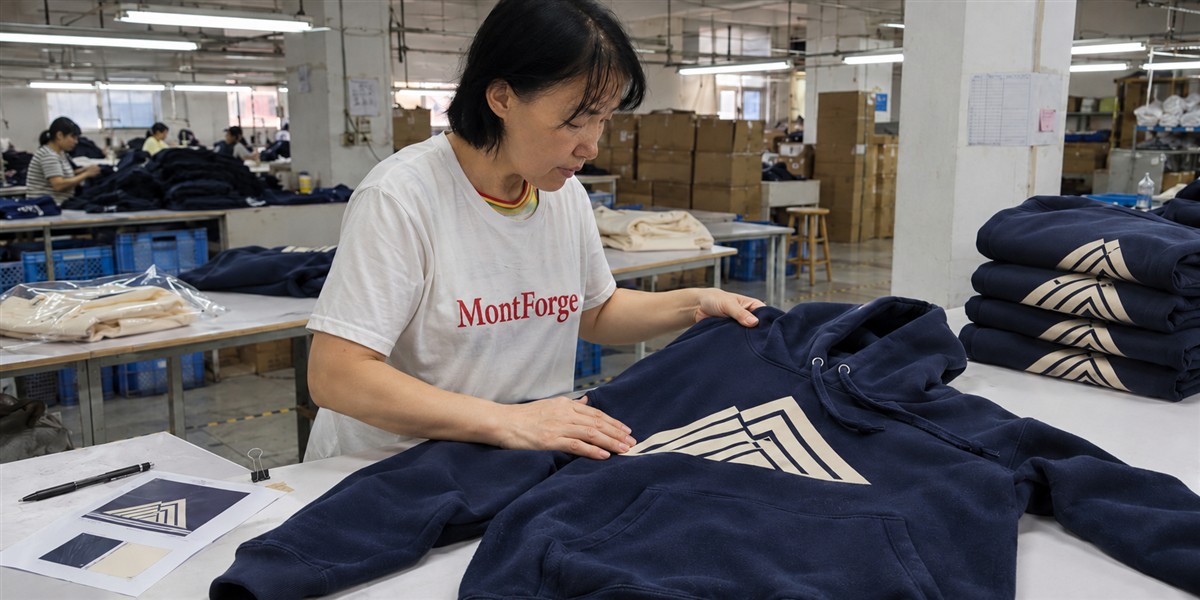
What should the decoration trial check?
Approve decoration on the intended fabric, color and surface finish. MontForge's heavyweight-decoration FAQ emphasizes detail clarity, placement, reinforcement where relevant, and unwanted stiffening or puckering. It also explains why a smooth test fabric cannot establish the result on fleece or French terry.
For a screen-print proposal, inspect edges, coverage, feel and the print's behavior as the garment is handled and worn. If a raised effect is requested, confirm that process separately rather than assuming it is included in standard screen printing. Agree the care procedure and compare the result with the retained reference.
How should you compare the true small-run cost?
Request garment, artwork setup, screens where applicable, samples and decoration as distinct quotation items. Include labels, packaging, inspection and delivery requirements. Fixed setup charges may matter more when divided across a very small quantity, so compare the full order total as well as the unit price.
What determines whether you can reorder consistently?
Record the blank style or approved fabric reference, color, measurements, artwork and decoration method. Ask whether the same materials and garment base are expected to remain available, without treating availability as guaranteed. A later reorder may require new confirmation if stock or material references change.
For custom production, link the physical sample with one dated specification and artwork revision. Review color and hand feel on the reorder rather than relying on a familiar style name. Agree how substitutions will be disclosed before buying replacement stock or releasing production.
What should you ask MontForge before sampling?
Start with the custom hoodie development service and explain whether you are testing artwork or developing a new garment. Send the desired fabric direction, fit reference, hood details and decoration artwork. Ask whether your precise quantity is feasible and which material or component minimums apply.
Use the garment production process to clarify sample approval and bulk release responsibilities. Request a project-specific quotation covering revisions, testing needs and schedule dependencies. If a custom production order is unsuitable for the launch volume, resolve that before paying for development you cannot use.
Which documents should be ready before you commit?
Prepare a concise approval package that makes the product repeatable. Resolve missing material, measurement and artwork decisions before treating an attractive sample photograph as authorization for production. Identify who can approve changes and how those changes are recorded.
- Garment reference, fabric identity and required construction.
- Size range, measurement points and agreed tolerances.
- Hood review comments and final material configuration.
- Artwork dimensions, placement, colors and print process.
- Decorated sample approval and agreed post-care checks.
- Quantities, full quotation, delivery terms and inspection responsibilities.
Frequently Asked Questions
Can I order 10–50 fully custom heavyweight hoodies?
Ask for project confirmation. Development samples, fabric purchases and production minimums are separate considerations; a small launch quantity does not establish acceptance of a custom run.
Does higher GSM always mean better quality?
No. Review composition, construction, finish, fit and decoration suitability together. Fabric mass alone does not establish the garment's overall quality.
Should I approve a print on a smooth cotton swatch?
Only for the limited purpose agreed. Final approval should use the intended hoodie material and surface, with a garment trial where placement or construction affects the result.
Can changing the hood lining affect fit?
Yes. Reassess the hood's opening, volume, drape and neckline connection after changes affecting bulk or material behavior.
What should my first inquiry contain?
Send reference images or a tech pack, fabric direction, artwork, quantities by style and color, delivery destination and target date. Identify the features that must be custom.
About MontForge
MontForge is a custom sportswear manufacturer offering OEM and ODM services for brands developing men's performance apparel. Its range includes training T-shirts, coordinated sets, shorts, hoodies and outerwear. Buyers can discuss materials, customization, quantities and production terms against their project brief. Learn more about MontForge.