Custom Team Sportswear Manufacturing: Equipping Clubs, Academies, and Teams
From weekend football clubs to national academies and corporate league programs, custom team sportswear is the uniform that turns a group of individuals into a recognizable, sponsored, and motivated squad. Yet the manufacturing decisions behind those kits, jerseys, and training sets are far more strategic than most buyers realize. This guide breaks down the team apparel market, the real requirements clubs face, and how the right manufacturing partner turns a logo on a shirt into a durable, consistent, and on-time program.
1. The Team Sportswear Market Is Bigger Than You Think
The demand for team uniforms is steady, recurring, and global. The team sport uniforms market was valued at USD 4.85 billion in 2025 and is projected to reach USD 7.20 billion by 2032 at a CAGR of 5.8% (PW Consulting / market research consensus). A broader team uniform market estimate puts 2025 at USD 18.6 billion, growing to USD 27.4 billion by 2034 (CAGR 5.2%), with Asia-Pacific already the largest regional buyer at 38.2% of global revenue (Marketintelo, 2026). Team sports apparel specifically reached USD 4.67 billion in 2024 and is forecast at USD 7.56 billion by 2033 (CAGR 5.7%).
The participation base is enormous: FIFA reports over 275 million registered football players worldwide, the U.S. alone has more than 26,000 organized basketball teams, and an estimated 285 million children aged 6-17 took part in school-based sports programs in 2025, a 34% increase since 2020. Each of those players typically needs 3-5 uniform sets per year for practice and competition, turning every club, school, and academy into a recurring procurement account rather than a one-off order.
2. What Clubs, Academies, and Schools Actually Need
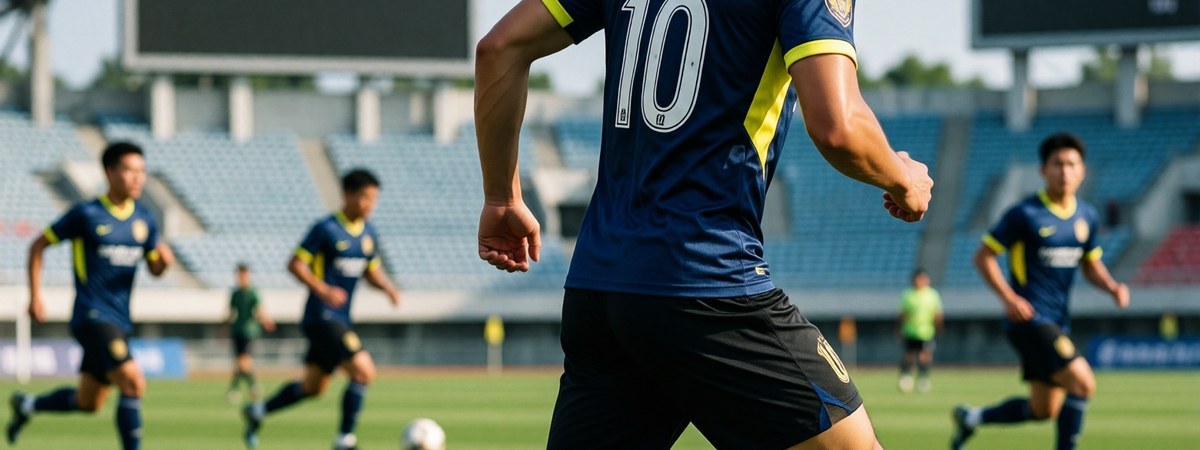
Team buyers are not shopping for a single garment, they are buying a program. That changes the priorities entirely. Three requirements dominate every serious teamwear order:
- Durability - kits survive rough contact, frequent washing, and UV exposure across multiple seasons.
- Consistency - the second reorder of a jersey must match the first one exactly in color, fit, and logo placement.
- Branding - the kit is a moving billboard for the club, its sponsors, and its identity.
Research cited by teamwear providers suggests a professional visual identity can account for up to 50% of how a team's credibility is perceived. A faded, peeling, ill-fitting kit does not just look bad, it quietly undermines the club's reputation with players, parents, and sponsors every single match day.
3. Durability: Why Cheap Kits Become Budget Killers
The hidden cost of low-quality teamwear shows up 18 months later. Industry case studies describe clubs spending roughly USD 2,000 every 18 months on replacements, which compounds to around USD 6,000 over three years, money that could have funded new equipment or training camps. The root cause is usually legacy printing: screen-printed or vinyl inks sit on top of the fabric and crack, peel, or fade under sweat, friction, and washing; cheap synthetic blends shrink, stretch, or lose elasticity because they were never engineered for sport.
Modern sublimation printing solves this by turning the dye into part of the fiber itself. As one manufacturer puts it, the color "becomes the material" and cannot fade, crack, or peel. Clubs that switched report custom kits lasting 3-5 years instead of being replaced every season, a durability gain that pays for the slightly higher upfront cost many times over.
4. Color and Sizing Consistency Across Reorders
For a club, the second order matters as much as the first. A youth academy that reorders every season needs the 2027 jersey to be the same Pantone blue as 2026, on the same base size, with the same logo position. Reputable manufacturers treat this as a locked specification rather than a fresh negotiation.
European teamwear producers advertise consistent colour and sizing across every reorder, and Asian factories describe "locked-in" production workflows where repeat bulk orders ship in 15-20 days with consistent color between runs. Pattern files are stored on the manufacturer's servers so a reorder is a production run, not a redesign. This is why asking a potential partner "how do you guarantee my reorder matches?" is one of the most important questions a team buyer can ask.
5. Bulk Ordering and Size Standardization Done Right
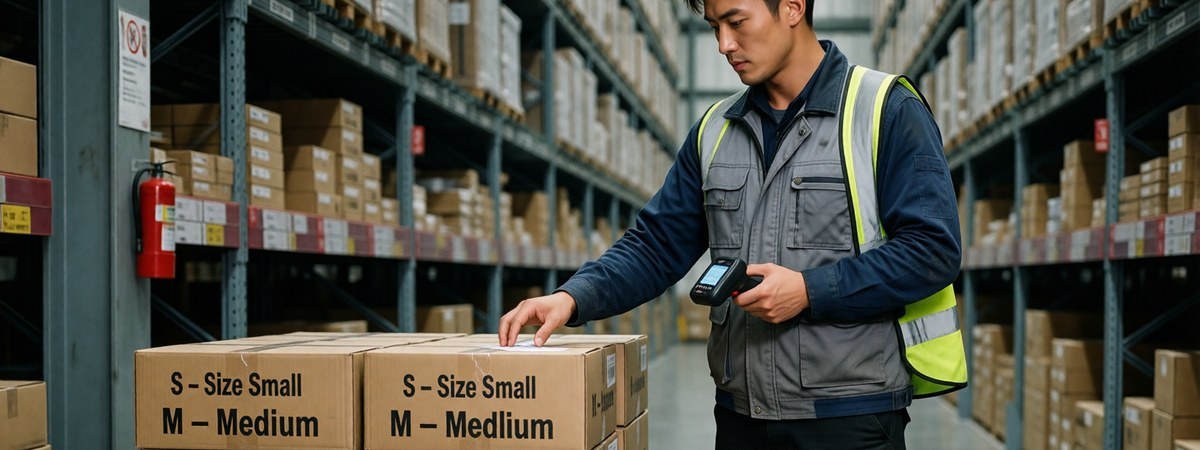
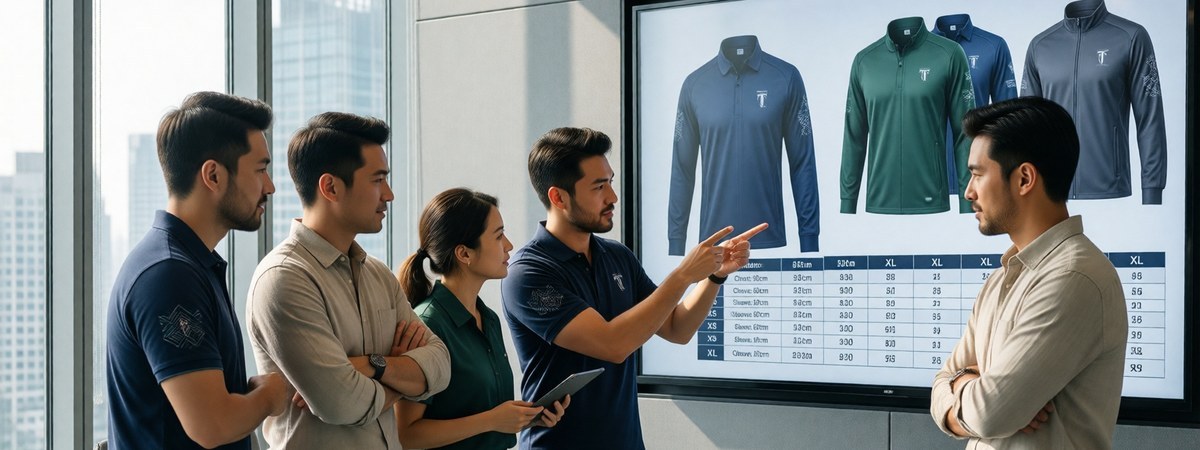
Teamwear lives or dies on sizing discipline. A club order is rarely one size, it is a distribution problem across youth, men's, and women's cuts, often 6-8 graded sizes plus custom requests for outlier players. The right manufacturer supplies sizing kits and fabric swatches before bulk production so fit is confirmed on real bodies, not guessed from a chart.
MOQ structures vary by model. Sublimation-focused producers offer very low entry points, some as low as 10-20 pieces per design, while standard custom programs run 50-100 pieces (ZUNS) or 300 pieces per style (Yueyi Active), with small trial runs from 100 pieces on blank styles for first-time validation. One documented corporate program delivered 3,000+ embroidered polo shirts across 8 sizes with individually Pantone-matched colors within 30 days. Sampling typically takes 7-14 days with one revision round, bulk runs 15-35 days, and reorders 15-25 days.
6. Full-Sublimation vs. Cut-and-Sew: Which to Choose
This is the single biggest design decision in teamwear manufacturing, and it governs look, durability, cost, and lead time.
Sublimation (dye infused into polyester fiber): unlimited colors and gradients, edge-to-edge coverage on cut-and-sew sublimation, ink that never cracks or fades, lightweight breathable fabric, and faster turnaround. Standard sublimation lead times run 7-10 days at MOQ 12 pieces and roughly USD 10-15 per piece at 100+ units. Cut-and-sew sublimation (full-wrap, edge-to-edge across seams and sleeves) runs 14-21 days at MOQ 24-50 pieces and USD 25-45 per piece.
Cut-and-sew with applied logos (screen print, embroidery, tackle twill): a more traditional look with wider fabric variety and very high durability for contact sports. Tackle twill, the NFL and NCAA standard, is the toughest method available but the heaviest and most expensive. Embroidery and screen print add a classic texture but thick ink layers can crack over time.
The practical rule: choose sublimation for bold, multi-color, frequently washed team kits where weight and breathability matter; choose cut-and-sew or tackle twill for heritage aesthetics and high-contact leagues where a sewn-on, premium finish is worth the extra cost and weight.
7. Team-Specific Design Considerations
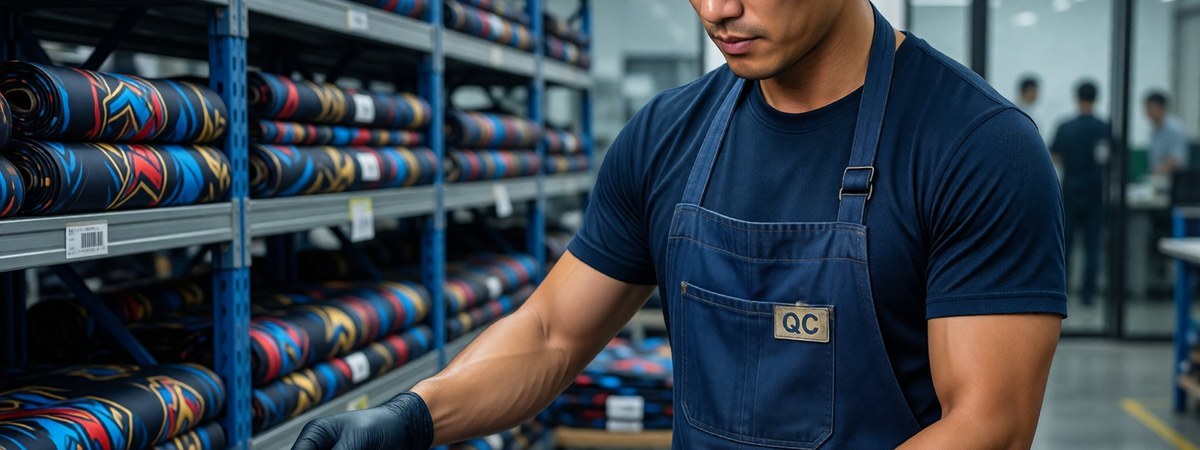
A great team kit is a brand system, not just a colored shirt. The design brief should specify the club crest, team name, player names and numbers, sponsor logos, and an exact Pantone palette so colors render at maximum saturation on every panel. Asian-focused suppliers note that 3D ergonomic cuts shaped to local body types (e.g. reinforced ribbed collars, tapered waists) keep uniforms sharp after repeated wear and sun exposure, a detail that matters for golf, corporate, and school programs alike.
Function follows sport: moisture-wicking polyester-spandex blends dominate (polyester and mesh accounted for 65.8% of team uniform material share in 2025), while sustainable rPET grew 36% in the basketball segment as eco-conscious schools and leagues demand recycled content. The kit should also plan for individual player naming, one Saudi Arabian academy received full-sublimation training wear with individual player names delivered FOB within 35 days.
8. Quick Turnaround for Seasonal and Tournament Needs
Teamwear demand is spiky: a new season, a tournament, a sponsorship launch, or a last-minute roster change can all compress the timeline. Manufacturers that specialize in teamwear build capacity for this. European on-demand teamwear runs from 1 piece at a 2.5-week lead time; Asian bulk programs quote reorders in 15-25 days and rush options for urgent deadlines. The key is a partner who stores your patterns and can restart production without re-development, so a single replacement jersey or a 2,000-piece tournament run both ship on a predictable clock.
9. A Real-World Look at Successful Team Programs
The best evidence is in the programs that actually shipped. A volleyball club that switched to sublimated kits reported uniforms lasting 3-5 years instead of being replaced each season. A 2026 manufacturer showcase listed delivered programs for a bank, a tech company, a professional volleyball team, and multiple university and elementary-school squads, all built from a one-step concept-to-vector design workflow with a "one-piece reorder" promise that solves roster changes. A corporate polo program delivered 3,000+ shirts across 8 sizes with individual department logos and Pantone-matched colors in 30 days and established an annual reorder. And a professional academy's 2,000+ piece per-season sublimated training wear with individual player naming shipped FOB within 35 days, with season two already confirmed.
10. How MontForge Supports Custom Teamwear Programs
MontForge approaches teamwear as a recurring program, not a transaction. We support low-MOQ trial runs so a new club can validate fit and color before scaling, full-sublimation and cut-and-sew construction, custom size charts graded to your region, and locked specifications so every reorder matches the first. Our QC process covers fabric inspection, in-line stitching checks, print and embroidery verification, and final packing inspection, keeping defect rates low enough that bulk team orders arrive match-ready. Whether you run a weekend football club, a school house system, or a corporate league, the goal is the same: a kit your players are proud to wear, season after season.
Planning your 2026/2027 team program? Send your inquiry and get a quote →
11. Frequently Asked Questions
What is the typical MOQ for custom team uniforms?
Sublimation orders can start at 10-20 pieces per design, standard custom programs at 50-100 pieces, and full custom styles at 300 pieces per style, with small 100-piece trial runs available on blank styles for first-time validation.
How long does sampling and bulk production take?
Sampling usually takes 7-14 days with one revision round. Bulk production runs 15-35 days depending on volume and customization, while reorders ship in 15-25 days when specifications are locked.
Which lasts longer, sublimation or screen printing?
Sublimation infuses dye into the polyester fiber, so logos and numbers cannot crack, peel, or fade, even after hundreds of washes. Screen-printed inks sit on the surface and can crack or peel over time, which is why sublimation is the dominant choice for frequently washed team kits.
Can you keep my reorders consistent with the first run?
Yes. Reputable manufacturers store your patterns and color specs on their servers and treat reorders as production runs rather than redesigns, delivering consistent color and sizing across seasons.
Conclusion
Custom team sportswear manufacturing is less about a single shirt and more about building a durable, consistent, and on-time program that represents your club, academy, or company. Understand the market, specify durability and consistency up front, choose the right print method for your sport, and partner with a manufacturer who treats reorders as seriously as the first order. The result is a kit your team wears with pride, season after season.
Ready to equip your team? Start your custom teamwear project →