Custom Gym Shorts: Inseam, Liner and Fabric Choices Explained
Gym shorts are the hardest-working piece in a training wardrobe and the easiest to get wrong: a 9-inch basketball cut will fight you in a deep squat, a loose linerless short will chafe on a long run, and cotton will soak through before the first set ends. This guide explains the three decisions that define a pair — inseam length, liner type and fabric — plus where branding sits best and how to launch a shorts line at low MOQ.
Inseam First: The Number That Defines the Short
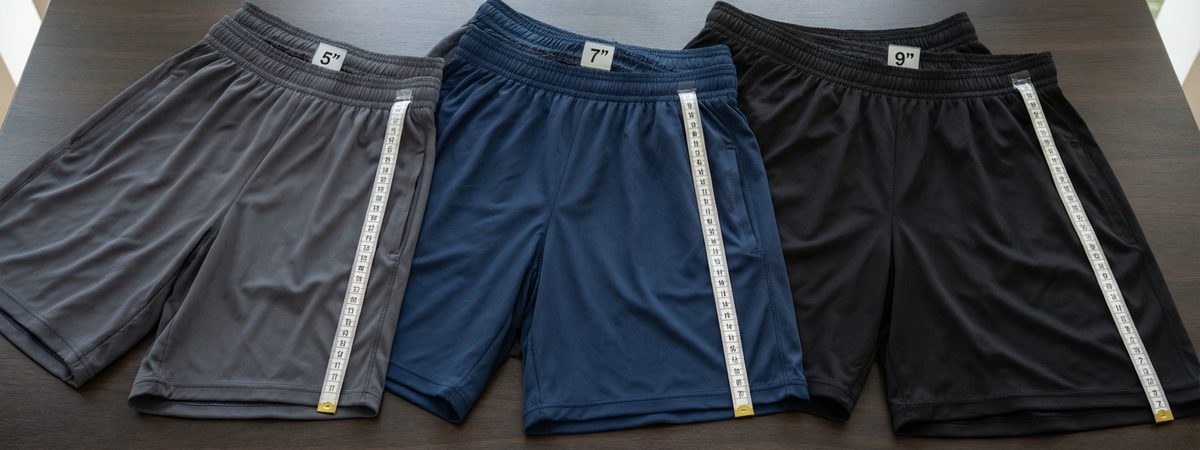
The inseam is measured from the crotch seam down the inside of the leg to the hem, and it is the single most important spec on a pair of shorts. It decides both coverage and mobility, which is why two shorts made from identical fabric can feel completely different. When you brief a manufacturer, give the inseam in inches explicitly — "mid-thigh" is not a specification. If you only have an overall length, subtract roughly 4–5 inches for the rise to estimate the inseam, or lay a pair you already like flat and measure the inner leg seam yourself.
5-Inch Inseam: Maximum Mobility
A 5-inch inseam sits at the upper-to-mid thigh and is the performance choice: it offers the greatest range of motion and airflow, which is why runners, sprinters and leg-dominant HIIT athletes choose it. Many running versions add a split hem for an even freer stride. The trade-offs are minimal coverage and less protection against gym equipment, so 5-inch shorts work best for running, conditioning and warm-weather training rather than heavy barbell work. For brands, the 5-inch cut has become mainstream rather than niche — it is a legitimate core SKU, not a specialty item.
7-Inch Inseam: The All-Rounder
If your line carries only one length, make it seven inches. It lands just above the knee for a man of average height, gives enough coverage for squats and lunges, and stays short enough that it never catches during box jumps or burpees — which is exactly why 7-inch shorts are the default for CrossFit, functional fitness and general gym use. It is also the most popular length on the market, which makes it the safest commercial bet for a first shorts drop. Choose a four-way stretch fabric with a gusseted crotch and the 7-inch cut handles everything from a squat rack to a five-kilometre run.
9-Inch Inseam and Longer: Coverage and Court
A 9-inch inseam approaches the knee and is the traditional basketball and team-sport length, offering maximum coverage and a relaxed look. It also earns a place in strength training for a practical reason: the extra fabric protects the shins from the bar during deadlifts. What it does not do is move freely — the longer it gets, the more it restricts deep squats, lunges and sprinting, and heavier fabric feels warmer. Spec 9-inch shorts with a high-stretch knit so the coverage does not come at the cost of mobility, and keep them away from a running-focused line.
Choosing Inseam by Height and Sport
The same inseam fits differently on different builds, so grade the range with your market in mind. As a working rule: under 5'6" a 5-inch inseam reads like a 7-inch on an average frame, and 9-inch shorts overwhelm the proportions; between 5'7" and 5'11" the standard recommendations apply with 7 inches as the everyday sweet spot; over 6'0" a 7-inch short looks athletic while 9 inches gives a more traditional fit. By activity, running favours 3–5 inches, weightlifting 5–7 inches, CrossFit and HIIT 5–7 inches, basketball 9 inches and up, and yoga or mobility work 7–9 inches. Build a size and length chart around those combinations and your customers will find their pair without guessing.
Brief vs Compression Liner
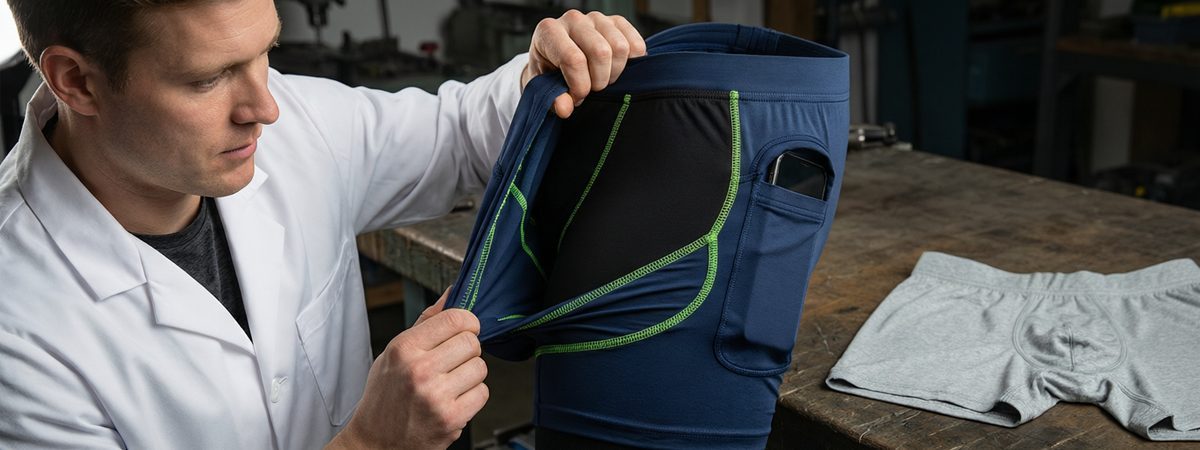
The liner is the built-in base layer, and it changes how the short performs. A brief liner is a lightweight mesh brief — highly breathable and unrestrictive, giving basic support, which is why it dominates traditional running shorts. A compression liner is a snug, stretchy inner short that supports muscle, improves blood flow, reduces muscle oscillation and, most importantly, prevents chafing; it is the right call for running, HIIT, leg day and explosive training, and it usually carries a bounce-free phone pocket. A boxer-brief liner sits between the two, and a linerless short gives maximum freedom for lifters and yogis who prefer their own compression base layer. Whichever you spec, the liner seams must be flatlock — a raised seam is a direct route to chafing — and the liner fabric should wick and dry.
Stretch and Moisture Management
Fabric is what makes a short perform under load. The industry standard is a polyester-spandex blend — commonly 80–90% polyester with 10–20% spandex — where polyester wicks sweat and dries fast while spandex provides four-way stretch and recovery. Nylon-spandex reads softer and more premium with excellent abrasion resistance, and higher spandex content (15–25%) signals a true compression piece. Cotton is the trap: it absorbs sweat, becomes heavy and dries slowly, so keep it out of performance lines. Two construction details separate a good short from a great one — a gusseted crotch (a diamond-shaped panel that adds range of motion and prevents seam blowouts) and a stretch-and-opacity check on dark colours, because a black short that turns translucent under tension fails at the squat rack. Add flatlock seams, a flat waistband with internal drawcord, and a zippered or liner phone pocket, and the basic engineering is done.
Branding Placement
Shorts offer fewer branding zones than a hoodie, so placement matters more. The most common positions are the left thigh (screen print, heat transfer or embroidery), the right thigh for a secondary mark, the hem or side seam for a woven label or small embroidered logo, and the waistband for a printed logo or a woven size tab. A branded drawcord tip or a small reflective logo at the back leg are low-cost premium details. Keep artwork simple and scaled to the panel — a thigh print typically runs 3–4 inches wide — and match colours to Pantone references so a set across shorts, tee and pullover reads as one collection. For full-coverage graphic looks, sublimation is permanent on polyester bodies and cannot crack or peel through stretching and washing.
Low MOQ Launch Plan
Shorts are one of the cheaper categories to launch, which makes them a good first product or a fast-follow to a tee or tank line. Full-sublimation and cut-and-sew shorts runs commonly start around 10–50 pieces per design, and wholesale programs ladder from roughly 50 units upward so unit price drops as the run grows. A practical launch: pick two inseams (a 5-inch and a 7-inch) in one fabric and one colourway, order a sample to confirm the liner, gusset and opacity, then run 50–100 pieces to test sell-through before adding a compression-liner 2-in-1 or a second colour. Keep the artwork on file so restocks are a straight repeat, and add a matching tee or tank from the same fabric family so the drop reads as a set.
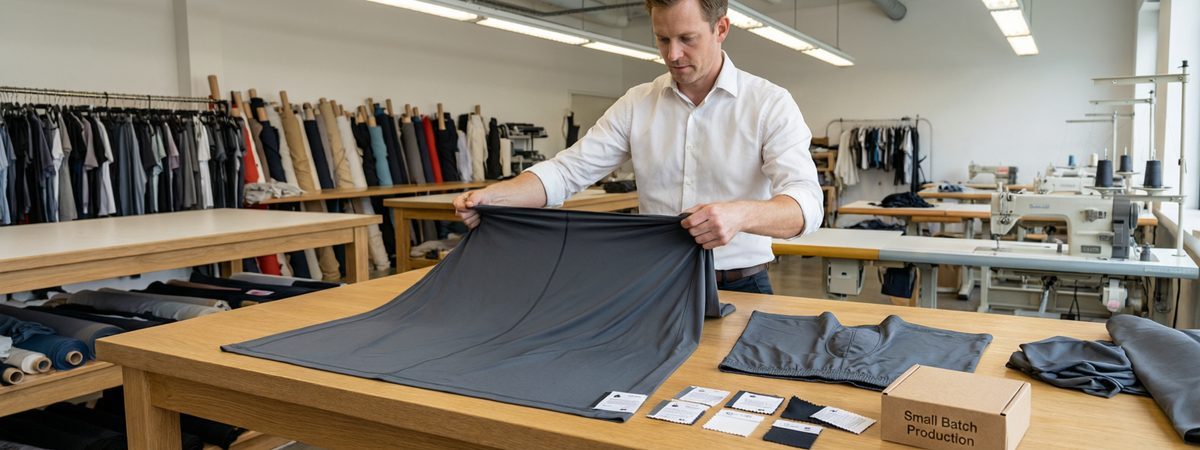
MontForge Gym Short Capabilities
MontForge manufactures custom gym shorts for performance, running and CrossFit brands. We build polyester-spandex and nylon-spandex knits with four-way stretch and moisture-wicking finishes, in 3, 5, 7 and 9-inch inseams, with gusseted crotches, flatlock seams, flat waistbands with internal drawcords, zippered and liner phone pockets, and your choice of brief, compression, boxer-brief or linerless construction. Branding runs across screen print, heat transfer, embroidery, sublimation and woven labels on the thigh, hem and waistband, with Pantone colour matching for coordinated sets. With low-MOQ runs, a short sample window and archived artwork for reorders, we help brands launch a shorts line that fits as well as it looks.
Frequently Asked Questions
What inseam should my gym shorts be?
Seven inches is the safest all-round length for lifting, CrossFit and general training. Five inches suits running, sprinting and HIIT with maximum mobility; nine inches and up serves basketball and maximum coverage. Match the length to the activity and the customer's height.
Brief liner or compression liner?
Brief liners are lightweight and breathable with basic support — common in running shorts. Compression liners support muscle, reduce vibration, prevent chafing and often include a phone pocket, making them the better choice for running, HIIT and leg day. Boxer-brief liners sit in between, and linerless suits lifters who wear their own base layer.
What fabric is best for performance shorts?
A polyester-spandex blend — typically 80–90% polyester with 10–20% spandex — gives moisture-wicking, quick drying and four-way stretch. Nylon-spandex feels softer and more premium with strong abrasion resistance. Avoid high-cotton content: it absorbs sweat, gets heavy and dries slowly.
Where should the logo go on gym shorts?
The left thigh is the standard position, with a secondary mark on the right thigh, a woven or embroidered logo at the hem or side seam, and a printed or woven label on the waistband. A branded drawcord tip is a low-cost premium detail. Keep thigh prints around 3–4 inches wide.
Can I launch a shorts line at low MOQ?
Yes — shorts are one of the more accessible categories. Sublimation and cut-and-sew runs often start around 10–50 pieces per design, with wholesale pricing improving from about 50 units. Test two inseams in one fabric and colourway, approve a sample, then scale on the archived artwork.
Ready to build a gym shorts line? Send us your inseam and liner spec or browse MontForge custom shorts — 3 to 9-inch inseams, four-way stretch fabrics and low MOQ runs.