3D Embossing and Laser Cutting: The New Frontier in Sportswear Aesthetics
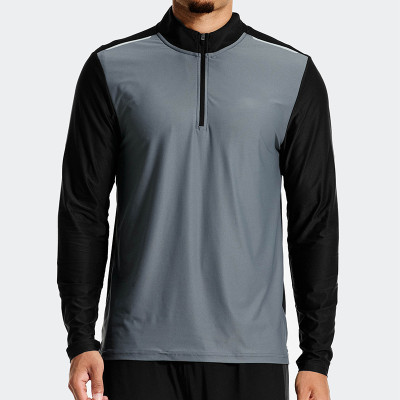
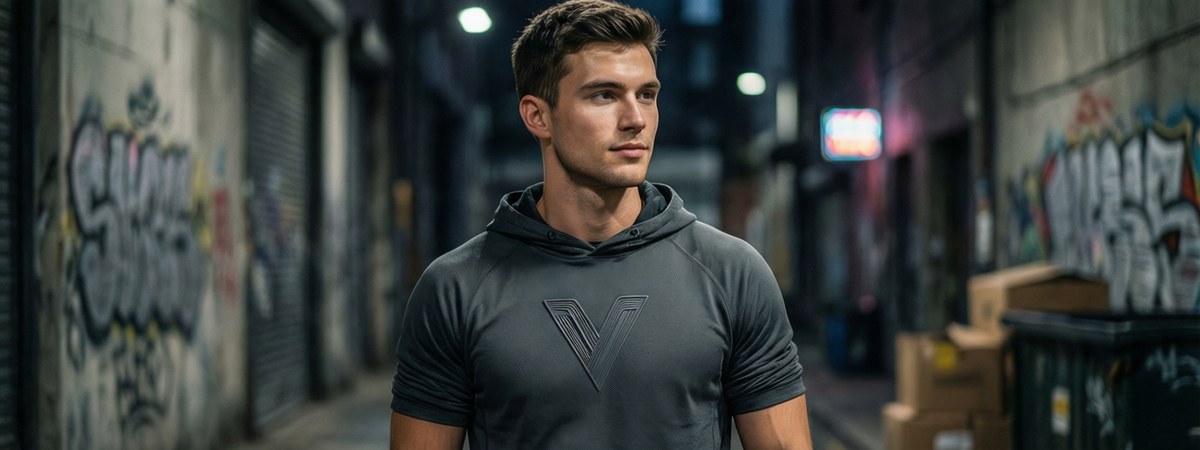
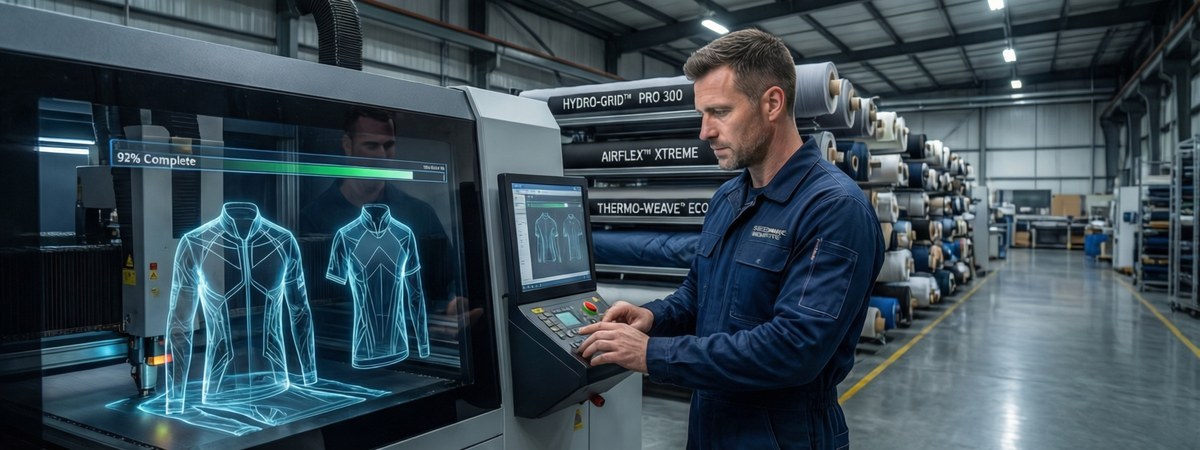
Sportswear buyers no longer reward function alone. The garments that command a premium shelf position, and a premium price, are the ones that also feel considered—where the logo has depth, the ventilation reads as design, and the surface tells a story. Two manufacturing technologies sit at the center of this shift: 3D embossing and laser cutting. Both turn flat fabric into something structural, breathable, and unmistakably branded. This guide explains how each works, where they apply, and what they cost a brand that wants to stand out. 3D embossing is a surface-engineering process that raises a logo, pattern, or texture above the base fabric to create a tactile, three-dimensional effect. Unlike flat screen printing, which sits on the surface, embossing physically deforms or bonds a soft material—typically TPU (thermoplastic polyurethane) or silicone—into a relief shape. The result reads as "premium" because the human hand notices depth before the eye does. The most common industrial method is high-frequency (RF) heat pressing. A high-frequency electric field makes TPU molecules vibrate and generate heat; a precision die then presses the softened material into a clean, contoured 3D mark. Suppliers such as iGift note this process fuses the emblem into jackets, jerseys, and bags with a smooth interior—no rough stitch backing—and can run from as few as 15 pieces, making it viable for small-batch branding. A 2020 Chinese patent (Pinghu Xingtianyang) described a related raised-embossing garment using TPU film plus pearl-cotton filler with independently heated upper and lower molds, meeting sweat-color-fastness ≥ grade 3 and formaldehyde ≤ 75 mg/kg. Brands choosing embossing today have three realistic routes, each with a different cost and flexibility profile: The practical takeaway: embroidery is thick and less breathable, standard DTF looks flat and can crack, and molded silicone is costly—UV DTF and RF heat-press now deliver most of the 3D impact with far less tooling risk. Laser cutting uses a computer-controlled, non-contact beam to vaporize microscopic sections of fabric, creating holes or cutting shapes with sealed, fray-free edges. In sportswear it does two jobs at once: it builds ventilation and it builds visual identity. Applied as perforation, the laser etches micro-holes directly into the base fabric—no mesh panel, no extra seam, no bulk. Applied as contour cutting, it renders logos, lace-like patterns, or bonded components that would be impossible or wasteful with dies. Because the "tool" is a digital file, switching from circles to an intricate brand monogram takes seconds, with zero tooling cost. The technical core is a CO₂ laser whose focused energy sublimates polymer fibers at a precise point. On synthetic, thermoplastic fabrics—polyester, nylon, and some polypropylene blends—the edge melts and recrystallizes into a smooth, fused ring that prevents fraying and locks filaments in place. A pulsed laser is preferred over a continuous wave because it controls the heat-affected zone tightly, giving clean sealed edges even at high density. Designers use body mapping: high-density perforations are placed on the upper back, underarms, and along the spine—the body's highest-heat zones—while lower-intensity areas stay solid. This creates a gradient "micro-climate" rather than the one-size-fits-all approach of sewn-in mesh. Natural fibers like cotton tend to char rather than seal, so synthetic blends remain the sweet spot for laser work. Neither technology is purely decorative or purely functional—their value is in the fusion. A 3D embossed chest logo adds perceived value without adding weight or blocking airflow. Laser perforation adds genuine thermoregulation while becoming a design signature: brands now render tonal patterns, gradients, and even logos entirely in holes. This is exactly why the athleisure market—where style carries equal weight with performance—has embraced both. Sino Finetex, a China-based OEM with two decades in performance apparel, reports that laser-cut ventilation paired with bonded mesh lets premium brands avoid the wrinkles and bulk of sewn mesh inserts, producing a hybrid system that is "beautiful, performant, and durable." Decathlon adopted laser marking for personalized sportswear customization in 2024, a signal that the technique has moved from niche to mainstream. The finish choices scale across the whole catalogue: Want to see these finishes on your own samples? Request a development kit → Delivering these effects consistently requires real infrastructure. A capable factory needs RF heat-press stations with custom aluminum dies, UV DTF printers with multi-layer varnish stacking, and CO₂ laser cutters with vision recognition for print-to-cut alignment. Tolerance matters: documented laser cutting holds ±0.1 mm versus ±1.5–2.0 mm for traditional die cutting, and changeover drops from 30–90 minutes to 1–5 minutes because the "die" is a file, not a physical tool. Material yield improves too. Nesting software optimizes pattern layout and can cut fabric waste by 5–15%, while automation reduces labor dependence in the cutting stage by around 60%. Energy use stays low at 2–3 kW/h, and modern water-cooled CO₂ systems are reported to be up to twelve times more energy-efficient than common alternatives. The honest answer on cost: laser and embossing carry higher setup investment than scissors and screens, but they pay back through efficiency and margin. Lanteng, a China manufacturer, reports that integrated laser-cut embroidery raised unit gross margin by 30%–60% and cut lead time nearly in half, while sealed edges removed a full production step and lowered return rates from edge fray and fit errors. Broader market signals support the shift. The World Laser Industry Association notes the share of computerized-embroidery enterprises using laser marking rose to 60% and is projected to reach 70% by 2025; the global computerized embroidery market (laser marking included) is forecast to grow about 10% per year, reaching $4.6 billion in 2025. Digital textile printing—the ecosystem these finishes plug into—grew from $3.85B (2025) to $4.43B (2026, CAGR 15.1%) and is headed to $7.59B by 2030 (The Business Research Company). Digitally printed fabric area hit 1.8 billion m² in 2024, up 22% year on year, with over 64% of fashion companies using it for limited runs and personalization. Curious what embossing or laser detailing would add to your line? Talk to our production team → In crowded categories, structural branding is a defensible differentiator. A raised logo cannot be easily copied by a screenshot; a laser-cut ventilation pattern becomes a recognizable signature. Because the processes are digital, brands gain design freedom—breathable micro-holes, complex lace effects on single-layer fabric, and bonded components that never fray—plus agility: on-demand production reduces dead stock and material waste, supporting sustainability claims that today's buyers scrutinize. An end-to-end digital line also means the CAD design connects directly to automated sewing, creating a fully traceable, Industry 4.0-compliant workflow. That traceability is increasingly what enterprise and DTC buyers ask for during supplier audits. When you shortlist a factory for embossing and laser work, verify the specifics rather than the adjectives: Localized embossing on small logo areas has negligible effect on breathability. Large all-over embossed panels can slightly reduce airflow in that zone, similar to standard print—but TPU film stays soft and far more comfortable than thick embroidery backing. No. The CO₂ laser seals the edge as it cuts, fusing the synthetic fibers. Properly executed perforations remain clean and intact through repeated washing and wear. Polyester, nylon, and polypropylene-blend performance fabrics cut and seal cleanly. Cotton and other natural fibers tend to char rather than seal, so they need careful testing or alternative methods. RF heat-press embossing can run from about 15 pieces at some suppliers; custom 3D heat-transfer labels usually start near 100 pieces with 3–5 day sampling. Laser cutting itself is file-based, so small batches are economical. 3D embossing and laser cutting are no longer experimental finishes—they are the manufacturing frontier that separates a competent garment from a considered brand. Used together, they deliver tactile premium identity and engineered ventilation without adding weight or waste. For a brand building defensible differentiation, the question is not whether to adopt them, but how soon. Ready to bring structural branding to your sportswear? Send your inquiry →1. What Is 3D Embossing and Why It Signals Premium Quality
2. The Main Types of 3D Embossing Used in Sportswear
3. Laser Cutting and Perforation: Engineering Airflow Into Design
4. How Laser Perforation Actually Works

5. Where the Two Technologies Meet: Aesthetics Meets Performance
6. Applications Across Gym Wear, Streetwear, and Team Apparel
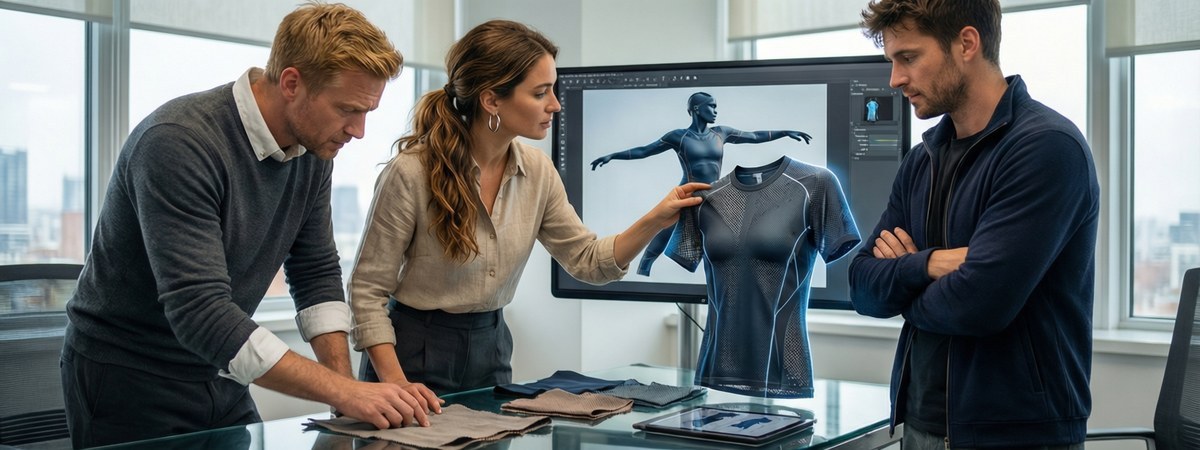
7. The Manufacturing Capabilities Behind the Finish
8. Cost Implications and the Real Value Proposition
9. How Embossing and Laser Detailing Differentiate Your Brand
10. Choosing a Manufacturing Partner With the Right Equipment
11. Frequently Asked Questions
Does 3D embossing make sportswear less breathable?
Will laser-perforated holes fray or tear in the wash?
Which fabrics work best for laser cutting?
What is the typical MOQ for embossed branding?
Conclusion