The Complete Guide to Sportswear Quality Control: What Every Brand Should Know
Why Quality Control Makes or Breaks Your Sportswear Brand
You have designed the perfect training collection. The tech pack is detailed, the fabric swatches are approved, and the factory has confirmed the timeline. Then the shipment arrives — and three out of ten jackets have crooked zippers, the jogger hems are uneven, and the color of the "black" tops does not match the sample you approved.
This scenario is not hypothetical. It happens to sportswear brands every day, especially brands that treat quality control (QC) as an afterthought. In private label and OEM sportswear, your brand name is on the finished product. When a customer buys a training top with a loose seam, they do not blame the factory — they blame your brand. This guide covers the complete QC process for custom sportswear manufacturing, from the moment raw fabric arrives at the factory to the moment finished goods are packed. Whether you are a startup launching your first collection or an established brand scaling production, understanding each QC stage protects your reputation, reduces returns, and builds a product customers trust.
Start with a QC risk assessment
Before you approve a new production run, let our team flag the highest-risk defect categories for your specific garment type.
Get a free QC assessmentThe Real Cost of Poor Quality in Private Label Sportswear
Before discussing QC processes, understand exactly what poor quality costs a sportswear brand. The numbers are sobering. Industry data from the American Apparel & Footwear Association indicates apparel brands lose an average of 3–5% of annual revenue to returns, with fit and quality issues the top two reasons.
Online, the pain is sharper. Analysis of 2025 ecommerce return rates shows fashion and apparel carries the highest return rate of any category at 24.4% — and size and fit issues alone account for 67% of those returns, with "too small" the single most common complaint at 34%. For a brand doing $1M in annual sales, 3–5% lost is $30,000–50,000 before you count the operational cost of processing returns, restocking, and managing complaints.
Beyond returns, poor quality damages your brand in three harder-to-quantify but more expensive ways:
- Customer acquisition cost rises. Unhappy customers do not repurchase, and negative word-of-mouth spreads faster than paid advertising can compensate for.
- Retailer relationships suffer. A single quality incident can land you on a retailer's "probation" list — or get you dropped entirely.
- Chargebacks and deductions. Retailers routinely charge back 2–8% of the invoice for quality-related issues, from defective goods to late deliveries caused by re-inspection.
The solution is not a perfect factory that never makes mistakes. It is a robust QC system that catches issues before they reach your customers — and that system starts before a single yard of fabric is cut.
Quantify your return-risk exposure
Use our Private-Label QC Cost Calculator to estimate what poor quality is quietly costing your brand.
Request the calculatorPre-Production: Fabric Inspection and the 4-Point System
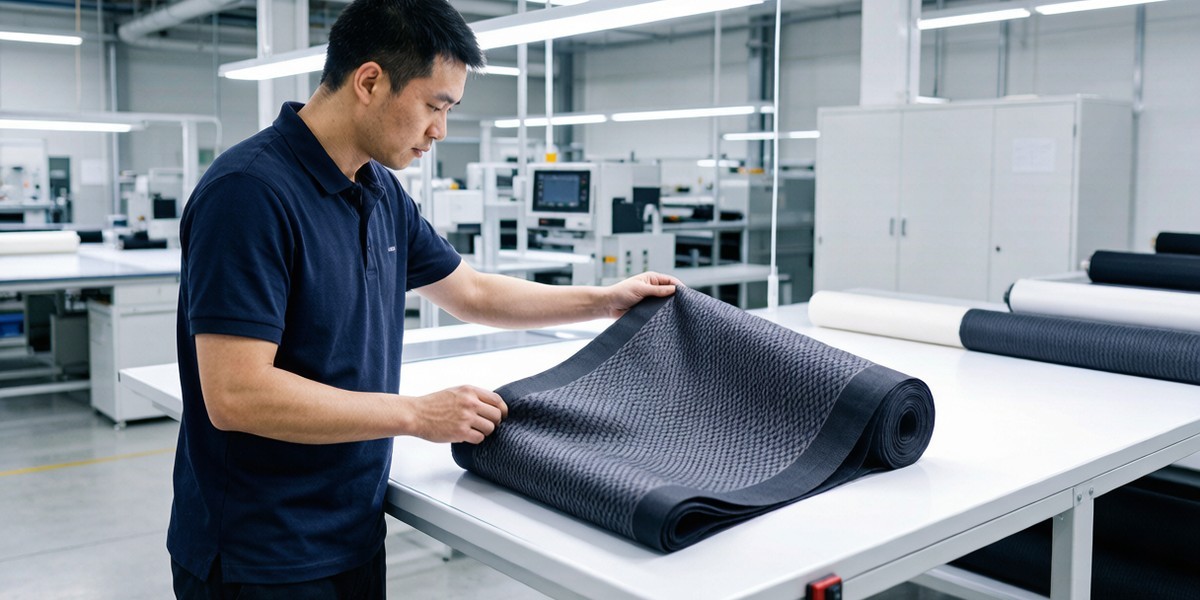
The most common source of quality problems in sportswear is not poor sewing — it is defective fabric. Flaws are often invisible until the garment is finished and inspected, which is why pre-production fabric inspection is the first and most critical QC checkpoint.
The 4-Point System is the industry-standard method for grading fabric quality. A roll is laid out on an inspection table and examined under controlled lighting. Defects are assigned penalty points by size and severity:
| Defect Size | Points | Example |
|---|---|---|
| ≤ 3 inches | 1 | Small knot or slub in knitting |
| 3–6 inches | 2 | Short yarn streak or thin bar |
| 6–9 inches | 3 | Visible crease mark or hole |
| > 9 inches | 4 | Long oil stain or mispick |
A roll is typically rejected if it scores more than 40 points per 100 linear yards. Passed rolls move into production; failed rolls return to the mill or are downgraded for non-critical use.
Pre-production fabric testing goes beyond visual checks. For sportswear, essential tests include fabric weight (GSM, ±5% tolerance), tensile strength (critical for compression garments), seam slippage (fitted activewear), and color consistency verified by spectrophotometer or light box. At MontForge, every incoming fabric lot passes 4-point inspection and laboratory testing before production, with detailed records that trace any later issue back to the specific roll and test result.
See our fabric inspection protocol
Get the exact 4-point checklist and laboratory test scope we run on every incoming lot.
Request the protocolIn-Production: In-Line QC and MES Real-Time Monitoring
Waiting until the finished garment to check quality is a recipe for costly rework. In-line QC — checking quality at each production stage — catches issues while they are still cheap to fix.
| Stage | What Is Checked | Common Issues Caught |
|---|---|---|
| Cutting | Marker efficiency, fabric alignment, cut piece accuracy | Misaligned patterns, fabric waste |
| Sewing (line) | Stitch quality, seam strength, thread tension | Skip stitches, loose seams, broken needles |
| Sub-assembly | Zipper installation, pocket alignment, label placement | Crooked zippers, off-center labels |
| Final assembly | Overall construction, symmetry, trim | Twisted legs, uneven hems, loose threads |
MES (Manufacturing Execution System). Advanced factories use a digital MES to track every production order in real time. Each workstation is connected and QC checkpoints are logged digitally. If a machine or operator produces an abnormal number of defects, the system flags it immediately so supervisors intervene before hundreds of units are affected.
For your brand, a factory with MES-driven in-line QC can correct a stitching issue after the first 10 units instead of after 1,000 — the difference between a 30-minute fix and a delay costing weeks and thousands of dollars. When evaluating manufacturing partners, ask specifically about their in-line QC system: not just whether they have one, but how defects are tracked and escalated in real time.

Ask about MES-driven QC
Find out how real-time production monitoring reduces your defect rate and lead-time risk.
Talk to our teamPost-Production: AQL Final Random Inspection
After production, finished garments pass final random inspection — commonly called AQL (Acceptable Quality Limit) inspection — your last line of defense before goods are packed and shipped.
How AQL works. An inspector randomly samples a statistically significant number of finished garments from the batch according to the ANSI/ASQ Z1.4 standard. Sample size depends on total lot size. For a typical sportswear order:
| Lot Size (units) | Sample Size | AQL 1.0 (Major) | AQL 2.5 (Minor) |
|---|---|---|---|
| 501–1,200 | 80 | Accept ≤ 2 defects | Accept ≤ 5 defects |
| 1,201–10,000 | 125 | Accept ≤ 3 defects | Accept ≤ 7 defects |
| 10,001–35,000 | 200 | Accept ≤ 5 defects | Accept ≤ 10 defects |
Defects are classified into three categories: Critical (unsafe or unsellable, 0 tolerance), Major (reduces usability, AQL 1.0 typical), and Minor (deviates from spec but sellable, AQL 2.5 typical). If defects exceed the limit, the lot is flagged for re-inspection, rework, or rejection. Most reputable manufacturers — including MontForge — operate at AQL 1.0 for major and AQL 2.5 for minor as standard.
Many brands also hire independent third-party inspectors such as SGS, Intertek, or Bureau Veritas for final inspection. This adds unbiased verification and is often required by retailers. If your buyer requires it, scope and budget it into your production timeline.

Scope AQL inspection early
We help you build third-party AQL inspection into your production calendar before it becomes a fire drill.
Plan my inspectionFunctional & Performance Testing: Moisture-Wicking, Breathability, Opacity
A garment can pass every construction check and still fail the wearer. For sportswear, functional performance is part of quality — and it is measurable.
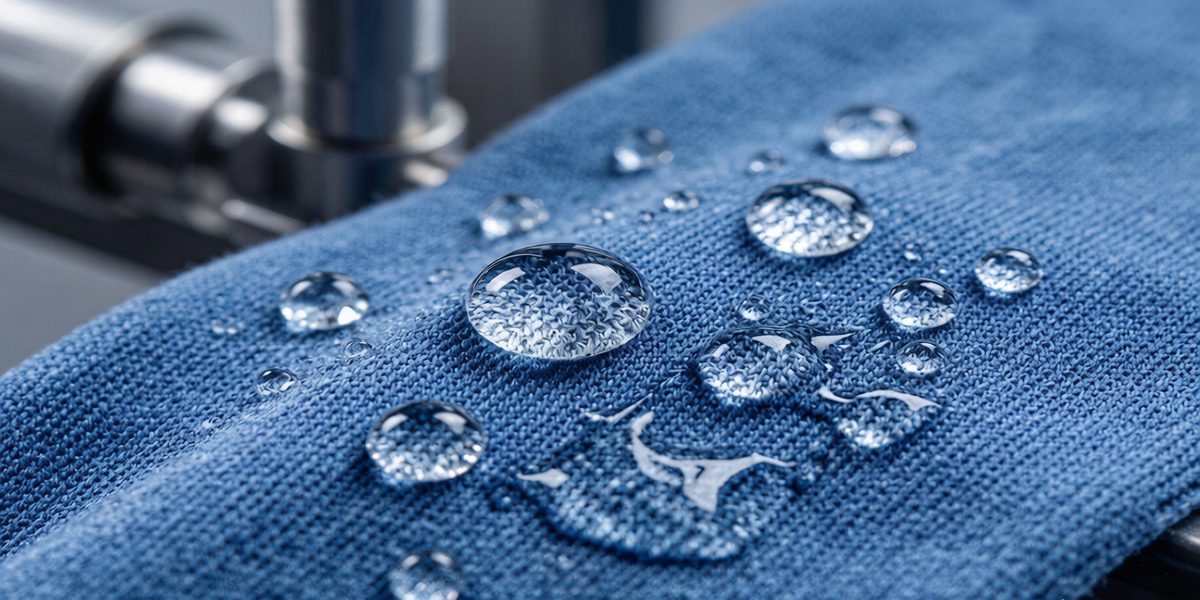
Moisture management. The standardized method for moisture-wicking performance is AATCC 195 (Moisture Management), which quantifies absorption rate, drying time, and moisture spreading. Brands that claim "moisture-wicking" should be able to show the test result, not just the marketing copy.
Breathability. Air-permeability and thermal resistance testing confirm the fabric lets heat and vapor escape during exertion — the difference between a top that performs and one that feels like cling film.
Opacity / squat test. For leggings and tight-fit activewear, an opacity (squat) test checks the fabric does not become see-through when stretched — a frequent, reputation-damaging complaint that no AQL point system catches on its own.
MontForge's in-house lab runs these performance tests on every new fabric lot and keeps digital records available for buyer review. If your supplier cannot provide them, that is a significant risk indicator.
Request performance test reports
See the AATCC 195 and breathability results behind our performance fabrics.
Get the reportsColor Fastness, Shrinkage, and Pilling Testing
Three laboratory tests matter most for sportswear because they directly affect real-world performance and lifespan.
Color fastness. Good sportswear should achieve a minimum rating of 4 (on a 1–5 scale) across color fastness to washing (ISO 105-C06), perspiration (ISO 105-E04), light/UV (ISO 105-B02), and rubbing/crocking (ISO 105-X12). A garment that bleeds onto a white towel after one wash, or fades after a month in a sunny window, generates returns.
Shrinkage. ISO 6330 testing washes and tumble-dries the garment three times, measuring dimensional change. Acceptable shrinkage for sportswear is typically ≤3% in both length and width — beyond that, a size L becomes a size M after three washes.
Pilling resistance. The Martindale test (ISO 12945-2) grades pilling 1–5. A rating of 3–4 is acceptable for most sportswear; premium brands should target 4+.
Sizing and Fit Consistency — Why Fit Drives 67% of Returns
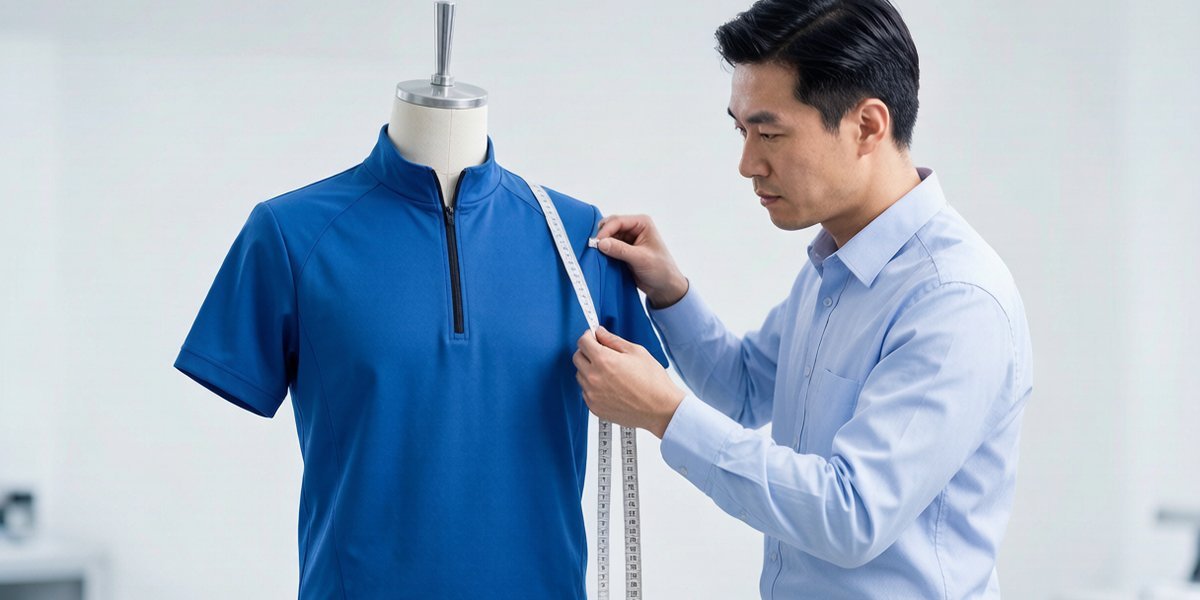
Fit is the number-one reason customers return sportswear, and the data is blunt: size and fit issues account for 67% of fashion returns. No matter how good the fabric or construction, if the size M top fits differently than the approved sample, customers notice.
Size consistency starts with the size-set sample — a complete set of all sizes — approved as the benchmark. Production garments must then match within defined tolerances:
- Chest width (1" below armhole) — ±0.5"
- Body length (HPS to hem) — ±0.5"
- Sleeve length — ±0.5"
- Waist — ±0.5" elastic, ±0.25" fitted
- Inseam — ±0.5"
- Hip width — ±0.5"
During final AQL inspection, a random sample from each size is measured against these tolerances. A good factory tracks measurement data across runs to catch sizing drift before it becomes systemic. This is also where a detailed size spec sheet — shared with your factory up front — pays for itself many times over.
Standardize your size specs
Get our size-specification template so production matches your approved fit every time.
Get the templateCommon Defects in Sportswear and How to Catch Them
Knowing what to look for is half the battle. The most common defects and where each is caught:
| Defect Type | Description | Where Caught |
|---|---|---|
| Skip stitch | Missing stitches causing seam weakness | In-line (sewing) |
| Uneven hem | Hem width varies along the edge | In-line (final assembly) |
| Twisted leg | Side seam spirals around the leg | Final AQL inspection |
| Color shading | Variation between pieces of one garment | Fabric inspection + final |
| Broken needle | Needle fragments embedded (safety hazard) | In-line + final metal detector |
| Label misplacement | Care or brand label off-position | In-line (sub-assembly) |
| Oil stains | Grease marks from machinery | Final inspection |
| Pilling | Fiber balls on fabric surface | Lab testing (pre-production) |
The key is not one final inspection but a multi-layered system where each stage checks specific defect types. A good factory maintains a defect database to drive continuous improvement. When you tour a manufacturer, ask to see their defect tracking reports — if they do not have them, that is a red flag.
Working with Your Factory: The Quality Agreement
The best QC system only works if you and your factory agree on what "acceptable quality" means. That alignment starts before production and is documented in a Quality Agreement covering:
- AQL levels — limits for major, minor, and critical defects
- Measurement tolerances — agreed dimensions per point
- Approved samples — signed reference samples production must match
- Rejection criteria — what happens when a lot fails
- Inspection timing — when inspections occur and who performs them
- Dispute resolution — how quality disagreements are resolved
Practical tips: send clear tech packs with measurement diagrams; request photo documentation of each checkpoint; build inspection time into your schedule; visit the factory during production; and build a relationship, not just a transaction. At MontForge, every client receives a detailed QC schedule before production — checkpoint timing, sample sizes, and reporting deliverables.
Lock in your QC schedule
We deliver a written QC schedule and reporting plan before your first cut.
Set up my QC planBuilding a Quality-First Brand Reputation
Quality control is not just about preventing defects. For a sportswear brand, consistent quality is your most powerful marketing asset — every garment that fits perfectly and survives repeated wash cycles is a free brand ambassador.
Brands that invest in QC from day one benefit from:
- Lower return rates — typically 2–3% vs. 8–12% without structured QC
- Higher customer lifetime value — satisfied customers repurchase at 2–3x the rate of one-time buyers
- Retailer trust — retailers prefer brands with documented QC processes
- Premium pricing power — quality brands command a 20–40% price premium
Quality is not a department; it is a philosophy embedded in every decision from fabric selection to final inspection. Brands that treat quality as a cost will always struggle against brands that treat it as an investment.
Build your collection with a QC-first partner
Reach out to MontForge for a walkthrough of our QC process, test reports, and a production plan your customers will reorder.
Partner with MontForgeFrequently Asked Questions
Q: What is AQL and why does it matter in sportswear quality control?
AQL (Acceptable Quality Limit) is the worst tolerable defect rate a production batch can have and still pass. Brands apply ANSI/ASQ Z1.4 sampling at General Inspection Level II—typically AQL 2.5 for major defects and AQL 4.0 for minor. Without a defined AQL, factories self-grade and defective activewear reaches customers.
Q: How does the 4-point fabric inspection system work?
The 4-Point System scores each fabric defect 1, 2, 3, or 4 points by severity (a single defect capped at 4). A roll is rejected once it exceeds 40 points per 100 m²—stopping weak, uneven knit before it becomes pilling-prone leggings or see-through tops.
Q: What performance tests should activewear pass before production?
Core tests: moisture-wicking (AATCC 195), breathability, opacity / squat test, pilling (ISO 12945-2), colorfastness (ISO 105 / AATCC 61), and dimensional stability (ISO 6330). Skipping them is the fastest route to “looked fine in the showroom, failed on the body” returns.
Q: Why do sportswear brands fail quality control?
Failures are systemic: fit inconsistency (the #1 driver, behind 67% of apparel returns), skipped in-line (DUPRO) checks, unverified mills, loose AQL discipline, and no third-party pre-shipment inspection. With apparel e-commerce averaging a 24.4% return rate, QC is a margin lever.
Q: When should a brand use third-party inspection?
Three moments: IPC (Initial Production Check) for new styles/factories, DUPRO (During Production) mid-run, and FRI (Final Random Inspection) before shipment. High-value or first-time orders use all three; stable repeat lines often need FRI alone.
Q: Which certifications prove a sportswear manufacturer is reliable?
Look for ISO 9001 (quality system), BSCI / SEDEX / WRAP (social compliance), GRS / RCS (recycled content), and OEKO-TEX / bluesign (chemical safety). Pair certificates with your own QC records—a badge is a start, not a substitute for inspection.