Sustainable Sportswear Manufacturing: A Complete Guide to Eco-Friendly Activewear Production
Sustainable Sportswear Manufacturing: The Complete Guide for Eco-Conscious Brands
As the global sportswear market pushes past $230 billion, a powerful transformation is reshaping the industry: sustainability has moved from a niche marketing angle to a non-negotiable operational standard. For sportswear brands, sustainable manufacturing is no longer about greenwashing with a single recycled polyester T-shirt. It is about building an entire supply chain — from raw material sourcing to finished packaging — that meets the environmental expectations of regulators, retailers, and consumers.
This guide covers the complete landscape of sustainable sportswear manufacturing in 2026, including recycled fabric technologies, waterless dyeing systems, zero-waste cutting, ethical factory certifications, and eco-packaging strategies that reduce both carbon footprint and long-term production costs.
The Business Case for Sustainable Sportswear Manufacturing
Sustainability in sportswear manufacturing is increasingly driven by hard economics as much as environmental values. The numbers tell a compelling story that goes far beyond consumer sentiment.
Regulatory pressure is the most immediate driver. The European Union Strategy for Sustainable and Circular Textiles mandates that by 2030, all textile products sold in EU markets must be durable, repairable, and recyclable — made largely of recycled fibers and free of hazardous substances. Brands without compliant supply chains will simply be locked out of the world second-largest sportswear market. Parallel regulations are advancing in the United States and United Kingdom, making sustainability compliance a prerequisite for market access rather than a competitive differentiator.
On the consumer side, the data is clear. A 2025 McKinsey survey found that 67% of consumers consider the use of sustainable materials an important purchasing factor, and 63% of Gen Z and millennial shoppers are willing to pay a premium of 10–25% for sustainably manufactured activewear. For sportswear brands targeting the under-35 demographic — the largest activewear-buying cohort — sustainable manufacturing is not optional.
The manufacturing economics also increasingly favor sustainable approaches. Recycled polyester (rPET) now costs only 5–15% more than virgin polyester at scale, while waterless dyeing technologies reduce utility costs by 40–60% per production batch. Zero-waste cutting patterns can improve fabric utilization from the industry average of 80–85% to over 95%, directly reducing material costs. When calculated across a full production year, a sustainably optimized factory can reduce per-unit costs by 8–15% compared to conventional production — making sustainability both an ethical choice and a margin driver.
Recycled and Regenerated Fabric Technologies
The foundation of sustainable sportswear manufacturing lies in fabric technology — specifically, how raw fibers are sourced, processed, and transformed into performance textiles without depleting virgin resources.
Recycled Polyester (rPET)
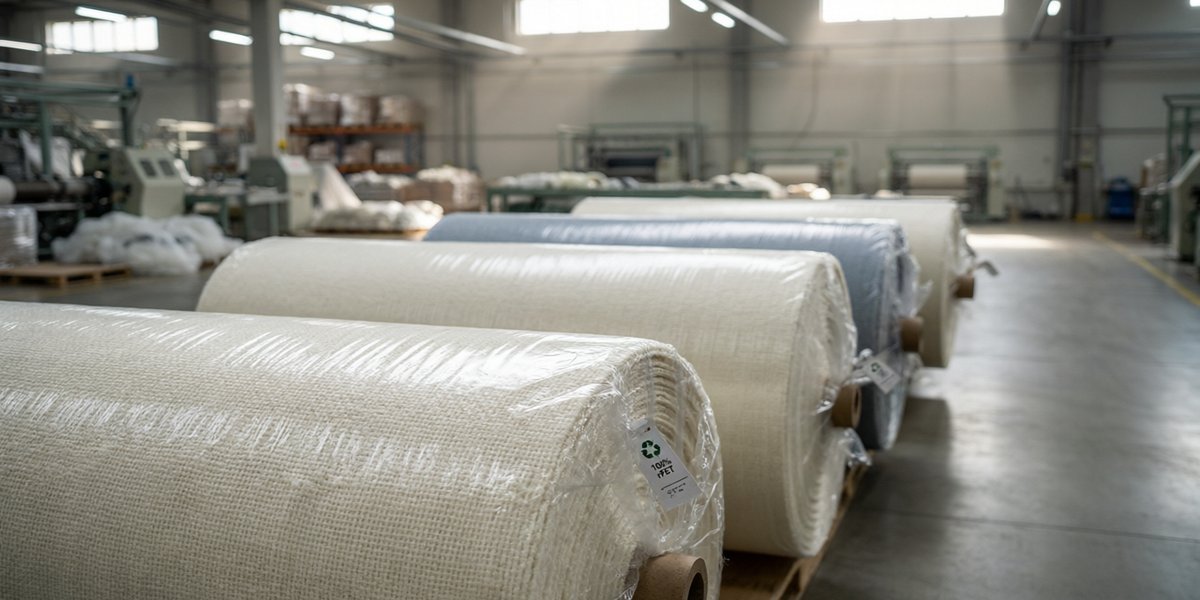
Recycled polyester, produced from post-consumer PET plastic bottles, is the most widely adopted sustainable fiber in the sportswear industry. The manufacturing process involves collecting, cleaning, and shredding plastic bottles into flakes, which are melted and extruded into new polyester filament yarn. The resulting fabric matches virgin polyester in durability, moisture-wicking performance, and colorfastness — while reducing energy consumption by 45%, water usage by 20%, and CO₂ emissions by 30% compared to virgin polyester production.
For sportswear brands, the key specification is GRS (Global Recycled Standard) certification, which verifies the recycled content percentage and tracks the material through every stage of the supply chain. GRS-certified rPET can be used in everything from compression leggings and training tops to outerwear shells and lining fabrics. At MontForge, our standard rPET fabrics are GRS-certified and available in weights from 140 GSM for lightweight training tops to 280 GSM for structured outerwear, with 4-way stretch and moisture-wicking properties that match virgin performance fabrics.
Regenerated Nylon (ECONYL and Similar)
ECONYL regenerated nylon, made from recovered fishing nets, fabric scraps, and industrial plastic waste, offers a premium sustainable alternative for high-abrasion sportswear applications like training shorts, swimwear, and outerwear. The regeneration process depolymerizes nylon waste back to its raw monomer (caprolactam) and repolymerizes it into virgin-quality nylon 6 — creating a truly circular material that can be recycled infinitely without quality degradation. For brands producing premium training gear, ECONYL-based fabrics deliver the same strength, stretch, and hand-feel as virgin nylon while diverting waste from oceans and landfills.
TENCEL Lyocell and Modal Blends
For the growing lifestyle-athleisure crossover segment, plant-based fibers like TENCEL lyocell offer a renewable alternative to petroleum-based synthetics. Produced from sustainably harvested wood pulp in a closed-loop process that recovers 99% of solvents, TENCEL fibers provide exceptional moisture management, natural antibacterial properties, and a luxuriously soft hand-feel. Blended with recycled polyester or organic cotton, TENCEL-enhanced fabrics are ideal for yoga wear, lounge collections, and premium athleisure that prioritizes next-to-skin comfort alongside environmental responsibility. OEKO-TEX Standard 100 and FSC certification are the key credentials to verify when sourcing TENCEL-based fabrics.

Waterless and Low-Impact Dyeing Technologies
Conventional textile dyeing is one of the most environmentally damaging stages of garment manufacturing, consuming an estimated 1.3 trillion liters of water annually and generating 20% of global industrial water pollution. For sportswear brands committed to sustainability, upgrading dyeing technology delivers the largest single reduction in environmental footprint.
Dope dyeing (solution dyeing) injects pigment directly into the molten polymer before fiber extrusion, embedding color inside the fiber rather than applying it to the surface. This eliminates the dye bath entirely — zero water consumption, zero effluent discharge — and produces colorfastness ratings of 4–5 that significantly outperform piece-dyed fabrics. Dope-dyed fabrics are ideal for core collection colors (black, navy, charcoal) that are ordered in high volumes, as the setup cost is amortized across larger production runs.
Waterless CO₂ dyeing uses supercritical carbon dioxide as the dye solvent instead of water. In a pressurized chamber, CO₂ acts as both solvent and carrier, infusing dye molecules deep into the fiber structure. When the pressure is released, the CO₂ returns to gaseous form and is recaptured for reuse — achieving a 95% CO₂ recovery rate with zero water discharge. While the technology requires significant capital investment (approximately $500,000–800,000 per machine), it reduces per-garment dyeing costs by 40–60% and eliminates wastewater treatment entirely.
Digital textile printing applies pigment inks directly to fabric via industrial inkjet printheads — a method that uses 90% less water than traditional screen printing and produces virtually zero chemical runoff. It also eliminates the need for printing screens and color-separation plates, enabling cost-effective short runs and on-demand production that reduces overproduction waste. For sportswear brands offering custom team kits, limited-edition drops, or small-batch collections, digital printing is both the most sustainable and most economically efficient decoration method.
Zero-Waste Cutting and Pattern Optimization
In a conventional cut-and-sew factory, approximately 15–20% of the fabric becomes cutting-room-floor waste — offcuts, scraps, and irregular remnants that are too small to use. Across the global sportswear industry, this represents millions of tons of textile waste annually. Zero-waste manufacturing targets this inefficiency directly through smarter pattern design and cutting technology.
Zero-waste pattern design approaches the garment as a jigsaw puzzle, where every piece of the pattern interlocks so that the total fabric area is consumed with no leftover material. This requires a fundamental rethinking of garment construction — seams may fall in unconventional places, and style lines may be dictated by pattern geometry rather than traditional design conventions. While zero-waste patterns are more complex to develop (requiring 2–3x the pattern-making time of conventional designs), they reduce fabric consumption by 15–20% per garment. For a brand producing 10,000 training tops per year, zero-waste patterns save approximately 3,000–4,000 meters of fabric annually.
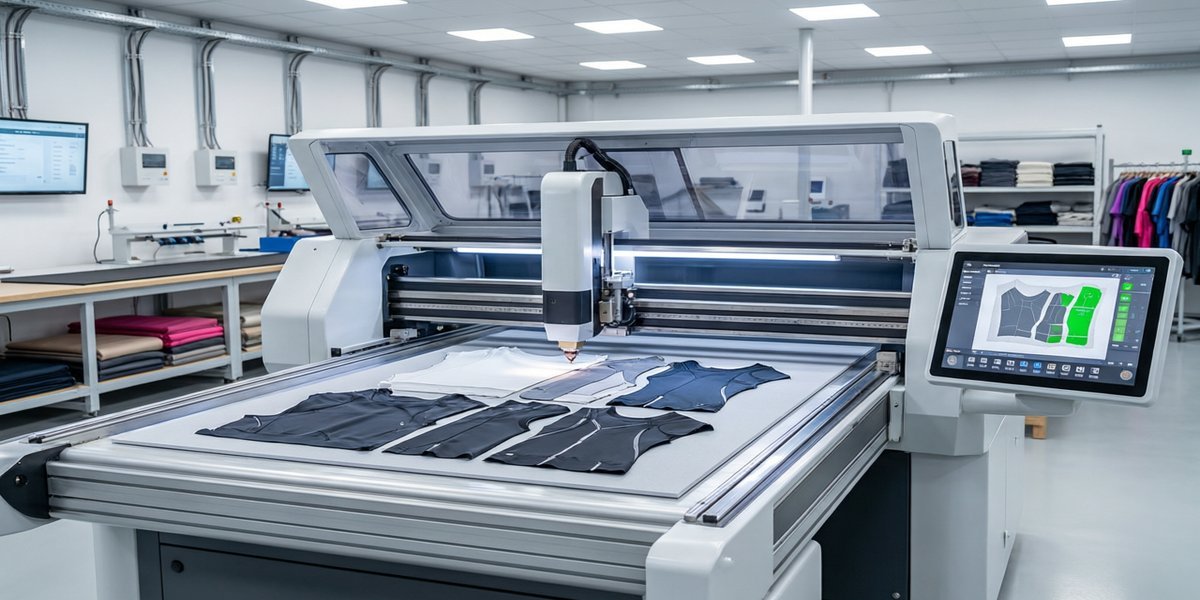
Computerized nesting and automated cutting use AI-powered software to arrange pattern pieces on fabric with maximum density before cutting. Modern nesting algorithms achieve 85–92% fabric utilization on multi-size marker layouts, compared to 75–82% with manual nesting. When combined with automated laser or knife cutting systems, the precision eliminates the safety margin typically added to hand-cut pieces (usually 2–3mm extra around each piece to compensate for cutting inaccuracy), further reducing waste.
Closed-loop textile recycling captures cutting-room offcuts and processes them back into usable fiber through mechanical or chemical recycling. Mechanical recycling shreds textile waste into fibers that can be re-spun into yarn, though fiber length shortens with each cycle. Chemical recycling depolymerizes synthetic fibers back to their monomer building blocks for true closed-loop regeneration. For factories processing 50+ tons of fabric per month, installing an on-site mechanical recycling line can recover 90% of cutting waste for reuse in non-critical applications like interlinings, hang-tag strings, or industrial textiles. MontForge operates closed-loop fabric recycling at our primary manufacturing campus, diverting over 85% of production textile waste from landfill.
Ethical Manufacturing Certifications and Social Compliance
Sustainable manufacturing encompasses social sustainability alongside environmental responsibility. For sportswear brands, factory certifications provide verified proof that garments are produced under ethical conditions — protecting both workers and brand reputation.
| Certification | Scope | Why It Matters |
|---|---|---|
| GRS (Global Recycled Standard) | Verifies recycled content and tracks it through the supply chain | Required for any recycled-content claim on product labels or marketing |
| OEKO-TEX Standard 100 | Tests for harmful substances in finished textiles | Consumer-facing safety assurance; required by many retailers |
| BSCI (Business Social Compliance Initiative) | Audits working conditions, wages, hours, and safety | European retailer requirement; covers 11 social compliance principles |
| bluesign | Evaluates chemical inputs and environmental impact of entire production | Most rigorous textile chemistry standard; preferred by premium outdoor brands |
| ISO 14001 | Environmental management system certification | Demonstrates systematic environmental management and continuous improvement |
| SA8000 | Social accountability across 9 performance areas | Gold standard for social compliance; requires certified auditors |
When evaluating a manufacturing partner sustainability credentials, request current copies of all relevant certifications — not just logos on a website, but the actual valid certificates with issuing body and expiry date. A factory that holds GRS certification can provide a valid scope certificate (SC) for each product category, while BSCI audit reports are valid for two years and should show a rating of at least C (Acceptable). At MontForge, we hold GRS, OEKO-TEX Standard 100, BSCI, and ISO 14001 certifications, with all certificates available for buyer review before production begins.

Sustainable Packaging: Recycled, Biodegradable, and Minimalist
Packaging is often the last item brands consider in their sustainability strategy — but it is the first thing customers see when they unbox a product. For a brand claiming sustainability credentials, plastic-heavy packaging undercuts the entire message.
Recycled and FSC-certified cardboard is the baseline for sustainable outer packaging. FSC (Forest Stewardship Council) certification ensures the paper originates from responsibly managed forests. Combined with soy-based inks for printing, FSC-certified packaging reduces the environmental impact of branded boxes and mailers by 50–70% compared to conventional alternatives.
Biodegradable poly bags address the most common packaging pain point — the individual poly bag that protects each garment during shipping. Conventional LDPE poly bags take 500+ years to decompose. Biodegradable alternatives made from PLA (polylactic acid, derived from corn starch) or oxo-biodegradable additives break down in commercial composting facilities within 180 days. The cost premium is approximately $0.02–0.05 per bag — a negligible amount at scale that eliminates the number-one piece of single-use plastic from the sportswear supply chain.
Minimalist packaging design reduces material usage at the source. Eliminating tissue paper, reducing hang-tag size by 50%, and using single-layer instead of multi-layer mailers can cut total packaging weight by 30–40%. For a brand shipping 50,000 units annually, this translates to lower freight costs (lighter packages), lower storage costs (smaller package volume), and a cleaner unboxing experience that aligns with the brand sustainability promise.
Carbon Footprint Reduction in Sportswear Production
The carbon footprint of a single sportswear garment spans raw material extraction, fiber processing, textile manufacturing, garment assembly, transportation, and end-of-life disposal. Each stage contributes to the total CO₂ equivalent (CO₂e), and each offers reduction opportunities for sustainability-focused brands.
Raw materials contribute 40–60% of a garment total carbon footprint. Switching from virgin polyester to recycled polyester reduces this segment by 30–50%. Switching from conventional cotton to organic cotton reduces it by 46%. The largest single carbon-reduction decision a brand makes is the fiber selection — and this decision happens before a single yard of fabric is woven.
Manufacturing energy sourcing contributes 15–25% of total carbon footprint. Factories powered by renewable energy (solar, wind, hydroelectric) reduce this segment by 70–90% compared to coal-powered facilities. A growing number of Tier-1 sportswear factories in China, Vietnam, and Bangladesh have installed rooftop solar arrays that supply 20–40% of their electricity demand — a capital investment of $200,000–500,000 that pays back within 3–5 years through reduced energy costs.
Transportation contributes 10–20% of total carbon footprint. Sea freight produces approximately 95% less CO₂ per ton-kilometer than air freight. For sportswear brands, the most impactful logistics decision is eliminating air freight for core collections — reserving express shipping only for samples and urgent replenishment. Consolidated shipping (full container loads rather than LCL) and optimized distribution center locations further reduce transport-related emissions.
At MontForge, our primary manufacturing campus is powered by a combination of rooftop solar (32% of total energy demand) and hydroelectric grid power, reducing our manufacturing carbon intensity by 48% compared to industry averages. We provide carbon-footprint estimates for every production order upon request, enabling brands to track and report their Scope 3 emissions with auditable data.
Building a Sustainable Supply Chain: A Practical Roadmap
Transitioning to sustainable sportswear manufacturing is a multi-year journey, not a single-project switch. The following phased approach helps brands prioritize high-impact changes while managing cost and complexity.
Phase 1 — Foundation (Months 1–3). Audit your current supply chain for sustainability: identify all fabric sources, dye houses, packaging suppliers, and logistics partners. Request certifications from each. Switch the easiest wins first — biodegradable poly bags, FSC-certified hang-tags, and recycled cardboard shipping boxes. These changes require no product redesign and minimal cost increase (typically under $0.10 per unit).
Phase 2 — Core Products (Months 4–8). Transition your highest-volume SKUs to GRS-certified recycled polyester or equivalent sustainable fabrics. Work with your manufacturer to develop recycled fabric options that match your current specifications for weight, stretch, and hand-feel. Implement digital printing for any decorated styles to eliminate water-intensive screen printing. These changes typically add $0.50–1.50 per unit but position your brand as genuinely sustainable rather than selectively green.
Phase 3 — Systemic Change (Months 9–18). Work with your manufacturing partner to adopt zero-waste cutting patterns for new styles. Transition dyeing to dope-dyed or waterless methods where viable. Implement carbon-footprint tracking across your entire product line. Explore closed-loop take-back programs where customers return worn garments for recycling into new products — a model pioneered by brands like Patagonia and increasingly demanded by Gen Z consumers.
Throughout this journey, the most important principle is transparency. Brands that honestly communicate where they are on their sustainability journey — including what they have achieved and what they are still working on — build far more trust than brands that make sweeping, unverifiable claims. The era of greenwashing is ending. The era of verifiable, auditable, supply-chain-wide sustainability has arrived.
Start Your Sustainable Manufacturing Journey
MontForge provides GRS-certified recycled fabrics, water-efficient production, zero-waste cutting, ethical manufacturing, and eco-friendly packaging — all under one roof. Whether you are launching your first sustainable collection or scaling an established eco-conscious brand, our team can guide you through every step of the process.
Request a Sustainable Manufacturing ConsultationFrequently Asked Questions
What is GRS certification and why does it matter for sportswear?
The Global Recycled Standard (GRS) is an international certification that verifies the recycled content percentage in textile products and tracks it through every stage of the supply chain. For sportswear brands, GRS certification is the only credible way to substantiate recycled-content claims on product labels, hang-tags, and marketing materials. It also covers social and environmental processing requirements, ensuring recycled fabrics are produced under ethical conditions.
Does recycled polyester perform as well as virgin polyester?
Yes. Mechanically recycled rPET matches virgin polyester in tensile strength, moisture-wicking performance, colorfastness, and durability. Independent testing by Intertek and SGS has consistently shown that GRS-certified rPET fabrics achieve identical or near-identical performance metrics to virgin polyester across all key sportswear specifications: stretch recovery (>95%), pilling resistance (grade 4+), and moisture vapor transmission rate (>10,000 g/m²/24h). Brands like Nike, Adidas, and Patagonia have used recycled polyester in their highest-performance products for years with no compromise.
What is the cost difference between conventional and sustainable manufacturing?
The cost premium for sustainable sportswear manufacturing has narrowed significantly. Recycled polyester fabric now costs approximately 5–15% more than virgin polyester at standard order quantities. Waterless dyeing technologies actually reduce per-unit costs by 40–60% compared to conventional dyeing. Zero-waste cutting patterns improve fabric utilization by 10–15%, directly reducing material costs. When all sustainable practices are combined, a fully optimized sustainable production line can reduce per-unit costs by 8–15% compared to conventional production within 12–18 months of implementation.
What certifications should I look for in a sustainable sportswear factory?
The essential certifications for a sustainable sportswear manufacturer are: GRS (recycled content verification), OEKO-TEX Standard 100 (chemical safety), BSCI or SA8000 (social compliance and ethical labor), and ISO 14001 (environmental management system). For premium brands targeting the outdoor and performance market, bluesign certification provides the most rigorous evaluation of chemical inputs across the entire production chain. Always request current valid certificates with issuing body details and expiry dates — do not accept logos alone.
How can a small brand start transitioning to sustainable manufacturing?
Start with the changes that require no product redesign and minimal cost: switch to biodegradable poly bags and FSC-certified packaging, request GRS-certified recycled polyester as your default fabric for new styles, and ask your manufacturer for their certification portfolio. These three steps cost under $0.15 per unit combined and immediately establish a credible sustainability baseline. From there, phase in water-efficient printing, zero-waste pattern design, and renewable-energy-powered production as your order volumes and budget allow.
What is the difference between mechanical and chemical textile recycling?
Mechanical recycling shreds textile waste into fibers that are re-spun into yarn. It is cost-effective and widely available, but fiber length shortens with each cycle, eventually requiring blending with virgin fibers. Chemical recycling depolymerizes synthetic fibers (polyester, nylon) back to their raw monomer building blocks, which can be repolymerized into virgin-quality fiber infinitely. Chemical recycling produces truly circular materials but requires higher capital investment and is currently available at fewer facilities. The most advanced sportswear factories are adopting both methods — mechanical for cutting-waste recovery and chemical for end-of-life garment recycling.