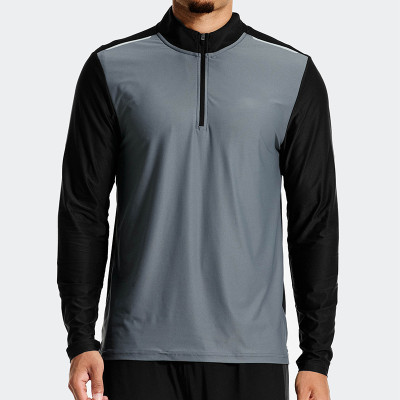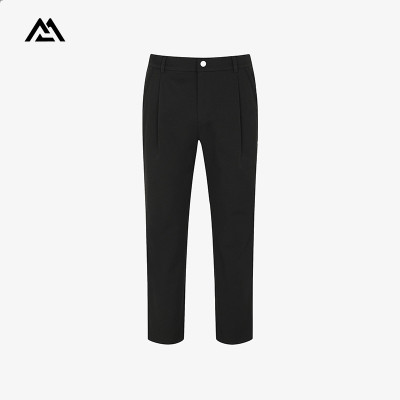
Custom Men's Training Suit Manufacturer: Minimum Order Quantities Explained (2026 Complete Guide)
2026 B2B Buyer Guide | Montforge Manufacturing
Quick Answer: The minimum order quantity (MOQ) for custom men's training suits typically ranges from 50 to 300 sets per style, depending on the factory type, customization level, and fabric complexity. At Montforge, our MOQ starts at 50 sets per style — allowing new brands to test designs and manage cash flow without committing to thousands of units upfront.
MOQ is one of the first questions every brand asks — and one of the most important. Get it wrong and you're either sitting on unsold inventory or locked out of a factory that's too big for your stage. This guide breaks down exactly what drives MOQ for men's training suits, what you can realistically expect in 2025, and how to negotiate the right terms for your brand.
What Is MOQ and Why Does It Exist?
MOQ — Minimum Order Quantity — is the smallest number of units a manufacturer will produce in a single order. It's not an arbitrary gatekeeping number. It reflects the real economics of running a production line.
When a factory takes on a custom men's training suit order, they have to:
• Source and purchase fabric (which comes with its own minimum yardage from the textile mill)
• Cut and prepare patterns for your specific spec
• Set up the production line and train workers on your garment's construction details
• Run quality control at multiple checkpoints
• Package with your branding, tags, and labels
All of that setup cost is fixed — whether you order 30 sets or 3,000. The MOQ is the minimum volume at which those fixed costs are spread out enough for the factory to make the job financially viable.
Understanding this is the key to negotiating MOQ. You're not asking a factory to bend a rule — you're asking them to find a way to cover their setup costs at a lower volume. Sometimes there's room. Often there's a trade-off.
What's the Realistic MOQ Range for Custom Men's Training Suits in 2025?
Based on the current market, here's what B2B buyers are actually seeing from different factory tiers:
| Factory Type | Typical MOQ | Unit Cost (FOB) | Best For |
|---|---|---|---|
| Large export factory (China/Bangladesh) | 500–1,000 sets/style | $12–$22 | Established brands scaling volume |
| Mid-size OEM factory (China) | 100–300 sets/style | $18–$35 | Growing brands, 2nd or 3rd collection |
| Startup-friendly OEM (China) | 50–100 sets/style | $25–$45 | New brands, first launch, test runs |
| Pakistan/Bangladesh mid-tier | 200–500 sets/style | $10–$18 | Basic styles, price-sensitive buyers |
| Domestic (USA/EU) factory | 30–100 sets/style | $60–$120+ | Speed to market, small batch premium |
Important: These are per style, per colorway. A 3-color collection at 100 sets MOQ means 300 sets total. Always clarify with your factory whether MOQ applies per style, per color, or per total order.
5 Factors That Directly Affect Your MOQ
1. Fabric Type and Sourcing
Performance fabrics — nylon/spandex four-way stretch, polyester moisture-wicking, recycled performance blends — come from textile mills with their own minimums, typically 200–500 meters per colorway. If your training suit uses a specialty fabric in a custom color, the factory needs to order enough to meet the mill's minimum before they can even start cutting.
Standard fabrics (off-the-shelf grey marl, basic black polyester) carry no fabric minimum risk — the factory likely has stock. Custom colorways in specialty fabrics will push your MOQ up, or add a fabric surcharge for small orders.
2. Customization Complexity
A simple training suit — matching jacket and jogger, one logo placement, standard zipper — has a lower setup cost and can often be done at 50–100 sets. The more complex your spec, the higher the factory's setup investment:
• Bonded seams or taped construction: setup cost increases, MOQ typically 100+ sets
• Multiple embroidery placements: each placement requires its own hoop setup
• Sublimation all-over print: higher MOQ because setup is per print file, not per garment
• Custom woven labels, silicone logos, or custom zippers: often carried minimum quantities by the accessory supplier
3. OEM vs ODM
OEM (you provide the design, they execute) generally carries a higher MOQ than ODM (you choose from their existing designs with your branding). If you're working from a factory's existing training suit block and just adding your logo, colorway, and label, the factory's setup costs are dramatically lower — and so is your MOQ.
This is why many first-time brand founders start with ODM to launch quickly at lower MOQ, then transition to full OEM once they've validated demand.
4. Branding Method
How you're applying your logo matters:
| Branding Method | MOQ Impact | Notes |
|---|---|---|
| Woven label (sewn in) | Neutral | Label supplier often has 100-pc label MOQ |
| Embroidery | Neutral to Low ↑ | Setup per design file, minimal impact |
| Screen print | Low–Medium ↑ | Per-color setup, better at 200+ pcs |
| Sublimation (all-over) | Medium ↑ | Per file setup; best at 100+ pcs |
| Heat transfer / silicone logo | Neutral | Flexible, common at low MOQ |
| Laser engraving (zipper pulls, etc.) | Low ↑ | Per-piece accessory cost |
5. Your Relationship with the Factory
First-order MOQs are almost always higher than repeat-order MOQs. A factory taking you on as a new client is taking on risk — they don't know your design approval process, your quality expectations, or how efficiently the relationship will run.
Brands that have placed 2–3 orders with a factory often find MOQs drop on subsequent runs, because the factory has amortized their setup investment across previous orders. Building a consistent factory relationship is one of the most effective long-term strategies for lowering your MOQ.
Test Order vs. Bulk Order: How to Think About Your First Run
Here's one of the most important strategic questions for any brand launching a custom men's training suit line:
Should you push for the lowest possible MOQ on your first order, or is there a better approach?
The answer depends on where you are in your brand journey:
| Brand Stage | Recommended Approach | MOQ Target | Why |
|---|---|---|---|
| Pre-launch / testing | ODM with small MOQ | 50–100 sets | Validate demand before committing capital |
| First launch with proof of demand | OEM test run | 100–200 sets | Own your design, test at manageable volume |
| Post-validation scaling | Full OEM bulk | 300–500+ sets | Better unit cost, more color options |
| Established brand, new style | OEM at scale | 500–1,000 sets | Maximum margin, full customization |
The mistake many new brands make is treating the first order as a 'production order.' It's not. It's a validation order. Your goal is to get real product into the hands of real customers with the least capital at risk, confirm the design sells, and then scale.
A $25,000 order at 500 sets is a risk. A $5,000 order at 100 sets is a test. If the test sells out, you now have proof — and your next order conversation with the factory starts from a completely different position.
How to Negotiate MOQ Without Burning the Relationship
Pushing back on MOQ is normal and expected. Here's how to do it effectively:
• Start with ODM, not OEM: Choose from existing factory designs with your label. The factory's setup cost is near zero. MOQ naturally drops.
• Offer a higher unit price for a lower volume: Ask what it costs per set at your target volume. Often factories will accept lower MOQ at a 10–20% unit price premium. The economics still work for both sides.
• Consolidate colorways: Instead of 3 colors at 100 sets each, ask for 1 color at 200 sets. Lower total MOQ for the factory, simpler production run.
• Commit to a follow-up order in writing: A letter of intent for a second order (contingent on first order quality) gives the factory confidence. They're not just doing a one-time run — they're investing in a relationship.
• Ask about their production schedule gaps: Factories sometimes have production slots they need to fill between larger orders. A smaller order that fits an open slot can often be done at lower MOQ because it costs the factory nothing to say yes.
• Be transparent about where you are: Professional factories have worked with hundreds of startups. Telling them you're launching your first line isn't a weakness — it's context. A good factory will advise you honestly on the right approach.
What's Included in a Custom Men's Training Suit Order at Montforge
To make this concrete, here's what a standard custom training suit order at Montforge looks like end-to-end:
| Stage | What Happens | Timeline |
|---|---|---|
| Tech pack / design brief | You share your design references, spec requirements, or we develop from scratch (ODM) | Day 1–3 |
| Material confirmation | We confirm fabric availability, colorway, GSM, and accessory specs | Day 3–5 |
| Proto sample | First physical sample produced for fit review and construction check | Day 5–14 |
| Revision round(s) | Adjustments to fit, construction, or details as needed | 3–5 days per round |
| Sealed sample approval | Final approved sample — becomes quality benchmark for bulk production | Client approval |
| Bulk production | Full production run with mid-production QC checkpoint | 25–35 days |
| Pre-shipment inspection | Final quality check against sealed sample before packing | 2–3 days |
| Shipping | DHL/FedEx Express (5–7 days) or sea freight (20–35 days depending on destination) | On schedule |
• MOQ: From 50 sets per style
• Fabrics: Nylon/spandex, polyester/spandex, recycled performance blends, warp-knit woven
• Customization: Full OEM and ODM, private label, custom packaging
• Certifications: OEKO-TEX Standard 100, BSCI audited
• Markets served: US, UK, EU, Australia, Canada
Common Mistakes Brands Make with MOQ
• Ordering the minimum and maxing out colorways: 3 colors at 50 sets each is 150 sets total — but in thin spreads that are harder to reorder. Better to do 1–2 colorways at slightly higher volume per color.
• Treating MOQ as the target, not the floor: The MOQ is the minimum. If your market research suggests you can sell 300 sets, don't order 50 just because you can. You'll pay more per unit and limit your margin.
• Not asking about fabric minimums separately: A factory's garment MOQ might be 100 sets, but if the fabric mill requires 300 meters minimum for your custom color, your practical minimum is higher. Ask about this upfront.
• Skipping proto samples to 'save time': The proto sample is where you catch problems before bulk. Brands that skip this often receive bulk orders that don't match their expectations — and have little recourse.
• Choosing a factory purely on MOQ: The lowest MOQ factory isn't the best factory. A factory offering 20-piece MOQs on complex men's training suits either has serious quality compromises or significant hidden costs. Match the factory to your actual needs.
Frequently Asked Questions
What is the minimum order for a custom men's training suit in China?
For a mid-size OEM factory in China, the standard MOQ is 100–300 sets per style. Startup-friendly factories like Montforge can go as low as 50 sets per style. Large export factories typically require 500+ sets.
Can I order different sizes within my MOQ?
Yes. MOQ applies to the total number of sets, not individual sizes. A 100-set order can be spread across S, M, L, XL, and XXL in whatever ratio fits your size run — typically following a size curve like 10-25-35-20-10.
Can I mix colors within my MOQ?
Usually yes, but with conditions. Mixing colors in one MOQ often requires each color to meet a sub-minimum (e.g., at least 30 sets per colorway). This is because each colorway requires separate fabric dyeing and sometimes separate production line setup.
Is there a separate MOQ for the jacket and the pants in a training suit set?
Most factories treat training suits as a set and quote MOQ per set (jacket + pants together). Some factories will allow you to order tops and bottoms separately, but this usually comes with a higher MOQ per piece or a blended minimum. Always clarify upfront.
What happens if I order below the factory's MOQ?
Some factories will accept below-MOQ orders with a small-batch surcharge — typically a flat fee of $100–$500 added to the order to cover setup costs. Others have a hard floor. It's always worth asking directly, especially if you have a clear follow-up order in mind.
How much does a custom men's training suit cost per set at low MOQ?
At 50–100 sets, expect to pay approximately $25–$45 FOB per set (jacket + pants) depending on fabric, construction, and branding complexity. At 300–500 sets, that range typically drops to $18–$30 FOB. These are China OEM factory estimates for quality men's performance training suits, not basic poly sets.
Can I get a sample before committing to bulk?
Yes, and you should always insist on this. At Montforge, we produce proto samples in 7–14 days. Sample cost varies by complexity — typically $80–$200 per set for a custom proto sample — but this cost is usually credited against your bulk order.
Start Your Custom Men's Training Suit Order
At Montforge, we've helped men's activewear brands — from first-time founders to established labels — navigate exactly this process. Whether you're launching your first 50-set test run or scaling a proven style to 500 sets, we'll give you honest advice on what MOQ makes sense for where you are.
What we offer:
• MOQ from 50 sets per style — jackets, joggers, or training suit sets
• Full OEM (your design) and ODM (our base styles, your branding)
• Proto samples in 7–14 days
• OEKO-TEX certified fabrics, BSCI audited factory
• Direct factory contact — no trading company markup
Get a Free Quote → Request a Sample Set →
Contact: admin@montforge.com | WhatsApp: +86 13528775886 | www.montforge.com
Montforge — Custom Men's Training Suit Manufacturer | Dongguan, China | OEKO-TEX Certified | BSCI Audited | MOQ from 50 sets