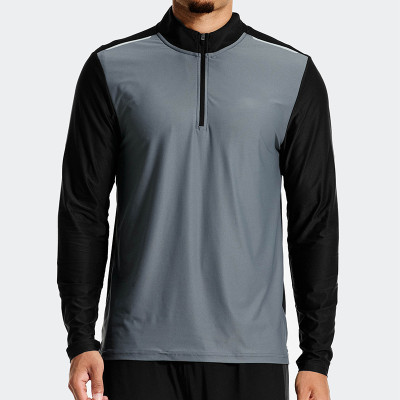
Custom Men's Sportswear Manufacturer: The Complete B2B Guide to Finding, Vetting, and Ordering from the Right Factory (2026)
Montforge Manufacturing | Updated May 2026
Direct Answer: A custom men's sportswear manufacturer is a factory that produces men's activewear — gym wear, track jackets, training suits, streetwear-athletic sets — built to your brand's specifications. To find the right one: (1) define your product category and volume; (2) verify certifications (OEKO-TEX, BSCI, ISO); (3) request physical samples before bulk; (4) confirm MOQ matches your stage; (5) check export experience to your target market. For brands targeting the US, UK, or EU, China-based OEM factories with 50–300 piece MOQs offer the strongest combination of technical capability, price, and flexibility.
The global activewear market was valued at approximately $440 billion in 2025 and is growing at a CAGR of 9% through 2033. Men's activewear is outpacing the broader market — growing at 9.6% CAGR — driven by rising gym participation, the mainstreaming of athleisure, and a new generation of men treating performance clothing as everyday wear.
That growth is creating a rush of new brands. And most of them make the same mistake: they search for a 'custom men's sportswear manufacturer' and pick the first factory that responds with low prices. This guide is written to help you avoid that mistake and build a sourcing relationship that actually holds up.
What Is a Custom Men's Sportswear Manufacturer?
A custom men's sportswear manufacturer is a factory that produces performance and lifestyle activewear for men — to your specific design, fabric, fit, and branding requirements. This is different from a wholesale distributor (who sells finished stock) or a print-on-demand service (who prints your logo onto generic blanks).
A genuine custom manufacturer does some or all of the following:
• Develops garments from your tech pack or reference sample
• Sources performance fabrics (nylon/spandex, polyester/spandex, recycled blends) to your specification
• Produces custom patterns and fit blocks for men's sizing
• Applies your branding — woven labels, heat transfers, embroidery, silicone logos
• Packages with your custom hangtags, polybags, or retail-ready boxes
• Manages export documentation and ships direct to your warehouse or 3PL
The men's custom sportswear category covers a wide range of product types:
| Product Category | Key Technical Requirements | Typical FOB Price Range |
|---|---|---|
| Men's gym shorts | 4-way stretch, moisture-wicking, 180–220gsm | $6–$14 |
| Men's compression tights | High-stretch nylon/spandex, flatlock seams, 200–240gsm | $10–$20 |
| Men's training tank / tee | Moisture-wicking, quick-dry, dropped armholes | $5–$12 |
| Men's training suit set | 4-way stretch, bonded seams optional, custom zippers | $18–$40 |
| Men's track jacket | Woven or knit shell, structured paneling, YKK zippers | $20–$45 |
| Men's hoodie / sweatshirt | Fleece-lined or brushed interior, ribbed cuffs, GSM 320+ | $15–$35 |
| Men's streetwear jogger set | Relaxed fit, heavy GSM, tape details, oversized design | $22–$48 |
| Men's cycling / running set | Aero cut, reflective details, technical stretch fabrics | $25–$55 |
Why this matters: Not every factory produces all of these well. A factory that excels at basic gym shorts may not have the pattern capability for a structured men's woven track jacket. Always confirm product-specific experience before ordering.
The 4 Manufacturing Models: OEM, ODM, Private Label, and Cut-and-Sew
Before you approach a factory, you need to know which model you're buying. They're not interchangeable — and confusing them leads to mismatched expectations and failed partnerships.
| Model | Who Designs | Who Produces | MOQ | IP Ownership | Best For |
|---|---|---|---|---|---|
| OEM (Original Equipment Manufacturer) | You (brand) | Factory executes | Medium–High | Your brand | Brands with original designs ready to produce |
| ODM (Original Design Manufacturer) | Factory designs; you adapt | Factory | Low–Medium | Shared / licensed | Brands wanting speed to market from proven bases |
| Private Label | Factory (stock styles) | Factory | Low | Factory (you get branding rights) | Startups testing market demand with low risk |
| Cut-and-Sew Custom | You (full spec) | Factory from raw fabric | Low–Medium | Your brand | Premium brands needing full construction control |
For most men's activewear brands building a differentiated product line — especially for gym wear, track jackets, and streetwear-athletic collections — OEM is the goal. It gives you full control over design, fit, and materials. ODM is the smart starting point when you're launching your first collection and want to move fast with proven silhouettes before investing in full original patterns.
How to Find a Custom Men's Sportswear Manufacturer
There are four primary channels. Each has a different risk profile and cost structure.
1. Trade Platforms (Alibaba, Global Sources, Made-in-China)
The most accessible starting point. Thousands of factories listed, filterable by product category, certification, and MOQ. The risk: factory profiles are self-reported, photos can be misleading, and trading companies are often listed alongside genuine manufacturers.
• Do: Filter for 'Verified Supplier' or 'Gold Supplier' status. Ask for business license, factory photos, and certification documents upfront.
• Don't: Choose based on price alone. The lowest price on Alibaba is almost never the best factory for technical men's sportswear.
2. Trade Shows (Canton Fair, Magic Las Vegas, Texworld)
The highest-trust discovery channel. Meeting factory representatives in person, seeing physical samples, and building initial rapport dramatically improves your odds of a successful first partnership.
• Canton Fair: Guangzhou, China — held twice yearly. The world's largest export trade fair. Activewear and sportswear factories exhibit in Phase 2.
• Magic Las Vegas: US-based, focused on apparel brands and buyers. Better for finding agents and brand-facing suppliers than raw production factories.
3. Industry Referrals and Brand Communities
The most underused channel. Founders who have already built successful men's activewear brands are often willing to share factory recommendations — especially in communities like private Discord groups, Reddit's r/streetwear, or Slack groups for apparel entrepreneurs. A warm referral to a factory that has already proven itself with a similar brand is worth weeks of cold outreach.
4. Direct Outreach to Factory Websites
Mid-size OEM factories that build for export markets often have their own websites and dedicated B2B inquiry systems. These factories tend to be more selective about clients — which is actually a good sign. It means they have established processes, consistent standards, and aren't just filling any order that comes in.
What to look for on a factory website: product portfolio showing men's activewear specifically, certifications displayed with verifiable numbers, sampling process documentation, and a direct contact form with a named account manager — not a generic info@ address.
The 8-Point Vetting Checklist for a Custom Men's Sportswear Factory
Once you've identified 3–5 candidate factories, run each through this framework before requesting a sample.
Checkpoint 1: Men's Sportswear-Specific Portfolio
Request a product catalog showing men's activewear they have actually produced — not a general showroom. You want to see men's training suits, track jackets, gym shorts, compression sets, or streetwear jogger sets. If the portfolio is 80% women's yoga wear and they say they 'also do men's,' treat that with caution.
Checkpoint 2: Certifications — Verified, Not Just Displayed
| Certification | What It Means | How to Verify |
|---|---|---|
| OEKO-TEX Standard 100 | All fabric components free from harmful substances — required for EU market entry | Verify certificate number at oeko-tex.com |
| BSCI | Labor practice audit — ethical working conditions, required by many EU retailers | Request audit report; valid BSCI reports are dated and third-party issued |
| ISO 9001 | Quality management system certification — consistent production processes | Ask for certificate number and issuing body |
| SGS / Intertek Testing | Third-party product performance testing — colorfastness, tensile strength, moisture management | Ask for test reports; should be specific to your product category |
| GOTS / GRS | Organic or recycled content certification — required for sustainability claims | Verify directly with certifying body |
Checkpoint 3: Technical Fabric Capability
Ask specifically: 'What performance fabrics do you work with regularly for men's activewear?' A knowledgeable factory will answer with fabric compositions, GSM ranges, and treatment options (DWR, anti-odor, UV-blocking). A factory that answers with 'we use high quality fabric' is not giving you a technical answer.
Key fabrics for men's performance sportswear:
• Nylon/spandex (80/20 or 87/13) — premium stretch, superior recovery, used in training suits and compression gear
• Polyester/spandex (92/8 or 88/12) — durable, moisture-wicking, most common in gym shorts and tees
• Woven nylon or polyester — for track jacket shells, windbreakers, structured outerwear
• Brushed fleece or French terry — for hoodies, sweatpants, casual performance pieces
• Recycled polyester (rPET) — GRS certified, for brands with sustainability requirements
Checkpoint 4: Sampling Process
A professional factory will have a structured sampling workflow. If a factory cannot describe their sampling stages, or wants to skip to bulk without a sealed sample approval, walk away.
| Sample Stage | Purpose | Timeline |
|---|---|---|
| Tech pack review | Factory reviews your spec for feasibility — they flag issues before cutting fabric | 1–3 days |
| Proto sample | First physical garment — for fit and construction review; not production quality | 7–14 days |
| Fit sample | Corrected version after your feedback — should match spec closely | 3–5 days per revision |
| Sealed sample | Final approved sample — becomes the quality benchmark for bulk production | Client approval |
| Pre-production sample (PPS) | Made from actual bulk production materials — final check before mass run | 3–5 days post-material arrival |
Checkpoint 5: MOQ and Pricing Transparency
A trustworthy factory gives you clear MOQ numbers upfront and explains how unit price scales with volume. Red flags:
• MOQ stated as a range without conditions ("50–500 pieces" without specifying what changes)
• Unit price quoted without specifying fabric quality, construction spec, or branding inclusions
• Unwillingness to give a ballpark price before seeing a tech pack (a professional factory can give ranges)
Checkpoint 6: Export Experience to Your Market
Confirm they regularly ship to your target market — US, UK, EU, or Australia. Ask for HS codes they typically use, whether they can handle DDP shipping, and whether they've worked with any brands in your geographic market before. A factory shipping to Europe for the first time is a risk for you, not them.
Checkpoint 7: Communication Quality
Send a detailed inquiry email with 5–7 specific questions about their men's sportswear capability. Judge the response:
• Did they answer all questions specifically, or did they send a templated brochure?
• Did they respond within 24–48 hours?
• Was the response from a named person, or a generic account?
• Did they ask any clarifying questions about your project?
A factory that engages thoughtfully with your first inquiry is a factory that will communicate properly during production.
Checkpoint 8: Payment Terms
Standard B2B terms: 30–50% deposit on order confirmation, balance before shipment. Any factory demanding 100% upfront with no track record is a serious risk. Any factory offering 0% deposit without a long-standing relationship is also unusual. Standard terms are standard for a reason.
The Step-by-Step Custom Men's Sportswear Ordering Process
Understanding the full process before you start saves weeks of confusion and thousands of dollars in avoidable mistakes.
| Step | What Happens | Who Does It | Timeline |
|---|---|---|---|
| 1. Design / Tech Pack | ou prepare your design brief: sketch, measurements, fabric spec, branding details. Or work with factory's ODM design team. | Brand (OEM) or Factory (ODM) | 1–2 weeks |
| 2. Factory Quotation | Factory reviews your spec and provides a formal price quote including fabric, construction, branding, packaging, and FOB price. | Factory | 2–5 days |
| 3. Order Confirmation | Agree on price, timeline, and terms. Sign PO or sales contract. Pay deposit (typically 30–50%). | Both parties | 1–3 days |
| 4. Material Sourcing | Factory sources your specified fabric, trims, and accessories. Custom colorways or specialty fabrics add 1–2 weeks here. | Factory | 5–14 days |
| 5. Proto Sample Production | First physical sample produced. You review fit, construction, and fabric. | Factory | 7–14 days |
| 6. Sample Revision(s) | You provide feedback. Factory revises and sends updated sample. Typically 1–3 rounds. | Both parties | 3–5 days per round |
| 7. Sealed Sample Approval | Final sample approved. This becomes the production quality standard. You sign off before bulk begins. | Brand signs off | 1–3 days |
| 8. Bulk Production | Full production run. Factory sends progress updates at key milestones (fabric cutting, sewing complete, QC pass). | Factory | 25–35 days |
| 9. Pre-Shipment Inspection | Final quality check against sealed sample. Third-party QC inspection recommended for first orders. | Factory + optional 3rd party | 2–3 days |
| 10. Shipping and Delivery | Balance payment. Factory ships via agreed method. Air (5–7 days) or sea freight (15–35 days depending on destination). | Factory (freight forwarder) | Varies |
Total timeline for a new custom men's sportswear style: 10–14 weeks from tech pack to delivery (sea freight to US/EU). Air freight on samples and sea on bulk is the most common approach for brands balancing cost and speed.
Fabrics That Define Men's Performance Sportswear
This is where brands get the biggest lift from working with a technically capable custom manufacturer. The fabric is the product for performance activewear — not just the substrate.
| Fabric | Composition | GSM Range | Best For | Key Property |
|---|---|---|---|---|
| Nylon/Spandex | 80% Nylon / 20% Spandex | 180–240gsm | Training suits, compression, premium gym shorts | Best stretch recovery; softer hand-feel than polyester |
| Polyester/Spandex | 88–92% Polyester / 8–12% Spandex | 160–220gsm | Gym shorts, training tees, performance tights | Durable, moisture-wicking, cost-effective |
| Warp Knit Polyester | 100% Polyester (woven structure) | 110–160gsm | Track jacket shells, windbreaker panels | Wind resistance; lightweight; structured drape |
| Brushed Poly Fleece | 88% Poly / 12% Spandex | 280–350gsm | Zip-up hoodies, sweatpants, cool-weather training | Warm interior; 4-way stretch; moisture management |
| French Terry | 80% Cotton / 20% Poly blend | 300–400gsm | Casual training wear, streetwear joggers | Natural-feel exterior; loop texture interior |
| Recycled Polyester | 100% rPET (GRS certified) | 160–220gsm | Brands with sustainability requirements | Equivalent performance to virgin poly; EU-preferred |
| Mesh / Airmesh | 100% Polyester | 80–130gsm | Ventilation panels, lining in gym shorts and jackets | Maximum airflow; lightweight |
Fabric buying tip: Always specify GSM (grams per square meter), fiber composition percentage, and treatment (DWR, anti-odor, UV-blocking) in your tech pack. 'Nylon/spandex' without GSM and composition ratio is not a fabric spec — it's a category. Vague specs lead to inconsistent quality across production runs.
Customization Options: What You Can Personalize
Here's the full scope of what a capable custom men's sportswear manufacturer can customize — organized by category so you can build a proper tech pack checklist.
Silhouette and Fit
• Men's fit options: Slim, Regular, Relaxed/Oversized — each requires different pattern grading
• Rise and inseam on shorts and tights
• Sleeve length and cuff style on jackets and hoodies
• Hem shape, split hems, or curved hems on tees and tanks
• Waistband style: flat elastic, drawstring, tunnel elastic, bonded, or structured waistband
Hardware and Trims
• Zippers: YKK vs generic; visible vs concealed; two-way vs one-way; coil vs metal
• Drawstrings: flat vs round; woven vs silicone-tipped
• Buttons and snaps (for casual-performance hybrid pieces)
• Reflective trims for running or cycling wear
• Velcro or magnetic closures for performance outerwear
Branding Application
| Method | Best For | MOQ Impact | Durability |
|---|---|---|---|
| Embroidery | Chest logos, sleeve marks on jackets and hoodies | Minimal | Excellent — lasts the garment's lifetime |
| Woven label (sewn-in) | Neck labels, care labels, brand identity labels | Neutral | Permanent |
| Heat transfer | Complex multi-color logos, gradient designs | Minimal | Good — 30–50 wash cycles |
| Silicone print | Matte or glossy logo on performance fabrics | Minimal | Very good — soft hand-feel, crack-resistant |
| Sublimation (all-over) | Bold graphic patterns, all-over color blocking | Medium increase | Excellent — dye is in the fiber |
| Screen print | Simple logos on cotton-blend casual styles | Low increase | Good — 50+ wash cycles |
| Laser engraving | Zipper pulls, metal hardware branding | Neutral | Permanent |
| Chenille patch | Heritage or collegiate aesthetic pieces | Medium increase | Excellent |
Packaging
• Polybag with header card — standard for wholesale
• Retail hang tag and tissue wrap — for D2C or boutique retail
• Custom mailer box with tissue — for premium DTC unboxing experience
• Garment on hanger — for retail rack-ready delivery
Red Flags: When to Walk Away
After working with enough factories, patterns emerge. These are the warning signs that consistently correlate with failed orders:
| Red Flag | Why It Matters | What to Do |
|---|---|---|
| Price 30–40% below market for the same spec | Cost is being cut somewhere — usually fabric weight, labor time, or component quality. The product will not match the spec. | Get a third quote and compare. If two quotes cluster and one is significantly lower, trust the cluster. |
| No structured sampling process | A factory that doesn't require a sealed sample approval has no production quality baseline. Bulk quality will be random. | Walk away, or insist on a sealed sample and make it a condition of the order. |
| Pressure to skip proto sample ('trust us') | This phrase is a warning, not a reassurance. It usually means the factory wants payment committed before you see what they produce. | Never commit to bulk without a physical sample you've tested personally. |
| Certification logos without verifiable numbers | Logos on a website are free. Real certifications have certificate numbers that can be verified with the issuing body. | Ask for the actual number and verify it yourself at oeko-tex.com or the BSCI database. |
| 100% payment upfront (no track record) | Legitimate factories don't need full payment before production starts. This structure puts all the risk on you with no leverage. | Insist on standard terms (30–50% deposit, balance on shipment). Offer LC for large first orders. |
| Response time over 72 hours on first inquiry | Legitimate factories don't need full payment before production starts. This structure puts all the risk on you with no leverage. | A factory that can't respond to a new inquiry within 48 hours is communicating their prioritization. |
| Can't share any existing client references | Legitimate factories can usually provide references or point to brands they've publicly worked with. Total inability to do so is unusual. | Ask for 1–2 reference brands you can independently contact. Not all factories will share, but good ones usually can. |
The Men's Sportswear Market in 2026: Why Now Is the Right Time
For B2B brand founders and buyers evaluating whether to launch or expand a men's activewear line, the market data points consistently in one direction.
| Market Metric | Data Point | Source / Context |
|---|---|---|
| Global activewear market size (2025) | $440 billion+ | Grand View Research; accelerating post-pandemic |
| Men's activewear CAGR (2026–2033) | 9.6% | Faster than overall activewear market average of 9.0% |
| US activewear market size (2025) | $22.3 billion | Growing to $34.1B by 2034 (CAGR 4.82%) |
| North America's share of global activewear | 34–40% | Dominant single region; EU second-largest |
| Key growth driver #1 | Athleisure mainstreaming | Men wearing performance clothing as casual everyday wear |
| Key growth driver #2 | Fitness participation | 50%+ of US adults meet recommended aerobic activity guidelines (CDC) |
| Key growth driver #3 | Brand differentiation demand | Rising customization preference; consumers choosing brands with identity over generics |
| Emerging segment | Streetwear x activewear hybrid | Men's jogger sets, oversized training gear, technical streetwear — fastest-growing subcategory |
The opportunity is real. The competitive pressure is also real — which is why the brands winning in this space are those with differentiated product, consistent quality, and a manufacturing partner who can grow with them. Generic branded blanks are losing ground to genuinely custom-designed men's activewear lines.
What to Expect From a Purpose-Built Custom Men's Sportswear Manufacturer
Not all factories positioned as 'custom men's sportswear manufacturers' are built for that specific category. Here's what genuine specialization looks like in practice:
• Men's fit blocks developed and tested: Ready-to-use pattern blocks for slim, regular, and relaxed men's cuts across core categories — not adapted from women's patterns.
• Performance fabric expertise: Deep knowledge of nylon/spandex, polyester/spandex, woven shells, and recycled performance blends — with in-house or cluster access to textile mills.
• Technical construction capability: Bonded seams, taped seams, flatlock seams, laser cutting, sublimation — these are tools a technical factory uses regularly, not occasionally.
• OEM and ODM both real: Full OEM (execute from your tech pack) and genuine ODM (adapt existing designs) — not ODM as a disguise for sending you stock with a logo.
• Low MOQ structure: Starting at 50 sets per style for the test and launch phase, scaling to 300+ for established lines. MOQ flexibility is a product decision, not just a marketing claim.
• Transparent quality control: Staged QC checkpoints built into the production timeline — not a single end-of-line check. Pre-shipment inspection available on request.
• Export experience: Regular shipping to US, UK, EU, and Australia. Compliance documentation, HS code accuracy, and DDP freight options managed as standard.
Montforge is a custom men's sportswear manufacturer based in Dongguan, China. We specialize in men's gym wear, track jackets, training suits, and streetwear-athletic collections for brands in the US, UK, EU, and Australia. OEKO-TEX certified | BSCI audited | MOQ from 50 sets | OEM and ODM.
Frequently Asked Questions
What does a custom men's sportswear manufacturer actually do?
A custom men's sportswear manufacturer produces activewear garments built to your brand's specific design requirements — including fabric choice, fit, construction, branding, and packaging. They differ from wholesalers (who sell pre-made stock) and print-on-demand services (who apply graphics to generic blanks). A genuine custom manufacturer operates across OEM (your design) or ODM (their design base, your branding) models.
How much does it cost to manufacture custom men's sportswear?
FOB unit costs vary by product complexity and volume. Men's gym shorts: $6–$14. Men's training suit sets (jacket + pants): $18–$40. Men's track jackets: $20–$45. Men's streetwear jogger sets: $22–$48. Add 10–20% for shipping, duties, and QC inspection to get your landed cost. Lower MOQ orders (50–100 sets) carry a 15–25% unit price premium versus 500-set production runs.
What is the minimum order quantity for custom men's sportswear?
It depends on the factory type. Startup-friendly OEM factories typically accept 50–100 sets per style. Mid-size OEM factories run 100–300 sets per style. Large export factories require 500–1,000+ sets. MOQ is also affected by fabric type (custom colorways require fabric mill minimums) and branding method (sublimation typically requires 100+ pieces per design).
How long does custom men's sportswear manufacturing take?
From tech pack to delivery: proto sample 7–14 days, revisions 3–5 days per round, bulk production 25–35 days, sea shipping to US/EU 15–35 days. Total: approximately 10–14 weeks for a new style via sea freight. Air freight on samples reduces turnaround to 8–10 weeks. Rush production on existing styles (no new sampling) can be done in 5–6 weeks.
What certifications should a men's sportswear manufacturer have?
For brands targeting the EU: OEKO-TEX Standard 100 (fabric safety), BSCI (ethical labor), ISO 9001 (quality management), and REACH compliance. For brands targeting the US: CPSC compliance for applicable categories, CA Prop 65 for California sales, OEKO-TEX is increasingly expected by US retail partners. For sustainable brands: GRS (Global Recycled Standard) for recycled fabric content claims.
Can I protect my designs when working with a custom manufacturer?
Yes. Always sign an NDA (Non-Disclosure Agreement) before sharing tech packs or design files. Request a Non-Compete clause covering your product categories and target markets. Register design IP in key markets before production begins. Work with factories that have documented IP protection policies and experience with international brand clients. Most reputable OEM factories operate with standard IP confidentiality as a matter of course.
Is it better to work with a factory directly or through an agent?
Direct factory: lower cost (no agent margin), more control, faster issue resolution. Best for brands with experience managing manufacturer relationships and the time to manage directly. Agent/sourcing company: higher cost but takes on relationship management, QC oversight, and local communication. Best for first-time buyers, brands with complex multi-factory sourcing, or those with no China-based operations. For custom men's sportswear at 50–500 sets, direct factory relationship is typically the better long-term approach.
What makes China the best country for custom men's sportswear manufacturing?
Three structural advantages: (1) Domestic performance fabric supply — China produces the world's polyester, nylon, and spandex, meaning your fabric is sourced within the same supply cluster as your factory. (2) Technical capability — decades of investment in four-way stretch construction, bonded seams, seamless technology, and complex outerwear engineering. (3) MOQ flexibility — the mid-size OEM factory tier in China offers 50–300 piece minimums that don't exist at equivalent technical quality in Bangladesh or at equivalent cost in Portugal or Turkey.
Start Building Your Custom Men's Sportswear Line
Whether you're launching your first 50-set collection or scaling a proven men's activewear brand, the right manufacturing partner makes the difference between a product that sells and one that sits in a warehouse.
At Montforge, we work with men's activewear brands at every stage — from first-time founders developing their initial collection to established labels launching new categories. We specialize in:
• Men's gym wear — shorts, tanks, compression tights, hoodies
• Men's track jackets and training suit sets
• Men's streetwear-athletic hybrid collections — jogger sets, oversized pieces, technical streetwear
• Custom performance fabric development in nylon/spandex, polyester/spandex, and recycled blends
What we offer every client: MOQ from 50 sets per style | Proto samples in 7–14 days | Full OEM and ODM | OEKO-TEX certified | BSCI audited | Direct factory pricing | Dedicated account contact
Request a Free Sample → Get a Custom Quote →
Contact: admin@montforge.com | WhatsApp: +86 13528775886 | www.montforge.com
Montforge Manufacturing — Dongguan, China | Custom Men's Sportswear | OEM & ODM | OEKO-TEX Certified | BSCI Audited | MOQ from 50 sets