China vs Bangladesh vs Portugal for Custom Men's Sportswear Manufacturing: An Honest Comparison (2026)
Which Country Should You Use for Custom Men's Sportswear Manufacturing?
2025–2026 Deep-Dive Sourcing Guide | Montforge Manufacturing
Quick Answer: For custom men's sportswear — performance gym wear, track jackets, training suits, and streetwear-athletic sets — China offers the strongest overall combination of technical capability, supply chain depth, MOQ flexibility, and price competitiveness. Bangladesh works for large-volume basic knitwear but lacks the technical infrastructure for performance activewear. Portugal excels for premium, fast-turnaround, EU-market production — but at a significantly higher unit cost. This guide breaks down all three countries across 9 factors so you can make the right call for your brand
At Montforge, we frequently consult with clothing brand founders from the US, UK, and Europe who initially explored South Asia for its lower unit costs, only to face severe quality bottlenecks when attempting complex outerwear or synthetic performance gear. The full picture is highly nuanced.
Let's walk through each country honestly. No sales pitch. Just the facts.
The Three Countries: A Quick Profile
| Factor | China | Bangladesh | Portugal |
|---|---|---|---|
| Industry size | World's largest garment exporter (declining US share in 2025) | 2nd largest exporter; $20B+ annual RMG exports | 5th largest EU textile producer; €5.5B exports (2025) |
| Core strength | Technical performance apparel, full vertical supply chain | High-volume basic knitwear (T-shirts, polos, cotton basics) | Premium quality, EU compliance, nearshoring for European brands |
| Primary market | Global — US, EU, AU, UK, Asia | US (10.53% share 2025), EU (~50% of exports) | EU (primarily), UK, US (premium brands) |
| Labor cost | Medium-high (offset by automation and efficiency) | Lowest globally | Highest of the three |
| Typical client | Brands at all stages needing OEM/ODM customization | Mass-market retail chains (H&M, Primark, Walmart) | Premium and sustainable brands; EU-based startups |
1. Technical Capability for Men's Performance Sportswear
This is where the comparison diverges most sharply — and where most brands get burned by choosing the wrong country.
China: The Full-Spectrum Technical Factory
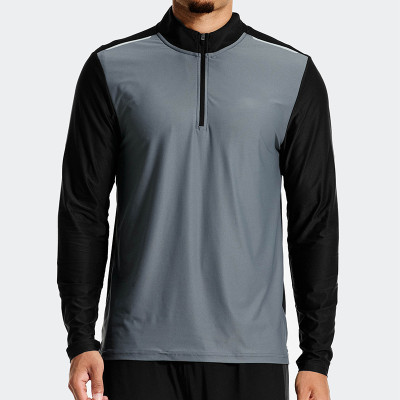
China's sportswear manufacturing ecosystem is built around technical performance apparel. Factories in Dongguan, Guangzhou, and Quanzhou work daily with four-way stretch nylon/spandex, bonded seam construction, laser cutting, moisture-wicking textiles, seamless knitting (Santoni machines), sublimation printing, and complex outerwear with structured paneling.
Critically, many Chinese factories are vertically integrated — they control yarn, knitting, dyeing, finishing, cutting, and sewing under one roof or within a tightly clustered supply zone. This means when you ask for a specific 280gsm nylon/spandex in a custom colorway with a DWR coating, they can actually deliver it. No waiting on imports, no outsourcing to a third mill.
Bangladesh: World-Class at Basics, Limited on Technical
Bangladesh built its $20B+ export industry on one category: basic knitwear at scale. Plain cotton T-shirts, polo shirts, basic hoodies, woven cotton trousers — this is where Bangladesh genuinely leads the world in price and capacity.
Technical performance sportswear is a different story. Synthetic performance fabrics like nylon/spandex and polyester/spandex blends? Most Bangladeshi factories import these from China, adding 2–4 weeks and undermining the cost advantage you assumed you'd have. Bonded seams, laser cut panels, seamless construction? Rare at scale. Four-way stretch pattern engineering for men's training suits? Inconsistent.
Industry data is clear: Bangladesh's defect rate rises significantly for intricate sewing techniques, heavy fabrics, and technical construction details. For a men's training suit or track jacket set, that risk is real.
Portugal: Premium Technical, European Ecosystem
Portugal punches above its weight on technical activewear — and it's getting better. Factories in Braga, Barcelos, and Porto work with OEKO-TEX certified performance fabrics, Santoni seamless machines, and advanced flatlock seam technology. More than 80% of Portuguese factories now focus on athleisure and sportswear categories.
The constraint isn't capability — it's scale and cost. Portuguese factories are calibrated for small-to-medium technical runs, not high-volume production. If you're making 50–300 sets of a premium men's training suit for EU distribution, Portugal delivers exceptional quality. If you need 1,000+ sets at competitive FOB pricing for a US rollout, the economics stop working.
2. Fabric and Raw Material Supply Chain
This factor is underrated in most comparison articles. The fabric supply chain directly determines your real MOQ, your realistic lead time, and your ability to develop custom colorways or technical specifications.
| Factor | China | Bangladesh | Portugal |
|---|---|---|---|
| Performance fabric production | Domestic — world's largest polyester/nylon/spandex producer | Primarily imported (mainly from China) | EU-sourced + selective imports; strong for organic/recycled |
| Custom colorway capability | Full — domestic dyeing within supply cluster | Limited — depends on imported greige | Good — EU mills within 20–50 miles of most factories |
| Technical fabric development | Full R&D capability, including recycled performance blends | Minimal | Growing — especially recycled polyester and organic blends |
| OEKO-TEX fabric availability | Widely available | Available but less consistent | Widely available; GOTS also accessible |
| Supply chain disruption risk | Low-moderate | High (import dependency + infrastructure gaps) | Low (EU integrated supply chain) |
The bottom line on supply chains: China is the origin point for most global performance fabric. Bangladesh buys from China. Portugal buys from EU mills or selective Asia imports. If you want to customize your fabric at the source — and for a technical men's sportswear brand, you probably do — China is where that conversation starts.
3. Minimum Order Quantity: What Each Country Realistically Offers
| Country | Factory Type | Typical MOQ (per style) | Notes |
|---|---|---|---|
| China | Large export factory | 500–1,000 sets | Volume pricing, rigid production schedule |
| China | Mid-size OEM factory | 100–300 sets | Flexible, common for growing brands |
| China | Startup-friendly OEM | 50–100 sets | Higher unit cost, strong customization support |
| Bangladesh | Standard export factory | 1,000–3,000 sets | Rigid, basic styles only at this MOQ |
| Bangladesh | Mid-tier factory | 300–500 sets | Limited technical capability at this range |
| Portugal | Specialist workshop | 50–100 units | Premium unit cost, EU-market focused |
| Portugal | Standard factory | 100–300 units | 4–8 week lead time to EU customers |
| Portugal | Export-oriented factory | 500–2,000+ units | Better pricing, longer lead time for non-EU |
Key insight: China has the widest range. You can find a legitimate OEM factory in China doing 50-set custom men's training suits, or one doing 5,000. Bangladesh's model is structurally dependent on volume — low MOQ isn't how their economics work. Portugal's low-MOQ options are real, but come at a 15–25% direct cost premium over equivalent China pricing.
For a brand launching its first men's activewear collection, China's mid-size OEM factory tier is almost always the right answer — enough flexibility to start small, enough capability to scale.
4. Lead Times: Sample to Shelf
| Stage | China | Bangladesh | Portugal |
|---|---|---|---|
| Proto sample | 7–14 days | 14–21 days | 7–14 days |
| Sample revision | 3–5 days | 5–10 days | 3–7 days |
| Bulk production | 25–35 days | 30–45 days | 20–30 days |
| Shipping to EU | 25–35 days (sea) / 5–7 days (air) | 25–40 days (sea) | 3–5 days (land/sea) |
| Shipping to US | 15–20 days (sea) / 5–7 days (air) | 20–30 days (sea) | 10–21 days (sea) / 5–7 days (air) |
| Total (EU, sea) | ~10–12 weeks | ~12–15 weeks | ~6–8 weeks |
| Total (US, sea) | ~8–10 weeks | ~10–13 weeks | ~10–12 weeks |
Portugal's geographic advantage is real — but primarily for EU brands. The 4–8 week lead time to European customers that Portuguese factories advertise is legitimate and genuinely useful for trend-driven, seasonal, or fast-turnaround production. For US-based brands, Portugal's shipping time nearly eliminates that advantage.
China's lead time is competitive globally once you factor in air freight options. For brands doing planned seasonal launches (rather than reactive restocking), 8–10 weeks total from tech pack approval to US delivery is entirely workable.
5. Cost Comparison: What You're Actually Paying Per Set
This is where it gets nuanced. The headline FOB price is not the full cost. What matters is the landed cost — including shipping, duties, quality control, and the cost of rejected batches or failed runs.
| Cost Element | China | Bangladesh | Portugal |
|---|---|---|---|
| FOB unit cost — men's training suit set | $18–$38 | $12–$22 | $35–$65+ |
| Shipping to EU (per unit, 300 sets, sea) | $2–$4 | $3–$5 | $1–$2 |
| Import duty (EU) | 12% | 0% (EBA scheme*) | 0% (EU-made) |
| Shipping to US (per unit, sea) | $2–$5 | $2–$5 | $4–$8 |
| Import duty (US, post-2025) | ~7.5–20% | ~20% (as of Aug 2025) | ~12–17% |
| QC inspection cost (per shipment) | $200–$400 | $300–$600 | Minimal (proximity) |
| Risk of batch rejection | Low-medium | Medium-high (technical styles) | Low |
| Effective landed cost (EU, 300 sets) | Medium | Low-medium* | Medium-high |
| Effective landed cost (US, 300 sets) | Medium | Medium* | High |
* Bangladesh's EU duty advantage (EBA — Everything But Arms) applies to least-developed country status. This preferential access is genuine for standard apparel. However, for technical performance sportswear where quality failure risk is higher, hidden QC costs can erode that advantage.
One data point worth knowing: research consistently shows that for orders under 500 pieces, Portugal costs only 12–18% more than Asia on a fully-loaded basis, once you account for faster lead time (reduced working capital tied up), lower QC costs, and proximity-enabled revision speed. That gap is real but smaller than the FOB price comparison suggests.
For orders above 500 sets targeting the US or global market, China's cost structure becomes decisively more competitive.
6. Certifications and Market Compliance
Certifications matter differently depending on your market. EU brands face stricter chemical and environmental requirements. US brands care about CPSC compliance and, increasingly, supply chain ethics documentation for retail partners.
| Certification | China | Bangladesh | Portugal |
|---|---|---|---|
| OEKO-TEX Standard 100 | Widely available | Available; less consistent | Widely available (42% hold both OEKO-TEX + GOTS) |
| BSCI (social compliance) | Standard for export factories | Common (post-Rana Plaza reform) | Standard; EU labor law baseline |
| ISO 9001 | Standard | Available | Common |
| GOTS (organic) | Available | Limited | Well-established |
| GRS (recycled content) | Strong | Developing | Strong |
| EU REACH compliance | Verified through testing | Requires independent testing | Baseline legal requirement |
| BLUESIGN | Available at select factories | Rare | Emerging |
| Made in EU label | Not eligible | Not eligible | Eligible |
For brands targeting premium EU retail — particularly those where 'Made in Portugal' or 'Made in EU' is a marketing asset — Portugal offers something China and Bangladesh simply cannot: a legitimate origin label that resonates with European consumers and satisfies EU nearshoring preferences among large retailers.
For brands where compliance is required but origin labeling isn't a marketing story, China's established OEKO-TEX and BSCI infrastructure serves most needs at lower cost.
7. Supply Chain Risk: The 2025 Reality Check
This section is the one most comparison articles skip. Don't.
Bangladesh: The Risk Profile Has Materially Worsened
2024–2025 was a turbulent period for Bangladesh's garment industry. The 2024 political crisis forced widespread factory closures and disrupted operations for months. Gas shortages cut some factories to below 30% capacity. India suspended transhipment facilities, complicating logistics. A fire at Dhaka airport destroyed garment samples and imported accessories worth millions of dollars.
On the trade policy front, Bloomberg Economics forecast up to $2 billion in export declines for 2025. The US imposed a 37% reciprocal tariff in April 2025 — eventually negotiated down to 20% effective August 7 — but not before significant order cancellations and margin erosion had already occurred. Garment exports fell for three consecutive months (August down 4.75%, September down 5.66%, October down 8.39%).
Bangladesh raised its US market share to 10.53% by early 2026, suggesting partial recovery — but the structural vulnerabilities (energy instability, political risk, tariff uncertainty, import dependency for technical fabrics) remain.
China: Shifted, Not Destabilized
China's share of US apparel imports declined to 13.66% in 2025 (from 20.83% in 2024), driven primarily by Trump administration tariffs that prompted major brands to diversify. However, this shift affected large mass-market brands dependent on commodity production at scale — not the OEM/ODM mid-size factory segment that serves custom men's activewear brands.
For the mid-size, export-focused OEM factory producing 50–500 sets of custom men's sportswear, the core business has been resilient. China's manufacturing infrastructure, automation investment, and supply chain depth have offset higher labor costs. Per capita hourly output in China is nearly three times Bangladesh's, meaning the labor cost gap is smaller in practice than it appears on paper.
Portugal: Stable, Growing, EU-Protected
Portugal's textile industry exported €5.5 billion in 2025 — growth every year for over a decade. The country faces no meaningful political or infrastructure risk. EU trade relationships provide stable market access to Europe's largest retail buyers. For brands where supply chain predictability is a priority and the EU is the primary market, Portugal's risk profile is the lowest of the three.
8. Factory Communication and Working Relationship
This factor is soft but real. How easy is it to actually work with factories in each country?
| Factor | China | Bangladesh | Portugal |
|---|---|---|---|
| English communication | Good — bilingual teams standard at OEM factories | Variable — better at large export factories | Good — English widely spoken in export factories |
| Direct brand relationships | Strong — built for small/mid B2B brand clients | Better via buying agents than direct | Strong — geared toward direct brand relationships |
| Tech pack processing | Standard — most OEM factories have developed workflows | Standard at larger factories | Strong — collaborative development common |
| Response time (inquiry) | 24–48 hours typical | 24–72 hours typical | Same day to 24 hours (EU time zones) |
| Problem resolution speed | Fast (same supply zone) | Slower (supply chain complexity) | Fastest (proximity, EU culture) |
| Time zone overlap (EU) | Partial (6–8 hours off) | Partial (5–6 hours off) | Same or +1 hour |
| Time zone overlap (US) | 12 hours off (manageable) | 10–11 hours off | 5–8 hours off |
9. The Full Decision Matrix
Pulling all factors together:
| Factor | China | Bangladesh | Portugal |
|---|---|---|---|
| Technical performance activewear capability | ✅ China | ⚠️ Limited | Strong (smaller scale) |
| Fabric supply chain for synthetic performance | ✅ China | ⚠️ Limited | Good (EU mills) |
| MOQ flexibility (50–300 sets) | ✅ China | ❌ Weak | Available (higher cost) |
| Sampling speed | ✅ China | Slower | Comparable |
| Unit cost at volume (300+ sets) | ✅ China | Lower FOB | Higher FOB |
| Landed cost (EU, <500 sets) | Competitive | Competitive* | Close gap |
| Landed cost (US, 300+ sets) | ✅ China | Comparable | Higher |
| OEKO-TEX / performance certifications | ✅ China | Less consistent | Excellent |
| Supply chain stability (2025) | ✅ China | Disrupted | Stable |
| EU market lead time | 8–12 weeks | 12–15 weeks | ✅ Portugal |
| 'Made in EU' label eligibility | No | No | ✅ Portugal |
| Premium brand positioning story | Neutral | Neutral | ✅ Portugal |
| Basic knitwear at 2,000+ units | Capable | ✅ Bangladesh | Not applicable |
So Which Country Should Your Brand Use?
Choose China if:
• You're building a custom men's performance activewear line (gym wear, training suits, track jackets, streetwear sets)
• Your MOQ per style is under 500 sets and you need a factory that can scale with you
• You need four-way stretch performance fabrics in custom colorways with technical construction
• You're targeting the US, UK, Australia, or global markets where EU origin isn't a factor
• You want full OEM control — your design, your label, your packaging
• You're at any brand stage, from first launch to established scaling
Choose Bangladesh if:
• You need 1,000+ units of basic cotton or standard knitwear styles (plain T-shirts, cotton joggers, basic hoodies)
• Price per unit is the absolute primary driver and quality requirements are straightforward
• You have an experienced buying agent managing the factory relationship on your behalf
• You're not launching technical performance styles — just basic essentials
Choose Portugal if:
• You're an EU-based brand where 'Made in Portugal' or 'Made in EU' is a genuine marketing asset
• You need fast turnaround for EU market launches — 6–8 weeks total is genuinely achievable
• Your brand positioning is premium or sustainable, and the higher unit cost is reflected in your retail pricing
• Your order sizes are under 300 sets and the EU cost premium is acceptable for your margin structure
• You're testing a concept with a small batch before scaling — the proximity makes iteration fast
Frequently Asked Questions
Is China still competitive for men's sportswear after the 2025 tariff changes?
For brands selling into the EU, yes — clearly. For US brands, the picture is more nuanced. China's US market share dropped to 13.66% in 2025 due to tariff pressure, but this was driven primarily by mass-market commodity categories. Mid-size OEM factories producing custom performance activewear at 50–500 sets have been more resilient. The combination of technical capability, supply chain depth, and MOQ flexibility still makes China the strongest overall choice for custom men's activewear brands, including those targeting the US market.
What happened to Bangladesh's garment industry in 2024–2025?
Bangladesh's RMG sector faced significant disruption. A 2024 political crisis caused widespread factory closures. Gas shortages cut output at spinning mills. US tariffs spiked to 37% before settling at 20% in August 2025. Garment exports fell for three consecutive months in late 2025. Bloomberg Economics forecast up to $2 billion in export declines. By early 2026 there are signs of partial recovery, but structural vulnerabilities remain — particularly energy instability, logistics disruptions, and import dependency for technical fabrics.
Is Portugal really worth the higher cost for a premium men's activewear brand?
For the right brand, yes. Research shows that at orders under 500 pieces, Portugal costs only 12–18% more than Asia on a fully-loaded basis — not the 50–70% gap the FOB price comparison implies. For EU brands specifically, the shipping time advantage (3–5 days vs 25–35 days) is worth significant working capital savings. If your brand story includes 'Made in EU', premium positioning, or sustainability, Portugal adds genuine brand value. If your target market is the US and cost efficiency is critical, China is almost always the better call.
Can I split my production between countries?
Yes — and many established brands do exactly this. A common approach: China for volume production of technical styles (training suits, track jackets), Portugal for small-batch premium styles or EU-exclusive drops, Bangladesh avoided for technical activewear but potentially used for basic knitwear accessories at scale. The 'China+1' strategy is mature in 2025–2026, with brands diversifying supply chains for risk management while maintaining China as the technical production core.
What's the typical lead time difference between all three countries for a US brand?
For a US brand producing a custom men's training suit set: China (sea freight) runs approximately 8–10 weeks total from tech pack to US warehouse. Bangladesh runs 10–13 weeks. Portugal runs 10–12 weeks (air freight faster but expensive). China's technical sampling speed (7–14 days for proto) also tends to be faster than Bangladesh in practice.
Which country has the best sustainability credentials for men's sportswear?
Portugal leads on environmental and labor standards — EU regulations set a high baseline, and an estimated 60% of Portuguese factories transitioned to 100% renewable energy by end of 2025. China has strong OEKO-TEX and GRS (Global Recycled Standard) infrastructure, particularly for recycled performance fabrics — some of the most advanced sustainability R&D in performance textiles happens in China. Bangladesh has strong labor compliance reform momentum post-Rana Plaza, but environmental standards lag behind both China and Portugal for technical apparel categories.
Sourcing Custom Men's Sportswear from China?
Montforge is a custom men's sportswear manufacturer based in Dongguan, China. We work directly with men's activewear brands across the US, UK, EU, and Australia — from first-time founders launching a 50-set test run to established labels scaling proven collections.
What we specialize in:
• Men's gym wear — shorts, tanks, compression sets, hoodies
• Men's track jackets and training suit sets
• Men's streetwear-athletic hybrid collections
• Custom performance fabric development (nylon/spandex, polyester/spandex, recycled blends)
• MOQ from 50 sets per style
• Proto samples in 7–14 days
• Full OEM and ODM — your design or ours
• OEKO-TEX certified | BSCI audited | direct factory (no trading company markup)
Request a Free Sample → Get a Custom Quote →
Contact: admin@montforge.com | WhatsApp: +86 13528775886 | www.montforge.com
Montforge — Custom Men's Sportswear Manufacturer | Dongguan, China | OEKO-TEX Certified | BSCI Audited | MOQ from 50 sets