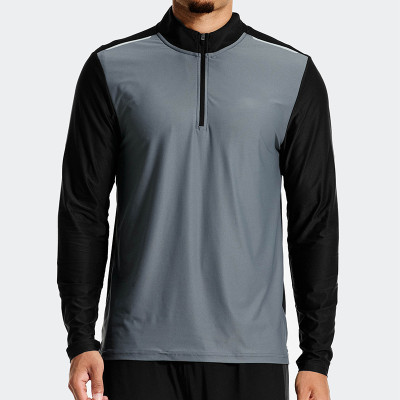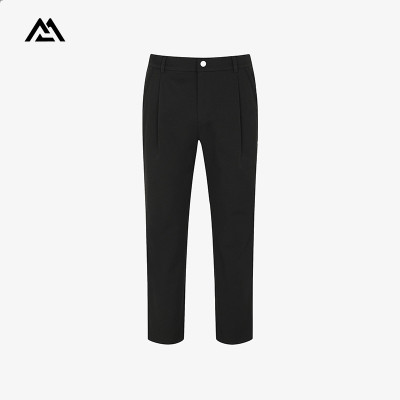
4-Way Stretch Performance Knit: The Fabric Behind Zero-Bag Technical Joggers
Category: Performance & Lifestyle Fabrics Brand: MontForge | Premium Men's Activewear Manufacturer Reading time: ~7 minutes
What Is 4-Way Stretch Performance Knit?
4-Way Stretch Performance Knit is a high-recovery technical fabric constructed from a 82–86% premium nylon / 14–18% high-grade spandex blend, woven at a weight of 220–260 GSM. Unlike standard polyester stretch fabrics, the nylon-dominant matrix provides multi-directional tension resistance in all four planes — lengthwise, widthwise, and both diagonal axes — meaning the fabric stretches fully in any direction and returns to its original dimensions without permanent deformation.
This elastic recovery property is measured as snap-back rate: the speed and completeness with which a fabric returns to its original dimensions after tension is released. In premium 4-way stretch knits, snap-back rate exceeds 95% after repeated stress cycles, which is why the fabric eliminates the knee-bagging and seat-warping problems common in standard sweatpants or generic polyester joggers.
In short: 4-Way Stretch Performance Knit is engineered for garments that must maintain their architectural silhouette through intense physical movement, repeated laundering, and long-term wear.
Key Technical Specifications
| Property | Specification |
|---|---|
| Fiber composition | 82–86% Premium Nylon / 14–18% High-Grade Spandex |
| Fabric weight | 220–260 GSM |
| Stretch direction | 4-way (warp, weft, both diagonals) |
| Elastic recovery rate | >95% after repeated stress cycles |
| Surface texture | Smooth technical knit, low-friction hand feel |
| Colorfastness | Grade 4–5 (ISO 105 standard) |
| Care compatibility | Machine wash, tumble dry low |
Why Nylon, Not Polyester?
Most entry-level stretch fabrics use polyester-spandex blends. The substitution of premium nylon changes three performance parameters in ways that matter for technical menswear:
1. Tensile strength and abrasion resistance Nylon fiber has a higher tensile strength-to-weight ratio than polyester at equivalent GSM. In practice, this means a 240 GSM nylon-spandex jogger resists pilling, seat wear, and seam stress better than a 260 GSM polyester equivalent — while remaining lighter on the body.
2. Multi-directional recovery Nylon's molecular structure allows the spandex filaments woven into the fabric to contract more completely after stretch. Polyester-spandex blends develop micro-deformation at the knit loops over time, which is the physical cause of knee bagging. Nylon resists this loop deformation significantly longer.
3. Moisture management Nylon absorbs slightly more moisture than polyester (approximately 4% vs. 0.4% moisture regain), which moderates the clammy-on-skin sensation during high-output activity. Combined with the smooth knit surface, this produces a drier, more premium contact feel during urban running or training.
What Garments Is This Fabric Built For?
4-Way Stretch Performance Knit is the correct fabric choice for three primary men's activewear categories:
Street Running & Technical Track Pants
The fabric's snap-back rate and four-directional elasticity allow a slim, tapered silhouette to be cut with significantly less ease allowance than woven fabrics. The result is a pant that looks structured standing still and moves without restriction at full sprint. The nylon surface also resists wind and light moisture, extending usability across urban outdoor conditions.
Technical Training Joggers
For gym, cross-training, and HIIT applications, the fabric handles deep squats, lunges, and lateral movement without distorting at the crotch, seat, or knee. This is where gusset and paneling construction (discussed below) amplifies what the fabric already does by its own nature.
Urban Athleisure — Elevated Casual
At 220–260 GSM, the fabric has enough body weight to drape cleanly on the leg without clinging. Styled with the right silhouette and finishing details (bonded zippers, tonal reflective branding), this fabric supports the "luxury technical" positioning that commands a market premium in European and North American athleisure retail.
How Fabric Properties Determine Construction Choices
The fabric does not operate in isolation. Because 4-Way Stretch Performance Knit is highly elastic, it imposes specific constraints — and unlocks specific opportunities — in the construction phase.
Seam and stitching requirements
Traditional chainstitch and lockstitch seams cannot flex with the fabric. As the textile stretches, a rigid stitch line creates a stress point and either snaps or distorts the surrounding knit. The correct seam for this fabric is flatlock stitching — a two-thread construction where the seam lies flat against the skin with no ridge, stretches in unison with the fabric, and returns without puckering. Secondary pocket and hem edges are best sealed with heat-welded bonded seams, which eliminate the seam allowance entirely and keep the silhouette flat against the thigh.
Paneling and gusset construction
Because the fabric stretches multi-directionally, the pattern maker can reduce ease allowances compared to woven fabrics. However, the crotch and knee zones still benefit from engineered paneling:
· Diamond crotch gusset: A four-point fabric insert that replaces the traditional single curved seam at the crotch. By distributing stress across four seam lines rather than one, the gusset eliminates friction binding and provides unrestricted range of motion in deep flexion without distorting the front panel.
· Articulated knee panel: A horizontal or diagonal patchwork seam positioned at the mid-knee creates a natural folding point that follows the leg's biological curve. When the wearer is standing, this seam is invisible. When the leg is flexed, it prevents the fabric from pulling taut across the knee cap — eliminating both discomfort and the aesthetic distortion of a stretched-out knee zone.
Branding and graphic application
Standard plastisol screen prints and iron-on vinyl transfers will crack on this fabric within 10–15 wash cycles because the graphic substrate cannot stretch at the same rate as the textile. Two techniques are compatible:
· 3M Reflective Heat Transfer: Reflective compounds are fused into the fabric matrix at calibrated temperature and pressure. The bonded graphic stretches at the same rate as the spandex without separating from the base knit. This technique is the industry standard for technical jogger branding because it also adds nighttime high-visibility — a functional asset for urban runners.
· Sublimation printing (on lighter nylon-spandex blends): Works on light-colored fabric where the dye is driven into the fiber itself rather than sitting on the surface. No surface layer means no cracking or peeling regardless of stretch cycles.
Compatible Tech Coating Upgrades
Because nylon accepts surface treatments more effectively than polyester, this fabric base supports several functional coating upgrades without altering the hand feel or weight significantly:
| Coating | Function | Recommended Application |
|---|---|---|
| DWR (Durable Water Repellent) | Causes water to bead and roll off the surface | Outdoor running, trail-adjacent urban wear |
| Anti-microbial treatment | Inhibits odor-causing bacteria at the fiber level | High-output training, recovery wear |
| UV-block finish | Adds incidental UPF protection to the base fabric | Spring/summer running collections |
How to Pair This Fabric Within a Collection
4-Way Stretch Performance Knit is most effectively used as the performance anchor in a men's activewear collection, positioned alongside a heavier, softer lifestyle fabric for complementary SKUs.
The natural pairing is Premium Cotton-Modal blend (280–320 GSM) — a 45% long-staple cotton / 45% Micro-Modal / 10% elastane construction. Where the nylon knit delivers technical performance and architectural structure, the cotton-modal blend delivers skin-softness, drape, and the tactile luxury signal that lifestyle athleisure buyers respond to. Two jogger SKUs — one in each fabric — serve the same customer across two distinct wearing occasions without cannibalizing each other.
A collection structured this way also supports a clear price architecture: the nylon performance jogger carries higher retail value due to construction complexity (gusset, bonded seams, reflective heat transfer), while the cotton-modal lifestyle jogger offers a lower entry price point with lower production cost.
Sourcing and Production Notes for Private Label Brands
Minimum Order Quantity: Flexible low-MOQ programs are available for independent private labels in the growth stage. Contact the MontForge technical team for a current MOQ matrix by fabric and construction type.
Sample lead time: 7–15 days, including digital pattern drafting, fabric sourcing, European size grading, and print application for physical verification.
Bulk production timeline: 30–50 days, covering incoming material inspection, computer-controlled laser fabric cutting, flatlock stitching, QC inspection, and export packaging.
Shrinkage evaluation: Because nylon-spandex blends behave differently from woven fabrics across regional production standards, MontForge provides a free shrinkage and stretch evaluation for brands translating overseas tech packs into European or North American size grading. This step prevents finished-garment dimensional errors that are expensive to correct at bulk stage.
GRS-certified recycled yarn: For brands with sustainability positioning requirements, this fabric construction is available in GRS (Global Recycled Standard) certified recycled nylon and recycled spandex variants. Performance and recovery properties are equivalent to virgin fiber at equivalent GSM.
Summary: What Makes This Fabric the Right Choice
4-Way Stretch Performance Knit in an 82–86% nylon / 14–18% spandex construction at 220–260 GSM is the technically correct foundation for men's street running pants and training joggers when the product brief requires:
· A slim, architectural silhouette that holds shape through repeated wear and laundering
· Multi-directional freedom of movement without fabric distortion at the knee or crotch
· Compatibility with technical branding methods (reflective heat transfer, bonded seams)
· A surface that accepts functional coatings (DWR, anti-microbial) without altering hand feel
· A positioning at the premium end of the men's activewear market
For lifestyle and recovery wear within the same collection, a different fabric matrix — Premium Cotton-Modal blend — is the appropriate choice. That fabric is covered separately in this series.
Frequently Asked Questions
What is 4-way stretch fabric made of?
Premium 4-way stretch performance knit is typically composed of 82–86% high-grade nylon and 14–18% spandex (elastane). The nylon provides tensile strength and abrasion resistance; the spandex provides elastic recovery in all four stretch directions.
Why does 4-way stretch prevent knee bagging?
Knee bagging occurs when fabric loops at the knit structure permanently deform under repeated stress. Nylon fiber resists this loop deformation more effectively than polyester at equivalent weights, maintaining snap-back rates above 95% across hundreds of wear and wash cycles.
What is the difference between 2-way and 4-way stretch?
2-way stretch fabrics flex in one axis only — either lengthwise or widthwise. 4-way stretch fabrics flex in all four directions: warp, weft, and both diagonal planes. For activewear that must accommodate complex multi-directional movement (squats, sprints, lateral cuts), 4-way stretch is the correct specification.
Can 4-way stretch nylon fabric be printed on?
Yes, with the correct technique. Standard plastisol prints are incompatible and will crack. 3M Reflective Heat Transfer and sublimation printing (on light-colored variants) are the two industry-standard methods for graphic application on high-elasticity nylon-spandex knits.
What GSM is best for technical joggers?
For street running and training joggers, 220–260 GSM in a nylon-spandex knit provides the optimal balance of drape, structure, and weight. Fabrics below 200 GSM tend to feel thin and lack body; fabrics above 270 GSM in this fiber blend add unnecessary weight without performance benefit for pants applications.
MontForge is a verified premium men's activewear manufacturer with over eight years of production experience serving independent European and global private labels. Core product competencies span technical joggers and track pants, hoodies and sweatshirts, gym and training wear, and technical outerwear. GRS-certified recycled material programs are available across all product categories.
Next in the Performance & Lifestyle Fabrics series: [Ultralight Windproof Fabric Guide: What It Is, What It's For, and How to Spec It]